Situation Overview
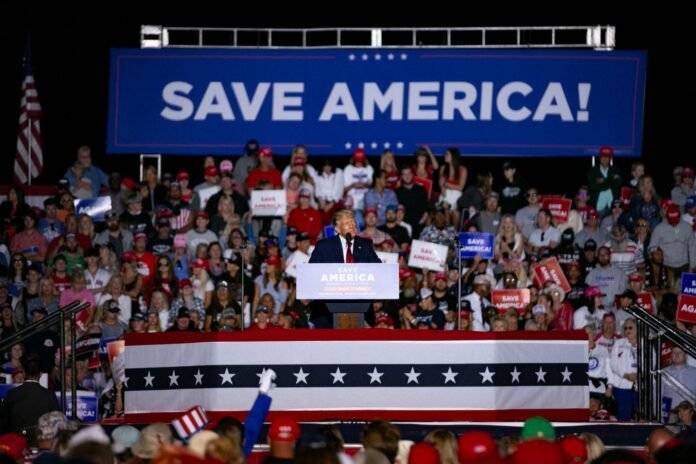
President Donald Trump this week outlined a renewed economic growth strategy centered on domestic manufacturing, energy expansion, tax stability, and regulatory restraint. Speaking at a policy-focused event and in meetings with Republican lawmakers, Trump emphasized what he described as a “growth-first” framework designed to strengthen job creation and restore long-term economic momentum.
The remarks come amid continued debate in Washington over inflation trends, federal spending levels, and industrial competitiveness. Republicans argue that stable tax policy, reduced regulatory burdens, and expanded domestic production remain the foundation of sustainable economic performance. Democrats have countered that federal investment programs and targeted subsidies are necessary to drive innovation and infrastructure development.
Trump’s speech signals that economic policy will remain a central pillar of his political messaging.
What Happened
In his address, Trump highlighted four primary pillars of his economic approach:
-
Expanding domestic energy production to reduce costs and strengthen supply stability
-
Encouraging manufacturing reshoring through tax certainty and trade enforcement
-
Reducing regulatory barriers that impact small and mid-sized businesses
-
Maintaining competitive tax structures to attract investment
He referenced economic indicators from his previous administration, including low unemployment levels and rising wage growth prior to the pandemic. Supporters argue that policy certainty during that period contributed to increased private investment.
House Republicans have since echoed Trump’s framework in committee discussions, tying economic growth proposals to broader fiscal debates. Several GOP lawmakers emphasized that long-term growth depends on predictable policy environments rather than short-term stimulus spending.
Recent economic reporting from major outlets continues to track inflation trends, labor market data, and manufacturing output levels—factors that remain central to the broader policy discussion.
Trump and GOP Response
Trump framed his growth strategy as an extension of what he calls “America First economics,” arguing that domestic production strengthens national security and economic resilience. He emphasized that energy independence reduces vulnerability to global supply disruptions and helps stabilize consumer prices.
Republican lawmakers aligned with the president have reiterated calls for permanent tax provisions and streamlined regulatory processes. GOP leadership has also signaled support for oversight measures aimed at limiting agency actions that they argue burden businesses.
The messaging reflects a clear policy contrast: Republicans advocating structural growth incentives versus Democrats favoring federal program expansion and industrial subsidies.
Several business advocacy groups have expressed interest in regulatory clarity and tax predictability, noting that long-term planning often depends on stable policy environments.
Economic and Political Implications
Economic policy remains a decisive issue for voters, particularly in suburban and industrial regions. Polling consistently indicates that inflation and job security are top concerns heading into upcoming elections.
By re-centering economic growth in his public remarks, Trump reinforces a narrative that prioritizes private-sector expansion over federal intervention. Republican strategists believe that focusing on manufacturing, small business development, and energy policy resonates strongly in battleground states.
The debate also intersects with broader fiscal discussions. Spending reductions proposed by House Republicans are frequently paired with pro-growth arguments, asserting that deficit control and economic expansion are complementary goals.
Financial markets continue to monitor Washington’s policy direction, particularly in areas related to tax legislation and regulatory reform. While immediate legislative changes may face negotiation hurdles, the long-term policy direction could influence investment decisions.
What Comes Next
Economic proposals are expected to feature prominently in upcoming committee hearings and campaign events. Lawmakers will likely advance draft legislation aimed at regulatory reform and tax stability in the coming months.
Any significant policy shift would require bipartisan negotiation in the Senate. However, Republicans appear focused on clearly articulating their growth-oriented approach ahead of broader legislative battles.
Trump’s renewed emphasis on economic strategy signals that fiscal policy, industrial competitiveness, and domestic production will remain at the forefront of national debate.
As Washington continues to grapple with budget pressures and economic uncertainty, the contrast between competing economic visions is likely to sharpen—placing growth policy at the center of political discourse.