



Situation Overview
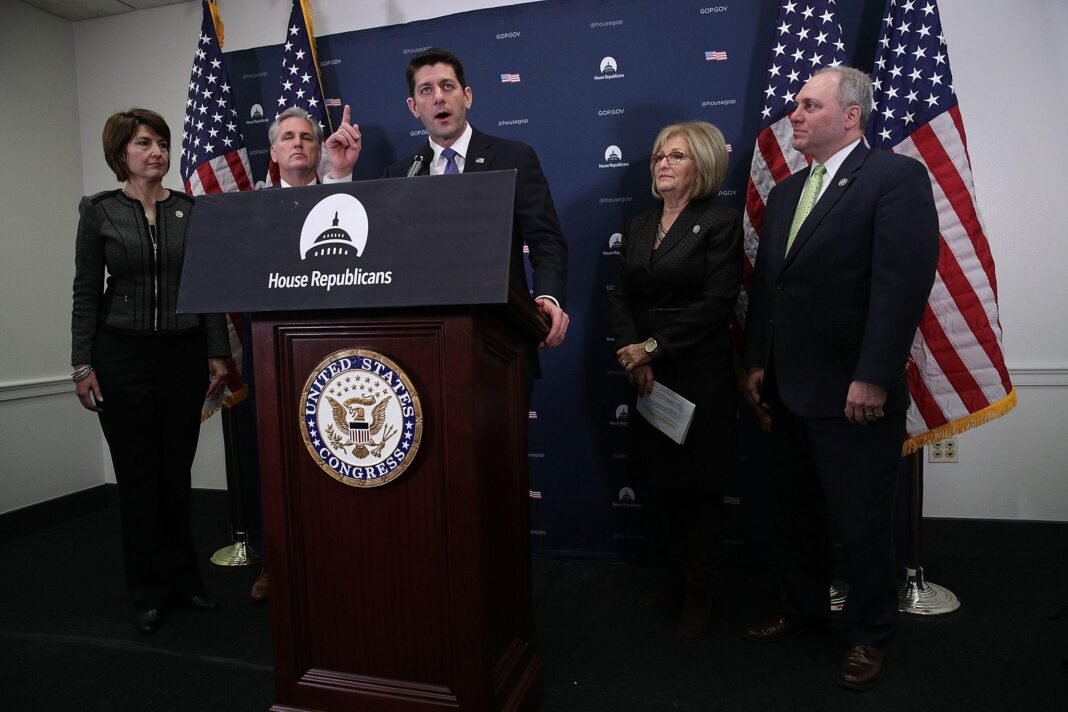
House Republicans have intensified their push for significant federal spending reductions as part of upcoming budget negotiations, positioning fiscal restraint as a defining priority. GOP leadership argues that rising deficits and sustained inflationary pressures demand a recalibration of federal expenditures. With federal debt remaining historically high, lawmakers say structural spending reforms are necessary to stabilize long-term economic growth.
The renewed effort follows weeks of internal caucus meetings and committee-level budget drafting. Republican leaders have framed the proposal as a corrective measure aimed at restoring fiscal discipline, reducing unnecessary programs, and prioritizing national security and border enforcement funding. Democrats, meanwhile, have raised concerns about potential impacts on domestic programs.
As budget deadlines approach, the debate is expected to intensify on Capitol Hill.
What Happened
House Republican leadership unveiled a framework outlining targeted reductions across several discretionary spending categories. While entitlement programs remain politically sensitive, GOP lawmakers have focused on:
-
Reducing non-defense discretionary spending growth
-
Reassessing pandemic-era funding extensions
-
Streamlining federal agency administrative budgets
-
Strengthening oversight of grant and subsidy programs
Committee chairs have begun marking up proposals designed to return certain spending levels closer to pre-pandemic baselines. The effort aligns with broader Republican messaging emphasizing fiscal responsibility and economic stability.
Recent congressional reporting indicates that deficit projections remain a central concern in Washington, particularly as interest payments on federal debt continue to rise. The Congressional Budget Office has warned of sustained debt growth under current spending trajectories.
Republicans argue that early intervention is necessary to prevent more disruptive fiscal adjustments in the future.
Trump and GOP Response
President Donald Trump has publicly supported efforts to reduce what he has described as “wasteful Washington spending.” In recent remarks, he emphasized that strong economic growth must be paired with responsible budgeting to protect American taxpayers.
Trump allies in Congress have echoed that message, framing the spending reduction effort as part of a broader economic strategy focused on domestic manufacturing, energy independence, and border security. Lawmakers argue that fiscal discipline strengthens investor confidence and supports long-term job growth.
House Speaker and committee leadership have stressed that essential defense and national security funding would remain protected under the plan. The focus, they say, is on eliminating inefficiencies rather than reducing core services.
The GOP’s approach is also designed to draw a policy contrast ahead of future elections, highlighting what Republicans describe as a commitment to balanced budgeting compared to expanded federal outlays in recent years.
Political and Legislative Outlook
Budget negotiations are expected to involve complex bipartisan discussions. Senate leadership has indicated that any final spending package will require cross-party cooperation. The key question remains how deeply spending reductions can be implemented without triggering procedural standoffs.
Democratic lawmakers have warned that across-the-board reductions could affect domestic priorities such as education, infrastructure, and healthcare grants. Republicans counter that targeted cuts and oversight reforms can achieve savings without undermining critical services.
Fiscal analysts note that while discretionary spending reductions can impact short-term deficits, long-term debt sustainability will ultimately require broader structural reforms. That reality suggests this debate may extend well beyond the current fiscal year.
Still, House Republicans appear unified in elevating spending restraint as a core legislative objective. The proposal reinforces their broader economic narrative centered on growth through fiscal responsibility.
Why It Matters
The federal budget debate shapes virtually every aspect of public policy—from defense readiness to social services and infrastructure development. With interest payments consuming a growing share of federal revenue, lawmakers face mounting pressure to address spending trajectories.
For Republicans, advancing a spending reduction framework allows them to demonstrate governance priorities centered on accountability and long-term stability. For Democrats, the challenge lies in balancing fiscal caution with programmatic investment.
As negotiations continue, the outcome will influence not only short-term appropriations but also the broader economic conversation heading into the next political cycle.