



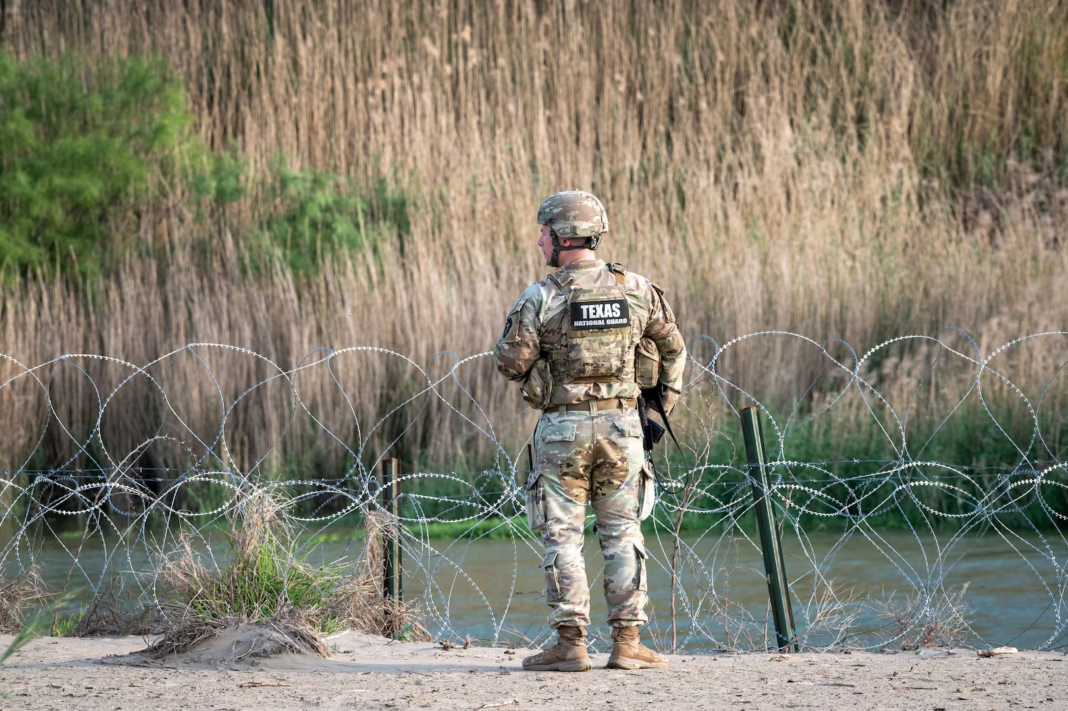
Situation Overview
Border security has returned to the center of national debate after President Donald Trump signaled support for expanding physical barriers and enforcement infrastructure along the U.S.–Mexico border. The renewed focus comes amid continued political disagreement in Washington over how to manage migration flows, asylum processing, and federal enforcement authority. Immigration remains one of the top issues for Republican voters, and GOP leadership has emphasized enforcement-first policies as a prerequisite to broader reform.
Trump’s position aligns with his long-standing argument that physical barriers, increased personnel, and expanded surveillance technology are necessary to maintain border order. Supporters frame the proposal as a continuation of first-term policies that they argue reduced illegal crossings in key sectors. Critics maintain that immigration reform requires broader legislative restructuring beyond physical infrastructure.
What Happened
During recent policy discussions with Republican lawmakers, Trump expressed support for reinforcing unfinished sections of border fencing and allocating additional funding for Border Patrol operations. The proposal includes:
-
Completing remaining high-traffic barrier gaps
-
Expanding surveillance systems and monitoring technology
-
Increasing staffing levels for enforcement personnel
-
Strengthening detention and processing capacity
The debate follows continued congressional gridlock over immigration legislation. House Republicans have indicated that border enforcement funding will remain a priority in upcoming spending negotiations. Senate discussions are expected to address whether enforcement provisions could be paired with asylum or visa processing reforms.
Recent reporting from major national outlets confirms that border security remains a central legislative flashpoint in Washington, particularly in budget talks and election-year positioning.
Trump and GOP Response
Trump has framed the renewed expansion plan as a matter of national sovereignty and public safety. In remarks to supporters and lawmakers, he emphasized that effective borders are foundational to economic stability and law enforcement integrity.
Republican leadership has echoed those arguments, stating that enforcement benchmarks must be met before any broader immigration compromise can be considered. GOP lawmakers argue that infrastructure investments represent a measurable, enforceable solution compared to open-ended reform proposals.
The party’s strategy appears focused on reinforcing border security as a defining policy contrast heading into the next election cycle.
Political and Legislative Outlook
The legislative pathway remains uncertain. Immigration provisions have historically become negotiating tools in larger spending packages. Any border expansion funding would likely require inclusion in a broader appropriations bill.
The issue continues to polarize Congress, with Republicans prioritizing enforcement mechanisms and many Democrats advocating expanded humanitarian processing systems and foreign aid initiatives.
Regardless of legislative timing, border security is expected to remain a central issue in national political discourse.