Story Highlights
- A House Agriculture subcommittee hearing on June 25 examined fraud in the $100 billion SNAP program, with USDA identifying $3 billion in potential fraud and waste
- Investigators found benefits sent to 186,000 deceased individuals and 442,000 applicants using fraudulent Social Security numbers
- The administration has fired 21 inspectors general and laid off thousands of federal investigators, reducing the oversight capacity needed to execute its own enforcement agenda
What Happened
The House Agriculture subcommittee held a hearing on June 25 examining waste, fraud, and abuse within the Supplemental Nutrition Assistance Program, commonly known as SNAP, which serves approximately 42 million Americans through roughly $100 billion in annual federal spending. The hearing was convened amid escalating pressure from the administration’s broader fraud-elimination push, chaired at the cabinet level by Vice President JD Vance through the Task Force to Eliminate Fraud, which has made SNAP a centerpiece target. The Department of Agriculture, working alongside the White House task force, presented findings that included $3 billion in potential fraud and waste, benefits sent to 186,000 deceased individuals, and 442,000 applications using Social Security numbers later found to be fraudulent.
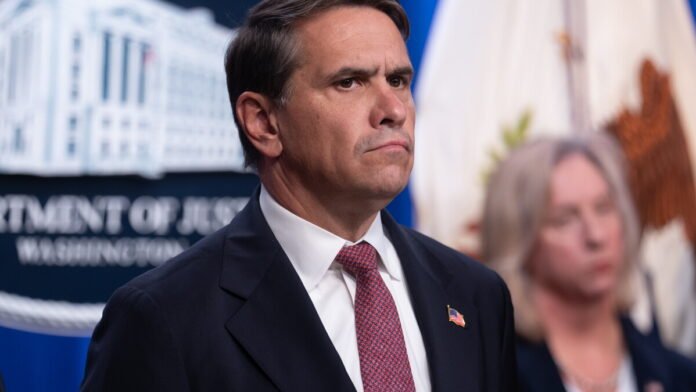
John Walk, the Department of Agriculture’s Inspector General, testified about documented vulnerabilities in the program, telling the subcommittee that electronic benefit transfer card skimming has emerged as a major and growing fraud vector, with organized criminal networks cloning cards to drain recipients’ benefits. The Government Accountability Office has separately estimated that retailer trafficking, the practice of exchanging food benefits for cash at participating stores, constitutes a roughly $5 billion annual fraud problem nationally. The program’s overall payment error rate, which includes both fraud and administrative mistakes, has historically hovered around 6 percent, a figure officials testified is comparable to other major federal benefit programs.
The hearing exposed sharp disagreements among witnesses about how aggressively to respond to these findings. Administration allies argued the documented fraud cases justify sweeping new eligibility verification rules and stricter enforcement mechanisms, while advocacy witnesses warned that the scale of proposed crackdowns extends well beyond the confirmed fraud cases and risks cutting off benefits for millions of vulnerable Americans who are not committing fraud but are instead caught by administrative errors, processing backlogs, or new paperwork requirements they struggle to complete. Reporting cited during the hearing, including from The Independent and the Virginia Mercury, found that many individuals losing SNAP benefits under new administration rules were being improperly denied or cut off due to processing failures rather than confirmed fraud.
Compounding the dispute, several witnesses and lawmakers noted that the administration’s capacity to execute its own enforcement agenda has been significantly undermined by its broader staffing decisions. The administration has fired 21 inspectors general across federal agencies since the start of its term and laid off thousands of federal investigators through the Department of Government Efficiency’s workforce reduction efforts, cuts that courts have in some instances required the administration to partially reverse after determining they were conducted without proper congressional notification. Witnesses noted that several states, including California, have also refused to comply with the Agriculture Department’s data requests, further complicating enforcement efforts regardless of staffing levels.
Why It Matters
The contradiction at the center of this hearing, aggressive enforcement rhetoric paired with a substantially diminished investigative workforce, illustrates a structural tension running through much of the administration’s broader governance approach. Inspectors general and career investigators are precisely the personnel responsible for building the kind of detailed, defensible fraud cases that distinguish genuine abuse from administrative error, and their absence makes it considerably harder to execute enforcement actions that hold up to legal and public scrutiny, even when the underlying policy goal, reducing fraud, enjoys broad bipartisan support.
For SNAP beneficiaries, the practical stakes are significant and immediate. With 42 million Americans relying on the program, even modest error rates in either direction, wrongly denying eligible recipients or failing to catch genuine fraud, translate into substantial real-world consequences for low-income families’ access to food assistance. The hearing’s evidence that legitimate beneficiaries are being cut off due to processing failures rather than confirmed fraud suggests the current implementation may be generating exactly the kind of administrative harm that careful, well-resourced oversight is designed to prevent.
For Congress, the bipartisan support reflected in the more than eight oversight bills passed addressing fraud in federal benefit programs suggests genuine cross-party appetite for addressing documented problems like EBT card skimming and retailer trafficking. But that bipartisan consensus on the underlying problem has not extended to agreement on solutions, particularly given concerns that some proposed remedies would impose burdens on legitimate recipients disproportionate to the scale of confirmed fraud.
For taxpayers, the dispute over SNAP fraud sits within a broader credibility question about the administration’s fraud-elimination agenda generally: pursuing fraud while simultaneously eliminating the institutional capacity built specifically to detect and document it raises questions about whether enforcement actions taken under this banner are grounded in rigorous investigation or in broader, less precisely targeted policy changes.
Economic and Global Context
The scale of SNAP itself, a roughly $100 billion annual program serving 42 million Americans, makes it one of the largest components of the federal safety net, and changes to its administration carry direct macroeconomic effects for low-income households’ grocery spending and, by extension, for retailers and food producers who depend on SNAP-funded purchases as a meaningful share of overall demand, particularly in lower-income communities.
The $3 billion in potential fraud and waste identified by USDA, while a serious sum in absolute terms, represents a small fraction of the program’s overall annual spending, underscoring the witnesses’ broader point that the vast majority of SNAP spending reaches its intended purpose even as documented fraud vectors like EBT skimming and retailer trafficking remain genuine and growing problems warranting targeted enforcement responses rather than broad-based eligibility restrictions.
The broader institutional context, a 16.6 percent reduction in inspector general office staffing across the federal government from January 2025 to early 2026 according to Washington Post reporting, exceeding overall government staffing cuts, reflects a structural choice with consequences extending well beyond SNAP into every federal program area nominally subject to inspector general oversight, including Medicare, Medicaid, and defense spending, raising the stakes of the staffing question considerably beyond this single program.
Implications
In the near term, expect continued congressional engagement on SNAP fraud policy, building on the bipartisan oversight bills already passed, though the partisan divide evident at the hearing over the scope and method of enforcement suggests further legislative compromise will be necessary before comprehensive reforms advance. Advocacy organizations are likely to continue documenting cases of improper denials to counter administration claims about the scope of confirmed fraud.
For the Department of Agriculture and its Inspector General John Walk, the hearing’s testimony regarding EBT skimming and retailer trafficking provides a roadmap for targeted enforcement priorities that could command broader bipartisan support than blanket eligibility restrictions, assuming the office retains sufficient staffing capacity to pursue such investigations effectively.
For states like California that have declined to share data with federal authorities, continued non-compliance is likely to become an escalating point of federal-state tension, potentially inviting funding conditions or further legal disputes over the scope of federal data demands relative to state administrative authority over benefit programs.
For the broader inspector general community, the SNAP hearing adds another concrete, programmatic example to the ongoing debate over whether the administration’s anti-fraud rhetoric can be reconciled with its parallel reduction of the oversight infrastructure historically responsible for identifying and substantiating fraud claims across the federal government.
Sources