Situation Overview
House Republicans moved forward this week with a new federal spending framework designed to shape upcoming appropriations negotiations and define fiscal priorities for the remainder of the year. The proposal, advanced within the past 72 hours, outlines spending targets focused on defense readiness, border enforcement, and domestic energy production while calling for tighter controls on discretionary domestic programs.
The framework reflects broader alignment with President Donald Trump’s fiscal philosophy — emphasizing economic growth, regulatory restraint, and stronger national security funding.
The development marks a key moment in ongoing negotiations between the House, Senate, and the White House as lawmakers work to avoid funding disruptions later this spring.
What Happened
In a series of committee sessions and internal caucus meetings:
-
House GOP leadership unveiled topline discretionary spending targets.
-
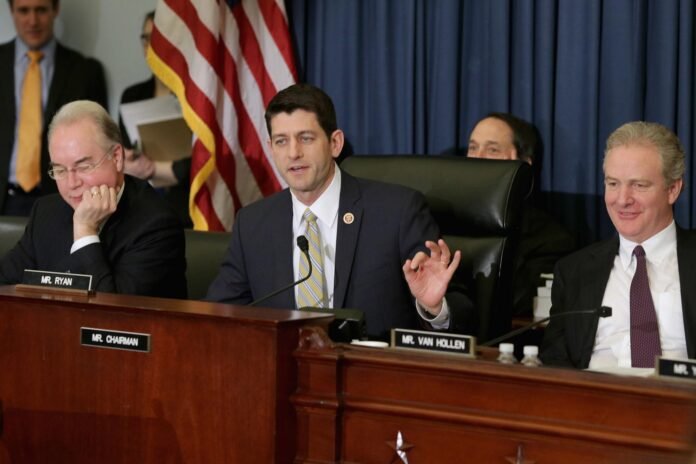
Budget committee members debated allocations for defense, homeland security, and domestic agencies.
-
Several Republican lawmakers emphasized the need to curb inflationary pressures through restrained federal outlays.
-
Democrats signaled resistance to proposed spending reductions in certain social and environmental programs.
The framework does not immediately enact funding cuts but establishes parameters for appropriations bills that will be introduced in the coming weeks.
Republican leaders described the proposal as a “responsible reset,” arguing that federal spending growth must be managed to prevent long-term debt expansion.
The debate comes amid renewed national focus on deficits and interest payments on federal debt, which have increased significantly in recent years.
Trump/GOP Response
President Trump has consistently advocated for disciplined federal budgeting paired with targeted investment in national defense and border security.
Administration officials expressed support for:
-
Stronger funding for border infrastructure and personnel.
-
Expanded defense modernization.
-
Reduced regulatory and administrative spending where possible.
-
Encouragement of private-sector growth to offset federal expenditures.
House GOP leadership framed the spending plan as consistent with Trump’s long-standing priorities of economic strength and national security.
Several Republican senators echoed support for fiscal discipline but signaled that negotiations with the Senate will require compromise on certain line items.
The administration has indicated it will work closely with House negotiators to align appropriations bills with executive priorities.
Who Is Involved
-
Donald Trump – Advocating fiscal restraint and security investment
-
House Republican Leadership – Drafting and advancing spending targets
-
House Budget Committee Members – Shaping allocation frameworks
-
Senate Lawmakers – Preparing for bicameral negotiations
-
Office of Management and Budget (OMB) – Reviewing alignment with executive proposals
-
Democratic Leadership – Opposing certain reductions and proposing alternatives
Why It Matters
Fiscal Policy Impact
Federal spending frameworks influence:
-
Defense readiness and military modernization
-
Border security infrastructure
-
Domestic program funding
-
Inflationary pressure and deficit trajectories
Supporters argue that spending discipline strengthens economic stability and investor confidence. Critics caution that reductions in certain domestic programs could affect local communities.
Political Implications
Budget debates are often defining political moments. For Republicans, advancing a framework aligned with Trump’s priorities reinforces party unity and fiscal messaging heading into election cycles.
The issue also provides a clear contrast between GOP calls for spending restraint and Democratic proposals for expanded federal investment.
Constitutional Considerations
Congress holds the constitutional power of the purse. The current debate highlights the interplay between legislative authority and executive policy goals, particularly when priorities align between the White House and House majority.
What’s Next
-
Appropriations subcommittees will begin drafting detailed spending bills.
-
Senate leaders are expected to introduce alternative spending proposals.
-
Negotiations between chambers will intensify ahead of funding deadlines.
-
The White House may issue formal statements of administration policy (SAPs) outlining support or concerns for specific provisions.
The coming weeks will determine whether bipartisan compromise is achievable or whether funding negotiations become another high-profile partisan standoff.