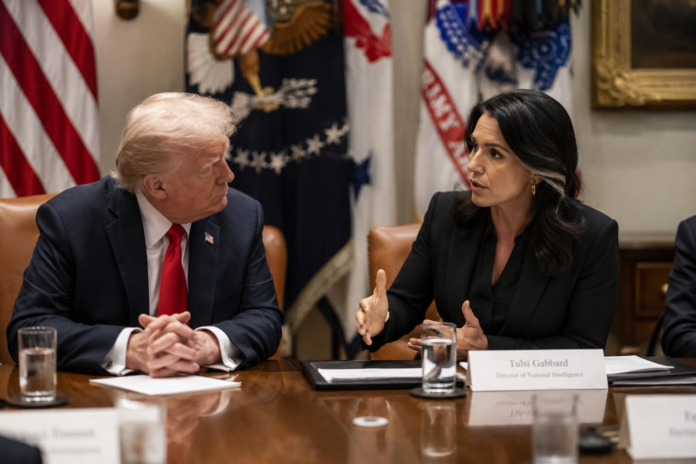
Investigative journalist Catherine Herridge has published new reporting alleging that a Central Intelligence Agency investigative unit closely monitored the internal workings of a Director of National Intelligence reform team, adding fresh detail to a months-old controversy over the relationship between the CIA and ousted intelligence chief Tulsi Gabbard’s office. The reporting, based on conversations with a senior member of Gabbard’s now-disbanded investigative unit, alleges intelligence officials operated with a mindset aimed at preserving a particular institutional worldview regardless of changing political leadership. The claims add to a growing body of allegations about internal resistance within the intelligence community to Trump administration reform efforts.
Story Highlights
- Herridge reported that a senior member of Gabbard’s Director’s Initiatives Group described a pattern of intelligence suppression tied to an institutional “globalist view”
- Earlier reporting alleged a CIA investigative unit tracked “every keystroke” on DIG team members’ government devices without clear justification
- The Director’s Initiatives Group investigated topics including the JFK assassination, COVID-19 origins, and the Crossfire Hurricane investigation before being disbanded
- Gabbard resigned as Director of National Intelligence in late June, citing her husband’s cancer diagnosis
What Happened
Investigative journalist Catherine Herridge published new reporting this week detailing extensive conversations with a senior member of former Director of National Intelligence Tulsi Gabbard‘s Director’s Initiatives Group, an internal investigative unit Gabbard created in April to examine what she described as politicization within the U.S. intelligence community. According to Herridge, she spent the past week speaking with the high-ranking official about the unit’s findings before its work was formally concluded following Gabbard’s departure from office.
The official described to Herridge what they characterized as a persistent institutional mindset within parts of the intelligence community, one the source termed a “globalist view” that officials allegedly worked to preserve regardless of which administration held power. According to Herridge’s reporting, the source pointed to specific examples they believed reflected this pattern, including the alleged downplaying or suppression of intelligence regarding threats from China, and what the source described as intelligence officials treating the Hunter Biden laptop story as Russian disinformation despite evidence suggesting otherwise. “There was this level of a bureaucracy, a kind of conspiracy that was making decisions about the kind of information that should be reaching policymakers and ultimately the commander in chief,” Herridge reported the source as saying.
The Director’s Initiatives Group, known internally as the DIG, had been tasked with investigating a wide range of high-profile and historically contentious matters, including the assassinations of John F. Kennedy, Robert F. Kennedy, and Martin Luther King Jr., the origins of the COVID-19 pandemic, the Crossfire Hurricane investigation into Trump campaign ties to Russia, alleged domestic surveillance conducted during the Biden administration, and so-called anomalous health incidents affecting government personnel. The unit’s work became a source of significant controversy even before its dissolution, with Democrats and some intelligence community insiders raising concerns that it could be used to weaken traditional spy agencies and consolidate greater direct presidential control over intelligence functions.
Herridge’s latest reporting builds on earlier claims from May, when she reported that a CIA investigative unit had sent emails to several members of the DIG team demanding they appear for questioning, without what Herridge described as clear justification given the unit’s typical mandate for conducting polygraphs and internal investigations. That earlier reporting alleged the CIA monitoring extended to tracking “every keystroke” on DIG team members’ government computers and devices, though Herridge noted that users of government devices generally have no expectation of privacy and typically see explicit log-on warnings to that effect. Separately, former CIA officer Pedro Israel Orta, appearing as a whistleblower in an interview with Tucker Carlson, stated of intelligence community resistance to the Trump administration, “They didn’t even wanna recognize him as the president.”
Why It Matters
The allegations, if substantiated, would represent a significant instance of internal intelligence community resistance to oversight efforts initiated by a Senate-confirmed director of national intelligence, raising fundamental questions about civilian and political control over intelligence agencies that operate with substantial independence and limited external scrutiny by design. For an administration that has made rooting out what it characterizes as politicized intelligence work a central priority, these claims provide further justification for continued restructuring efforts within the intelligence community.
For congressional oversight, the allegations of CIA monitoring of a director-authorized investigative team, if accurate, would raise serious questions about the appropriate boundaries of internal counterintelligence activities when directed at officials operating with explicit authorization from the director of national intelligence, the nominal head of the entire intelligence community apparatus.
For public trust in intelligence institutions, these competing narratives, alleged institutional resistance to reform on one hand, and concerns about politicization of legitimate intelligence functions on the other, reflect a deeper and unresolved tension about how much independence intelligence agencies should maintain from elected political leadership, a debate with implications extending well beyond any single administration.
For the future of intelligence reform efforts, Gabbard’s resignation, which she attributed to her husband’s rare bone cancer diagnosis, leaves unresolved questions about whether her successor will continue pursuing the kind of internal investigations the DIG conducted, or whether the unit’s disbandment effectively closes the book on these particular lines of inquiry regardless of their underlying merit.
Economic and Global Context
The controversy surrounding intelligence community reform carries budgetary implications extending well beyond the specific allegations at issue. Under Gabbard’s leadership, the Office of the Director of National Intelligence announced plans in August to reduce its workforce and trim more than 700 million dollars from its annual budget, reflecting a broader push to reduce spending across intelligence agencies that critics argued could compromise operational capacity even as supporters framed the cuts as eliminating redundant or unnecessary functions.
Globally, the credibility of American intelligence assessments carries significant weight in shaping allied nations’ confidence in shared intelligence products and cooperative security arrangements. Allegations of internal politicization or institutional resistance to civilian oversight, regardless of their ultimate veracity, have the potential to complicate these international intelligence-sharing relationships if foreign partners begin questioning the reliability or independence of American intelligence products.
The broader context also includes Gabbard’s declassification of documents related to Russian interference in the 2016 election and the release of additional information regarding COVID-19’s origins, actions that drew both praise from supporters who viewed them as necessary transparency measures and criticism from those who argued they selectively challenged long-settled intelligence community judgments for political purposes.
Implications
In the near term, the allegations detailed in Herridge’s reporting are likely to prompt renewed calls from congressional Republicans for formal investigations into the alleged CIA surveillance of the DIG team, potentially including hearings before relevant congressional intelligence oversight committees examining whether such monitoring exceeded appropriate legal and constitutional bounds.
For the intelligence community’s institutional culture, the public airing of these internal tensions, regardless of how they are ultimately resolved, is likely to affect morale and trust between career intelligence officials and politically appointed leadership for the foreseeable future, complicating efforts by any future director of national intelligence to implement significant reforms.
For Gabbard’s successor at ODNI, whoever ultimately fills that role will inherit both the unresolved questions raised by the DIG’s investigations and the practical challenge of rebuilding working relationships with intelligence agencies that some officials allege actively resisted oversight efforts during her tenure.
For the broader public debate over intelligence community accountability, these competing claims will likely continue generating significant media attention and political controversy, particularly as additional documents and testimony potentially emerge through ongoing congressional inquiries or further investigative reporting on the matter.
Sources
The Permanent Government: Insider Reveals How Intel Chiefs Played Gatekeeper With the Truth