Story Highlights
- Trump dismissed Iran’s denial, saying Tehran is “wrong” and that inspections were agreed to privately during the Switzerland talks
- Iran’s foreign ministry said there are “no plans” for IAEA inspectors to visit nuclear sites damaged by U.S. and Israeli strikes
- Vice President Vance had announced Monday that inspectors could arrive “as soon as this week” — a claim Iran also did not confirm
What Happened
Vice President JD Vance set off the diplomatic dispute Monday after returning from Switzerland, declaring that Iran had agreed to allow International Atomic Energy Agency inspectors to visit nuclear facilities struck by U.S. and Israeli forces during the conflict. Vance described it as “a major milestone” and predicted inspectors could arrive within days, citing the first round of direct U.S.-Iran talks as having laid “a very good foundation for a successful final deal.” He called the inspection commitment what Americans should be “most excited about.”
Iran responded immediately. Foreign ministry spokesman Esmaeil Baghaei told reporters in Tehran on Tuesday that no meeting had been scheduled with the IAEA director general and that there were “no plans” for inspectors to access facilities damaged in the strikes. His statement directly rejected the most significant concrete achievement the U.S. side had claimed from the Switzerland session, creating a rare and visible public rift between the two negotiating parties at the outset of a delicate diplomatic process.
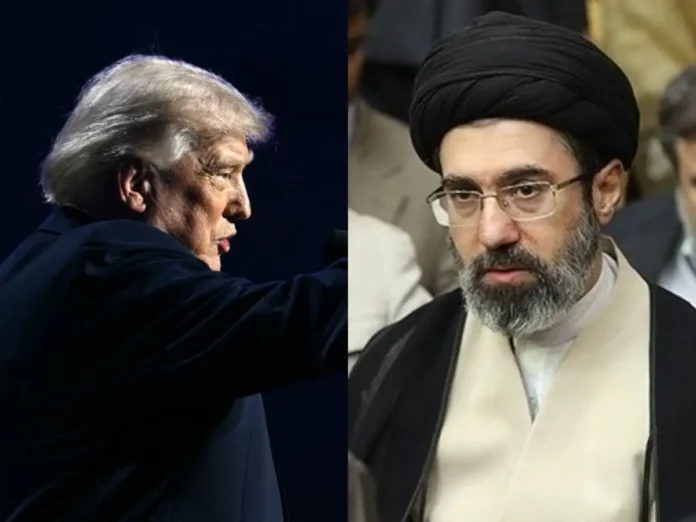
Trump pushed back during remarks to reporters in Pennsylvania on Tuesday. “They’re wrong, they know they’re wrong,” the president said. “They told us inside, and we have it down, 100% inspections.” When asked for a timeline, Trump said only, “At the appropriate time. There is no rush.” His confident tone offered no documentary corroboration but signaled that the administration regards the inspection commitment as a non-negotiable prerequisite for further negotiations.
Secretary of State Marco Rubio was meanwhile traveling to the UAE, Kuwait, and Bahrain to brief Gulf allies on the state of negotiations. Rubio confirmed that Iran would not be permitted under any final agreement to charge vessels transiting the Strait of Hormuz, calling such a move a violation of international law. He also emphasized that a comprehensive deal must address Iranian proxy forces across the region, particularly in Lebanon, where renewed Israeli strikes threatened the broader ceasefire framework.
The IAEA has operated in and out of Iran since the conflict began but has not been granted access to the bombed enrichment sites — most critically, the facility at Isfahan where Iran’s highly enriched uranium stockpile is believed to be stored deep underground. Whether Iran might allow inspections of less sensitive nuclear installations as a partial concession to break the impasse remains an open and unresolved question.
Why It Matters
Nuclear inspections are not a procedural formality — they are the foundational verification mechanism for any agreement aimed at preventing Iran from developing a nuclear weapon. Without credible IAEA access to the most sensitive sites, the entire diplomatic framework rests on unverifiable assertions. History offers no encouraging precedent for nuclear agreements with Tehran that lacked robust, on-the-ground verification from the outset, and the current dispute mirrors patterns seen during prior rounds of failed Iranian nuclear diplomacy.
The contradiction between U.S. and Iranian accounts is particularly damaging because it surfaces at the very opening of the 60-day negotiating clock. If both governments cannot agree on what was already settled, reaching consensus on genuinely unresolved issues — including the permanent disposition of Iran’s enriched uranium stockpile, the dismantling of its proxy networks, and the long-term future of its civilian nuclear program — becomes substantially harder before technical talks have even formally begun.
The dispute also raises pointed accountability questions domestically. Trump and Vance publicly announced a concrete Iranian commitment. If IAEA inspectors do not gain access to Iranian nuclear sites in the near term, the administration will face sustained congressional and public scrutiny over whether it granted significant economic concessions — including the sweeping 60-day oil sanctions waiver — without first securing verified Iranian obligations in return. Members of both parties have already requested formal briefings on the memorandum’s terms.
Nuclear policy experts have separately flagged a structural concern embedded in the memorandum itself. The document calls for Iran to “downblend” its enriched uranium domestically under IAEA supervision rather than removing the material from the country. Critics argue this arrangement leaves Iran in effective control of the world’s most dangerous non-nuclear stockpile, with oversight that depends entirely on Iranian goodwill and cooperation.
Economic and Global Context
The inspection dispute unfolds against considerable economic stakes. The U.S. Treasury last week issued General License X, a sweeping 60-day sanctions waiver authorizing the production, delivery, and sale of Iranian crude oil and petrochemical products — including to U.S. refineries — for the first time in more than four decades. The measure reversed a cornerstone of American sanctions policy, lifting restrictions that had forced Iran to sell oil at steep discounts to buyers willing to risk secondary sanctions exposure.
Monday’s Strait of Hormuz saw 35 commercial vessel transits — a post-war record per maritime tracking firm Kpler, though still roughly one-third of pre-war levels. An estimated 67 million barrels of Iranian crude stranded in the Gulf could quickly re-enter global markets once transit operations normalize. Analysts project China’s state and independent refineries will aggressively increase Iranian oil purchases during the 60-day window, handing Tehran a significant financial windfall at the very moment it is being asked to make nuclear concessions.
Trump has publicly promised Americans that oil and gasoline prices will fall significantly once the Strait of Hormuz fully reopens. Energy analysts caution that any impact on pump prices may take several months to materialize and will depend heavily on OPEC production decisions and China’s pace of purchasing. The financial benefits to Iran from the sanctions waiver, meanwhile, begin accruing immediately — regardless of whether nuclear inspection commitments are fulfilled.
Gulf allies including Saudi Arabia, the UAE, Kuwait, and Bahrain remain deeply cautious. Rubio’s tour of the Persian Gulf signals U.S. awareness that regional partners harbor serious concerns about an agreement that may financially rehabilitate Iran without verifiably constraining its nuclear capabilities or dismantling its network of armed proxies operating across Lebanon, Iraq, and Yemen.
Implications
The inspection dispute gives the Trump administration a short-term decision point with clear political stakes. If Iran fails to provide IAEA access in the coming weeks, Trump can credibly argue that Tehran is breaching its commitments — creating domestic justification for resumed economic pressure or a harder negotiating posture. The president stated Tuesday he would not permit negotiations to continue without firm inspection access, language that functions as a publicly declared red line.
For Iran’s government, the public denial serves a domestic political function. Hard-line factions, particularly elements aligned with the Islamic Revolutionary Guard Corps, have consistently opposed arrangements granting foreign inspectors access to what they regard as sovereign military infrastructure. Baghaei’s statement may be intended to manage internal opposition while preserving diplomatic space to grant limited inspection access later without appearing to have capitulated under American pressure.
The credibility of the broader 60-day framework now rests significantly on whether IAEA inspectors actually reach Iranian nuclear facilities. Failure to achieve that basic milestone would substantially erode international confidence in the peace process and validate skeptics — in Israel, the Gulf states, Europe, and the U.S. Congress — who have privately warned that the memorandum of understanding grants Iran too much economic relief while leaving the hardest questions of verification and enforcement unresolved for later negotiations.
Sources