Story Highlights
- The G7 summit in Évian-les-Bains runs June 15–17, with Iran and Ukraine dominating the agenda
- Trump announced a U.S.-Iran ceasefire deal on June 14, including the reopening of the Strait of Hormuz
- European leaders have criticized Trump for launching war with Iran without prior consultation
What Happened
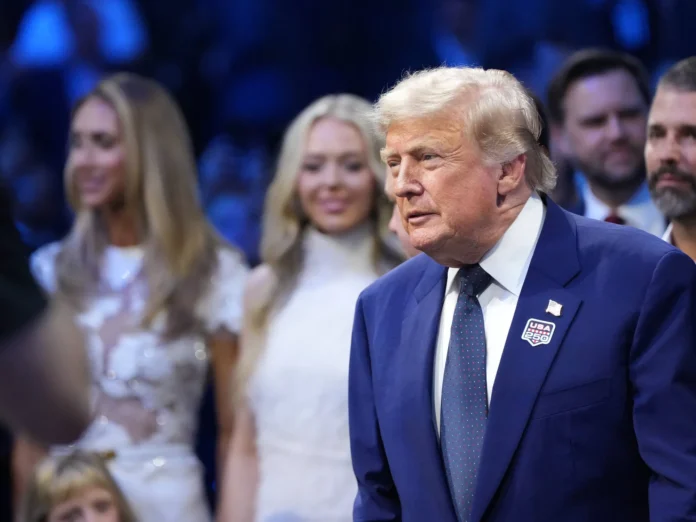
President Donald Trump arrived in France on Monday to meet with top global powers at the annual G7 summit. Held in Évian-les-Bains, France, from June 15 to 17, this is the president’s fifth time attending the conference in person and comes amid heightened global turmoil, with the conflicts in Iran and Ukraine expected to loom large over the summit’s economic and geopolitical agenda.
This is the first time the G7 leaders are meeting in-person since the start of the U.S.-Iran war, which has now reached its 15th week and continues to impact the global economy, with increases in fossil fuel and oil and gas prices.
Trump spent two days at the Group of Seven meeting of leading industrialized nations in the resort town, where both the Iran war and the Russia-Ukraine conflict figure to loom large. After launching an attack against Iran on February 28, Trump complained that European allies hadn’t done enough to advance American war aims. Mocking British Prime Minister Keir Starmer, Trump said in the spring: “This is not Winston Churchill that we’re dealing with.”
French President Emmanuel Macron, the summit host, congratulated Trump at the start of Monday’s meeting for finding a way to an agreement with Iran, saying, “It’s a very important step for peace of the whole world.” However, the broader diplomatic atmosphere remained tense, with European leaders still smarting over being excluded from the decision to go to war.
Trump flew to Évian straight from an Ultimate Fighting Championship cage match that he staged on the White House grounds, an event he had excitedly anticipated. Trump said Sunday that he had reached a breakthrough in the Iran war, posting on his social media site that a “deal” with Iran was done and the crucial Strait of Hormuz shipping lane would reopen without Iran charging a toll for passage.
Why It Matters
The G7 Summit arrives at one of the most consequential moments in American foreign policy in decades. The United States is simultaneously managing the aftermath of a military conflict with Iran, a grinding war in Ukraine now in its fourth-and-a-half year, and a fractured relationship with its closest democratic allies. The summit represents a critical opportunity — and also a potential flashpoint — for Trump to either rebuild those alliances or further widen existing rifts.
For ordinary Americans, the outcomes of this summit carry direct consequences. The Iran war has already driven up energy prices globally, with oil markets remaining volatile throughout the 15-week conflict. A durable ceasefire and the reopening of the Strait of Hormuz — through which roughly 20 percent of the world’s oil supply flows — could offer meaningful relief at the gas pump and ease inflationary pressures that have been building since hostilities began.
The tensions between Trump and European leaders also raise larger questions about the future of the Western alliance structure. For decades, NATO and the G7 have operated on the assumption of prior consultation before major military action. Trump’s unilateral decision to strike Iran without briefing allies in advance represents a fundamental break from that norm, one that European capitals are clearly unwilling to simply absorb and move past.
Ukraine also looms large. Leaders are looking to secure lasting peace in Ukraine, with the war escalating, especially with Ukraine’s expansion of long-range strikes into Russian territory. The United States and Europe remain aligned on broad support for Kyiv, but differ significantly on the pace, scope, and terms of any peace settlement.
Economic and Global Context
The economic backdrop to the Évian summit is one of significant strain. The U.S.-Iran war has continued to impact the global economy, with increases in fossil fuel and oil and gas prices. Energy markets have been whipsawed throughout the conflict, with prices spiking sharply during the most intense phases of military operations and easing slightly on ceasefire announcements.
The Strait of Hormuz is among the most economically critical chokepoints on the planet. Approximately 20 percent of global oil and liquefied natural gas trade moves through the narrow passage between Iran and Oman. Its closure or restriction during the war imposed cascading costs across the global economy, from higher shipping insurance rates to fuel surcharges that worked their way through supply chains and into consumer prices worldwide.
The G7 economies — the United States, Canada, France, Germany, Italy, Japan, and the United Kingdom — collectively represent roughly half of global GDP. Decisions made at Évian on energy security, trade policy, and support for Ukraine will therefore reverberate well beyond the meeting rooms of the Alpine resort town. Currency markets, bond yields, and commodity prices have all been sensitive to each day’s developments.
France’s hosting of the summit also carries domestic political weight. This will mark the last summit for French President Emmanuel Macron, who faces a significant legacy question over whether he can achieve Western unity at a moment of maximum divergence.
Implications
The most immediate implication of the Évian summit will be whether the G7 nations can reach a unified statement on the Iran ceasefire and what conditions they collectively endorse for any permanent peace agreement. The terms of any deal — particularly whether Iran retains any nuclear enrichment capacity — will define regional security architecture for a generation.
For the Trump administration, the summit is both a validation and a test. Having announced the ceasefire deal just one day before arriving in France, Trump enters the meeting from a position of self-proclaimed strength. But translating that into meaningful allied consensus on post-war Iran policy, nuclear non-proliferation enforcement, and regional reconstruction will require the kind of sustained diplomatic engagement his administration has at times resisted.
European governments are watching closely to see whether Trump’s approach to the Iran deal leaves room for multilateral involvement or whether, as with the war itself, Washington intends to manage the aftermath unilaterally. For NATO allies in particular, the precedent set here will inform how they assess American reliability in future security contingencies.
Voters in all G7 nations will ultimately render their own verdict. In the United States, public opinion on the Iran war has been sharply divided. A successful ceasefire that stabilizes oil prices and avoids a prolonged military commitment could reshape that political landscape heading into midterm election cycles.
Sources
“Trump arrives in France for 1st G7 summit since US-Iran war began”