Story Highlights
- President Trump personally gave acting Attorney General Todd Blanche a stack of news articles topped with a sticky note reading “Treason” in Sharpie, after which the DOJ issued multiple grand jury subpoenas to news organizations including The Wall Street Journal.
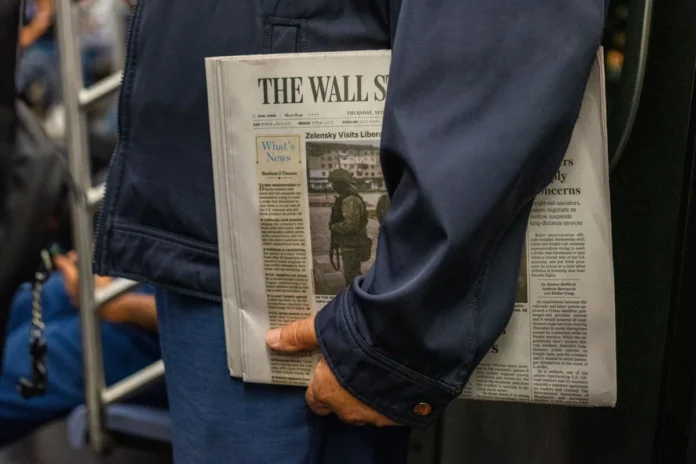
- The Wall Street Journal’s subpoenas, dated March 4, 2026, target reporter records tied to a February 23 story revealing that Joint Chiefs Chairman Gen. Dan Caine and other Pentagon officials had warned Trump about the risks of attacking Iran — published five days before the war began.
- Dow Jones, the Journal’s publisher, called the subpoenas “an attack on constitutionally protected newsgathering” and vowed to “vigorously oppose this effort to stifle and intimidate essential reporting.”
What Happened
President Donald Trump, frustrated by a series of news reports that he believed were drawing on leaked classified information about his conduct of the Iran war, took a step that administration officials described to CNN as deeply personal and direct. He assembled a stack of printed news articles he found particularly objectionable, affixed a sticky note to the top bearing the word “Treason” written in Sharpie, and handed the bundle to Acting Attorney General Todd Blanche — his former personal defense attorney — during a White House meeting. Within a short period, the Department of Justice’s National Security Division issued multiple grand jury subpoenas to news organizations, including The Wall Street Journal.
The Journal revealed on May 11, 2026 that it had received those subpoenas, dated March 4, relating to a story published February 23 — five days before the United States and Israel launched military strikes against Iran. That article reported that General Dan Caine, Chairman of the Joint Chiefs of Staff, along with other senior Pentagon officials, had presented President Trump with warnings about the strategic risks and potential for an extended military campaign if the United States attacked Iran. Trump launched the strikes regardless. The story — reporting on what the nation’s senior military officials told the president before he took the country to war — is the kind of accountability journalism that American press freedom traditions have long protected as essential to democratic governance.
Blanche, after receiving Trump’s packet, publicly committed to the subpoena strategy. “Any witness, whether a reporter or otherwise, who has information about these criminals should not be surprised if they receive a subpoena about the illegal leaking of classified material,” he wrote on X. He later stated at a press conference that the Trump administration had prioritized “prosecuting leakers who share our nation’s secrets with reporters, in turn risking our national security and the lives of our soldiers.” The framing casts the reporting as a national security threat — a characterization that journalists and legal experts sharply dispute.
The Journal is not alone. Multiple other news organizations received subpoenas in connection with Iran war reporting, though some chose not to publicly confirm their receipt. The sweep of the subpoena campaign appears designed not merely to identify specific leakers in isolated cases, but to broadly chill reporting by making journalists and their sources understand that their communications are subject to federal grand jury process. In April, Trump had said publicly that he would work to imprison journalists involved in reporting on a downed U.S. fighter jet in Iran. In March, he had floated charges of “treason” against reporters he accused of circulating “false information” about the war.
Dow Jones chief communications officer Ashok Sinha responded in a formal statement: “The government’s subpoenas to The Wall Street Journal and our reporters represent an attack on constitutionally protected newsgathering. We will vigorously oppose this effort to stifle and intimidate essential reporting.” A federal judge separately ruled, one week before the Journal’s subpoenas were revealed, that the DOJ could not search the devices of a Washington Post reporter, finding protection under the Privacy Protection Act of 1980.
Why It Matters
The constitutional stakes here are substantial. The First Amendment protects the freedom of the press not merely as an abstract principle but as a structural element of democratic self-governance. The news that senior military officials warned the president about the risks of attacking Iran before he launched the war is precisely the kind of information that Americans need to evaluate their government’s decisions — and that the executive branch has a powerful incentive to suppress. When the DOJ is deployed to expose confidential sources and obtain reporters’ records, the immediate effect is not just legal pressure on individual journalists. It is a message to every current and potential source within the government: speaking to the press, even about matters of profound public importance, will be treated as a federal crime.
The subpoenas also arrive in the context of what legal analysts describe as a broader pattern of using DOJ resources to serve the president’s personal and political interests — a pattern that includes the Comey prosecution, settlements rewarding Trump allies, and repeated targeting of journalists and critics. Blanche’s role is particularly significant: as Trump’s former personal attorney in criminal cases, he arrived at the DOJ with a pre-existing personal and professional loyalty to the president that raises structural questions about the independence of any investigation he oversees.
The use of a sticky note reading “Treason” as the effective initiation of a federal grand jury investigation is remarkable in both form and precedent. It suggests that the subpoenas were not produced by an independent institutional assessment of criminal activity but by a direct presidential directive routed through a compliant attorney general — precisely the kind of executive overreach that Justice Department independence norms are designed to prevent.
Economic and Global Context
Press freedom is not merely a domestic governance issue — it is tracked by international organizations and allied governments as a measure of democratic health. Reporters Without Borders’ annual press freedom index has consistently ranked the United States below other Western democracies, and the subpoena campaign targeting Iran war journalism is expected to further damage that standing in the 2026 rankings. Allied nations that share classified intelligence with the United States do so within a framework of trust that includes confidence in American institutional stability. When the president of the United States personally directs his attorney general to subpoena reporters who published warnings from the Chairman of the Joint Chiefs, that framework is tested in ways that affect intelligence-sharing relationships.
The Iran war reporting at the center of the dispute is also economically consequential. The Strait of Hormuz disruption has driven gasoline prices above $4.50 per gallon and is costing American consumers tens of billions of dollars. Accurate, independent reporting on how the war began, what military leaders advised, and how decisions were made serves the legitimate public interest in accountability for policy decisions with enormous economic consequences.
Implications
For the news organizations involved, the subpoenas represent a legal fight that will unfold on multiple fronts. The Privacy Protection Act of 1980, which a federal judge recently upheld in the Washington Post reporter case, provides significant statutory protection against government seizure of journalists’ work product. Shield law protections, available in many federal circuits, offer additional defense. The organizations have signaled they will fight the subpoenas aggressively, and the cases are likely to produce important appellate rulings on press freedom in the national security context.
For whistleblowers and government sources, the subpoena campaign has an immediate chilling effect regardless of its legal outcome. Sources who might otherwise inform journalists about policy failures, military miscalculations, or executive branch misconduct now face a significantly elevated risk that their communications will be exposed — and that speaking truth to power could result in federal prosecution.
For Congress, the episode presents an oversight challenge and a political test. Democratic members of the House and Senate Judiciary Committees have condemned the subpoenas as an attack on press freedom and called for hearings. Republican members have been largely silent. How Congress responds — or fails to respond — to a president who labels journalism “Treason” and directs his attorney general accordingly will be a defining measure of institutional resilience in the months ahead.
Sources
“Trump pushed DOJ to subpoena reporters over alleged Iran war leaks, sources say”