Story Highlights
- Martina McBride, Bret Michaels, The Commodores, Morris Day and the Time, and Young MC all withdrew from the Great American State Fair concert series, citing concerns the event was political in nature
- Trump called the departing performers “Third Rate” on Truth Social and suggested canceling the concerts entirely, replacing them with “the Greatest Rally, EVER!”
- Freedom 250, the White House-backed organization running the fair, confirmed Trump will personally headline the opening ceremony on June 24
What Happened
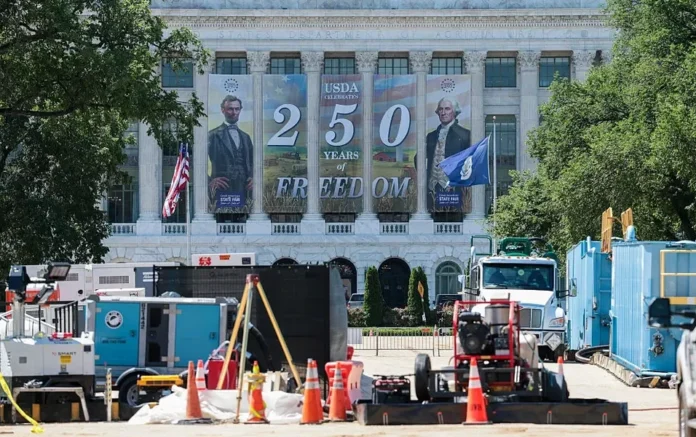
Freedom 250, a public-private partnership created by executive order and led by a former Trump State Department appointee, announced a lineup of performers for the Great American State Fair concert series in late May — a 16-day exposition on the National Mall billed as nonpartisan and designed to celebrate America’s 250th birthday. The announcement triggered an immediate and cascading wave of withdrawals.
Martina McBride was among the first to pull out, posting on Instagram that she had been “presented with an opportunity to perform at a nonpartisan event but that turned out to be misleading.” She wrote that she thought she was participating in “a bigger version of so many state fairs I have performed at over the years, celebrating community.” McBride said she hoped to perform in Washington in the future “at an event that is not so politically charged.” Bret Michaels of the rock band Poison, The Commodores, Morris Day and the Time, and Young MC all followed, each announcing they would not participate, with most citing concerns about the event’s perceived political associations with the Trump brand.
The remaining roster of willing performers skewed toward legacy acts with more direct political alignment: Vanilla Ice said he was “honored” to appear and pushed back on criticism, stating “this is not a political platform” but a celebration of America’s birthday. Flo Rida and Fab Morvan of Milli Vanilli also remained on the bill. Freedom Williams of C+C Music Factory posted a video saying he does not support Trump but would still perform, framing it as a nonpartisan act.
President Donald Trump responded to the performer withdrawals with escalating posts on Truth Social. He accused departing artists of getting “the yips,” called them “highly paid, Third Rate ‘Artists'” with “boring” music, and suggested he could replace them as the featured attraction himself — describing himself as the person “some say is the Greatest President in History.” By Saturday evening, his posts had shifted from mocking to proposing cancellation: “We should have a giant MAKE AMERICA GREAT AGAIN RALLY, for 250, instead of having overpriced singers, who nobody wants to hear, whose music is boring, and yet who do nothing but complain.” Freedom 250 subsequently confirmed Trump would open the fair personally on June 24.
Why It Matters
The Great American State Fair was conceived as a signature moment of Trump’s presidency — a nationally visible event timed to coincide with America’s semiquincentennial. The broad-based artist exodus reveals a cultural and commercial reality that the administration has consistently encountered: many artists and entertainers decline to associate their brands with politically charged events, particularly those that could alienate significant portions of their audience.
For the administration’s accountability record, the episode raises questions about how Freedom 250 recruited performers and whether the event’s political character was adequately disclosed. McBride’s account suggests that at least some performers were led to believe the event was nonpartisan when the organizers understood its association with a White House initiative. That gap between marketing and reality is a substantive governance question about how a federally backed event operates.
The episode also underscores a broader pattern in Trump’s public communications: when facing setbacks, the response tends toward personal attacks on those who declined to cooperate rather than toward institutional reflection or course correction. Replacing a public cultural celebration with a campaign-style MAGA rally would transform a nationally intended milestone event into a partisan one.
Economic and Global Context
Freedom 250 secured substantial corporate backing for the broader 250th anniversary celebrations, which include a FIFA World Cup fan zone, a UFC fight at the White House, and the Patriot Games fitness competition. The National Mall exposition itself is projected to draw large crowds and generate significant economic activity for Washington’s hospitality and tourism sectors during its 16-day run.
The performer withdrawals create logistical and financial complications. Concert series contracts typically include performance fees, production costs, and advance marketing expenditures that may not be recoverable when artists withdraw. The reputational spillover — with the event now widely characterized in media coverage as a MAGA rally rather than a nonpartisan national celebration — could affect attendance projections and future sponsorship.
Implications
The Trump administration’s pivot to having the president personally headline the opening ceremony reframes the event in ways that may deepen the political divisions surrounding it. A presidential rally at a national birthday celebration collapses the distinction between the office and the officeholder in ways that will generate ongoing controversy and legal questions about the appropriate use of publicly funded Mall space and taxpayer-backed event infrastructure.
Performers who declined the invitation are unlikely to face the kind of organized boycotts or coordinated pressure campaigns that might have followed similar decisions in prior administrations. But the episode serves as a case study in the cultural polarization of American public life — and in how federal event planning under this administration consistently generates the political controversies it claims to be trying to avoid.
Sources
“Trump floats MAGA rally instead of concert after musicians drop out of Freedom 250”