Story Highlights
- Dozens of families previously separated under Trump’s first-term zero-tolerance policy were re-separated during the second administration, the AP found
- A court settlement banning most family separations until December 2031 was violated, according to the investigation
- Some parents were detained in ICE facilities or wrongfully deported, leaving children in the U.S. without parents
What Happened
The Associated Press published a major investigative report earlier this week, which was highlighted Wednesday as part of ongoing coverage of the Trump administration’s immigration enforcement practices, documenting that the government had re-separated dozens of immigrant children from families who had already survived separation during the first Trump term.
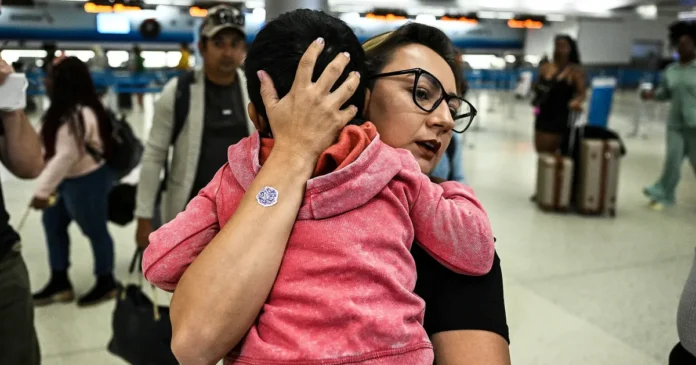
Among the cases documented was that of Ederson Galicia Alva, an 11-year-old Guatemalan child who was first separated from his mother, Mirsy Maricela Alva López, at the age of three in 2018 under Trump’s original zero-tolerance border policy. He spent four and a half months in a government shelter in Arizona before lawyers intervened and secured their reunion. Then, in June 2025 — approximately five months into Trump’s second administration — the family was separated again at Miami’s airport, where federal agents detained his mother during questioning.
The re-separation occurred despite a federal court settlement approved under the Biden administration that granted Ederson’s family and others like them legal status in the United States, with pathways to residency and asylum and explicit protections against future separation. That settlement was designed to prevent the government from ever again using family separation as a deterrent to immigration. The AP found the Trump administration had violated those protections across dozens of similar cases.
Under Trump’s second term, the AP found that some parents were detained in ICE facilities while their children remained in the United States. Others were wrongfully deported to their home countries, forcing their U.S.-resident children to follow them into poverty-stricken circumstances. An estimated 500 babies and toddlers have been jailed by ICE since Trump returned to office, according to additional reporting cited alongside the AP investigation.
A federal judge ultimately ruled that the government had acted illegally in Ederson’s case, and the family was allowed to return to Florida following an 11-month forced stay in Guatemala. The judge’s order and the scale of the AP’s findings have intensified legal challenges to the administration’s enforcement posture from immigrant rights organizations.
Why It Matters
The AP’s findings document a direct violation of a court-approved settlement — not an executive order, not a policy preference, but a binding legal agreement that the U.S. government entered into under judicial supervision. That the Trump administration proceeded with re-separations anyway places it in direct contempt of the judicial framework that American courts established in response to the harms of the first-term zero-tolerance policy.
The legal significance cannot be overstated. The settlement that was violated was not an informal agreement but a formal class action resolution that represented tens of thousands of families. If the government can violate such settlements when doing so serves its enforcement priorities, the enforceability of all court-supervised agreements involving immigration is placed in question. Judges across the country who have entered similar orders are now confronting the possibility that the executive branch may treat those orders as advisory rather than binding.
The human cost is no less significant. Children who were separated at the age of two or three and spent months in government facilities, who received years of mental health treatment to address trauma from that experience, have now endured that trauma a second time. Medical and psychological literature on childhood trauma is unambiguous: repeated severe separations cause measurable, long-term neurological and developmental harm.
For the broader American public, the AP investigation raises fundamental questions about the rule of law. The administration has presented its immigration enforcement campaign as lawful and necessary, but the documented violation of a court settlement covering families who had already suffered government-imposed trauma — and who had legal protection — is difficult to reconcile with any good-faith interpretation of American legal values.
Economic and Global Context
Trump’s second-term immigration enforcement apparatus has been explicitly designed to maximize the scale and speed of deportations, with the administration targeting more than one million removals per year. That pace creates enormous pressure throughout the enforcement pipeline — from detention capacity to legal processing to international diplomatic negotiations over repatriation — and the pressure appears to have contributed to violations of established legal boundaries.
The Brookings Institution has documented that the parents of tens of thousands of American-born or legally resident children have been detained under the second-term enforcement surge. The economic consequences of mass parental detention extend to the children left behind, who may enter foster care, government support systems, or suffer educational disruption — all of which generate downstream public costs that dwarf the immediate savings from reduced immigration levels.
Guatemala and other Central American nations receiving deported families have raised diplomatic objections to the conditions of forced returns, including cases where individuals covered by U.S. court settlements were nonetheless removed. Those diplomatic tensions complicate the bilateral cooperation arrangements that the administration relies upon for sustained deportation operations.
The reputational cost to the United States in international human rights forums is also measurable. Several allied governments and United Nations bodies have cited the re-separation findings in formal statements expressing concern about U.S. compliance with international child welfare standards.
Implications
The most direct implication of the AP’s findings is a wave of federal litigation. Attorneys for the affected families are already in court seeking enforcement of the original settlement, and the federal judge’s ruling in Ederson’s case suggests the judiciary is prepared to hold the government accountable. The volume of documented violations may support a broader motion to hold the administration in contempt of the original settlement agreement.
For policymakers, the investigation will intensify Democratic calls for congressional oversight hearings focused specifically on the compliance status of court-supervised immigration settlements. Whether Republican committee chairs will authorize such hearings is uncertain, but individual members from districts with large immigrant populations may face constituent pressure to act.
For the administration, the findings create a legal and political liability that is difficult to manage. The government cannot credibly claim the re-separations were inadvertent when the pattern of violations is documented across dozens of cases. Any defense will require either justifying the violations on legal grounds — a position courts have already begun rejecting — or acknowledging systemic failure within the enforcement apparatus.
Sources