Story Highlights
Federal regulators are investigating whether Santos placed insider bets on his own attendance at the 2026 State of the Union
The Commodity Futures Trading Commission has opened a formal probe into the prediction market platform Kalshi
Santos served less than four months of a seven-year sentence before Trump commuted his sentence in 2025
What Happened
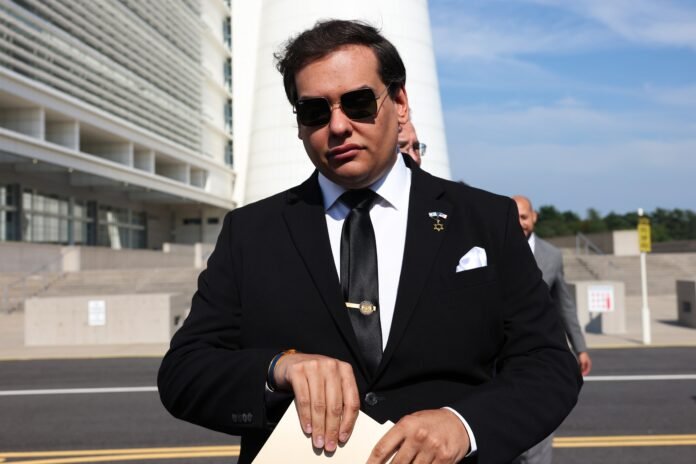
George Santos, the former Republican congressman from New York who was expelled from the House of Representatives in 2023 and later pleaded guilty to federal fraud and identity theft charges, is now facing a federal investigation into allegations that he engaged in insider trading on a regulated prediction market. The Commodity Futures Trading Commission has opened a probe into trades Santos allegedly placed on Kalshi, an online platform that allows users to wager on real-world political and social outcomes.
The investigation centers on bets tied to whether Santos would attend President Trump’s State of the Union address on February 24, 2026. According to multiple sources, Santos publicly stated on social media the day before the speech that he would be present in the chamber’s gallery, a claim that drove betting activity on Kalshi regarding his attendance. Santos ultimately did not attend, citing a delayed flight, and sources say his trading activity around that outcome raised red flags at Kalshi, which subsequently froze his account and referred the matter to both the CFTC and the Justice Department.
Santos was originally sentenced to seven years in prison in 2023 on charges including wire fraud, money laundering, and aggravated identity theft related to his 2022 congressional campaign. He served less than four months of that sentence before President Trump commuted it in 2025, a decision that drew criticism from some quarters given the scope of Santos’s original financial crimes. Sources have indicated that while the CFTC’s investigation into Santos’s Kalshi trades is active, the Department of Justice has not opened its own formal criminal investigation into the matter, though that could change depending on the regulator’s findings.
Santos has publicly denied any wrongdoing, calling the allegations “preposterous” in a statement posted to social media and saying he intends to cooperate with any agency that contacts him regarding the matter. The case arrives amid a broader wave of federal scrutiny of prediction markets, which have grown rapidly in popularity and drawn at least two other recent criminal cases involving alleged insider trading on similar platforms, including charges against a U.S. Army Special Forces soldier and a Google software engineer.
Why It Matters
The Santos case illustrates a recurring concern raised by critics of Trump’s use of the clemency power: that commutations and pardons granted without the conventional Justice Department review process can return individuals to public life, and potential opportunities for further misconduct, well before they might otherwise be released. Santos served only a small fraction of his original sentence before receiving relief directly from the president.
For regulators overseeing the rapidly growing prediction market industry, the case represents an important test of enforcement capability in a financial sector that has expanded dramatically over the past two years with limited established precedent for handling insider trading allegations. The Commodity Futures Trading Commission has signaled that policing these markets is now a top enforcement priority, citing what officials describe as a mistaken public perception that insider trading is permissible on such platforms.
The episode also raises broader accountability questions about the pattern of clemency recipients facing subsequent legal scrukrutiny. While Santos’s alleged conduct in this case is unrelated to his original congressional fraud charges, the case adds to a documented pattern of individuals who received clemency from the current administration subsequently facing new allegations of misconduct, a pattern that has drawn scrutiny from watchdog organizations tracking outcomes among pardon and commutation recipients.
For members of Congress, particularly those who served alongside Santos before his expulsion, the case is likely to reinforce calls for greater transparency and more rigorous standards governing how clemency decisions are made and reviewed before being granted.
Economic and Global Context
Prediction markets such as Kalshi and Polymarket have grown explosively over the past two years, attracting both retail participants and significant trading volume on political, economic, and cultural outcomes. That growth has outpaced the development of clear regulatory frameworks specifically tailored to address insider trading risks unique to markets where outcomes can be influenced or known in advance by the very individuals being wagered upon.
The CFTC’s recent enforcement actions, including charges against individuals using nonpublic information to bet on outcomes ranging from geopolitical events to corporate search trends, suggest regulators are treating these platforms increasingly like traditional securities markets, where insider trading carries serious criminal and civil penalties under the Commodity Exchange Act.
The growth of these platforms has also drawn scrutiny from lawmakers concerned about the broader implications of allowing individuals to profit from wagers on outcomes they themselves can directly influence, a concern that extends well beyond the Santos case to other public figures whose decisions or statements could similarly move betting markets.
Implications
For Santos, the outcome of the CFTC investigation will determine whether he faces civil penalties, a referral for criminal prosecution, or no further action, with the department’s current decision not to pursue parallel criminal charges leaving open the possibility that the matter could be resolved through regulatory enforcement alone.
For prediction market platforms, the case adds pressure to strengthen internal monitoring systems capable of flagging suspicious trading patterns involving public figures whose own statements and actions can directly affect market outcomes, a unique compliance challenge distinct from traditional securities markets.
For the broader debate over executive clemency, the case will likely be cited by critics and defenders alike as evidence either of the risks inherent in expedited, non-traditional clemency decisions or as an unrelated matter that should not reflect on the broader pardon and commutation power itself.
Sources
Former NY Rep. George Santos under investigation for alleged insider trading on Kalshi