Story Highlights
- Newsom says DOJ agents have contacted more than a dozen friends, former employees, donors, and associates as part of the investigation
- The governor says both he and his wife, Jennifer Siebel Newsom, are subjects of the inquiry
- Newsom publicly invited scrutiny of his own finances but demanded his family be left alone
- The Trump administration has launched investigations into numerous high-profile political critics since the start of Trump’s second term
What Happened
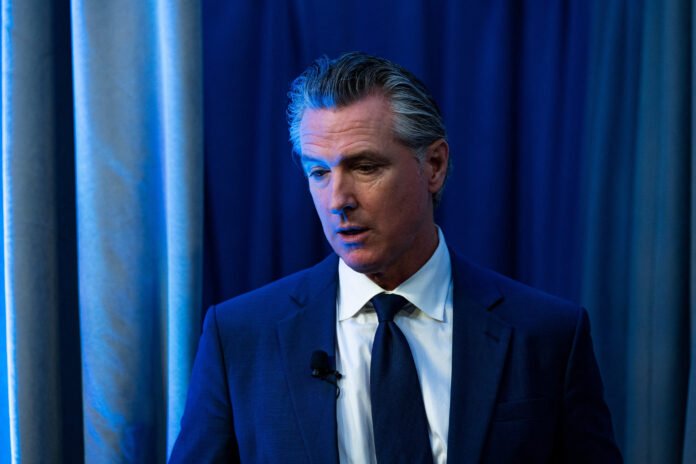
Gavin Newsom, the Democratic governor of California, said in June that the Justice Department appears to be investigating him and his wife, Jennifer Siebel Newsom, with federal agents reportedly reaching out to more than a dozen friends, former employees, business associates, donors, and organizations connected to the governor and his family. Newsom’s office disclosed the contacts, saying agents had conducted interviews as part of what he characterizes as a politically motivated inquiry rather than a legitimate criminal investigation grounded in evidence of wrongdoing.
Newsom has publicly speculated that the investigation is connected to his prominent national political profile and frequently discussed status as a potential 2028 Democratic presidential candidate. He responded defiantly in public remarks, stating, “You can subpoena my records. You can investigate me. You can harass me. Put my name on any and every enemies list that you have.” However, he drew a sharp line regarding his family, adding: “But leave my wife and family out of your personal vendetta!”
Siebel Newsom is a filmmaker who leads two nonprofit organizations, the California Partners Project and the Representation Project, both focused on gender equity issues. Public disclosure records reviewed by California political reporters show Newsom solicited at least $1.9 million in charitable contributions, known as “behested payments,” during 2024 and 2025 for his wife’s California Partners Project, including a $1 million donation from the Federated Indians of Graton Rancheria. These behested payment disclosures, which are a matter of public record under California’s Fair Political Practices Commission rules, have drawn scrutiny in the context of the federal investigation, though it remains unclear whether they are directly connected to the matters federal agents are examining.
The White House referred questions about Newsom’s allegations to the Department of Justice, which did not immediately respond to requests for comment when the story was first reported. The investigation comes amid a broader pattern this year in which the Trump administration has pursued legal action against numerous prominent Democratic officials and Trump critics, including New York Attorney General Letitia James, former FBI Director James Comey, and Federal Reserve Governor Lisa Cook, all of whom have characterized the actions against them as retaliatory.
Why It Matters
This case raises a fundamental question of democratic governance: whether federal law enforcement powers are being deployed based on genuine evidence of criminal conduct or as a tool to pressure and intimidate a sitting governor who happens to be one of the president’s most visible political critics and a likely future electoral rival. Regardless of one’s views of Newsom personally, the proper functioning of American democracy depends on confidence that DOJ investigations are insulated from raw political calculation about who might challenge a sitting president in a future election.
Vice President JD Vance and other administration officials have stated that actions against perceived Trump opponents are “driven by law and not by politics.” However, the pattern of investigations targeting a consistent roster of prominent Trump critics, including sitting elected officials, journalists, and former federal officials, has prompted sustained bipartisan concern from legal observers about whether prosecutorial discretion is being exercised even-handedly across the political spectrum.
For California voters and residents, the practical question is whether their governor’s capacity to perform his elected duties is being meaningfully disrupted by an investigation whose scope and evidentiary basis remain undisclosed publicly. Federal investigations targeting sitting governors are exceptionally rare events in American governance, and the lack of specific public detail about what conduct, exactly, is under scrutiny makes independent evaluation of the investigation’s legitimacy difficult for the public.
There is also a broader institutional concern raised by legal scholars studying the pattern of investigations against Trump’s political opponents: once federal investigative power becomes associated with a president’s personal political rivalries rather than neutral law enforcement priorities, restoring public confidence in the impartiality of federal investigations becomes significantly harder, regardless of which party controls the White House in the future.
Economic and Global Context
While this story is primarily a domestic governance matter rather than one with direct economic or global market implications, it carries meaningful costs to California’s state government function. Defending against and responding to a federal investigation requires significant time, legal resources, and attention from the governor’s office, potentially diverting focus from substantive state policy matters at a time when California continues to navigate significant fiscal and infrastructure challenges.
The pattern of investigations into Trump’s political critics, taken in aggregate, has also drawn attention from international observers and democracy researchers who study the use of state power against political opposition as an indicator of institutional health in democratic systems. Comparative governance scholars have noted that sustained, high-profile investigations targeting opposition political figures, even when ultimately resulting in no charges, can have a chilling effect on political participation and willingness to challenge incumbent power.
Domestically, this case sits within a broader fiscal and legal context in which numerous federal agencies under the Trump administration have significantly expanded investigative activity directed at perceived political opponents, a pattern that itself carries administrative costs across the federal government as resources are allocated toward these inquiries rather than other law enforcement or regulatory priorities.
Implications
In the near term, much will depend on whether the Justice Department formally confirms the investigation’s existence and scope, or continues to decline comment, as it has thus far. Newsom’s public disclosure strategy, inviting scrutiny of his own conduct while drawing a line around his family, suggests he intends to use the investigation as a political talking point rather than retreat from public visibility.
For Newsom’s political future, particularly speculation about a potential 2028 presidential run, the investigation could cut in either direction. It may serve as a rallying point that strengthens his standing among Democratic voters who view it as confirmation of Trump’s willingness to weaponize federal power against rivals, or it could create lasting legal and reputational complications depending on what, if anything, investigators ultimately uncover.
For other Democratic governors and prominent Trump critics nationally, this case will likely be watched closely as a signal of how the administration intends to treat potential future electoral challengers, particularly as the 2028 presidential cycle begins to take shape earlier than usual amid Trump’s relatively low approval ratings heading into the midterms.
For the broader public and policymakers concerned with institutional norms, sustained attention to how this investigation unfolds, including whether formal charges are ever filed and what evidence, if any, is presented publicly, will be an important data point in assessing whether federal law enforcement has maintained appropriate independence from presidential political interests during this period.
Sources
“Newsom accuses Trump of putting him on a ‘hit list’ and launching federal investigations”