Story Highlights
- Sources say Trump was privately angered by low attendance at a National Mall speech kicking off the 250th anniversary “Great American State Fair”
- Saturday’s July Fourth event will feature an afternoon air show and a fireworks finale organizers hope sets a Guinness World Record
- Forecasters predict highs near 100 degrees on the National Mall, with coolers banned from the event grounds
What Happened
President Donald Trump has promoted his July Fourth address on the National Mall as, in his own words, the culmination of “the most unforgettable birthday party any country has ever seen.” But according to sources familiar with internal White House discussions, officials have grown increasingly anxious about how many people will actually attend, following a disappointing turnout at a recent rally kicking off the celebrations that reportedly infuriated the president.
That earlier event launched the “Great American State Fair,” a 16-day celebration organized by the administration’s Freedom 250 organization and stretched across a 1.5-mile section of downtown Washington, D.C. Coverage of the fair has described sparse crowds, scattered infrastructure problems, and several musical performers dropping out amid political backlash. The fair featured a mix of patriotic programming and initiatives tied to the “Make America Healthy Again” movement associated with Health and Human Services Secretary Robert F. Kennedy Jr., including panels on wellness, nutrition, and family values, alongside exhibits from conservative organizations including Focus on the Family and Hillsdale College.
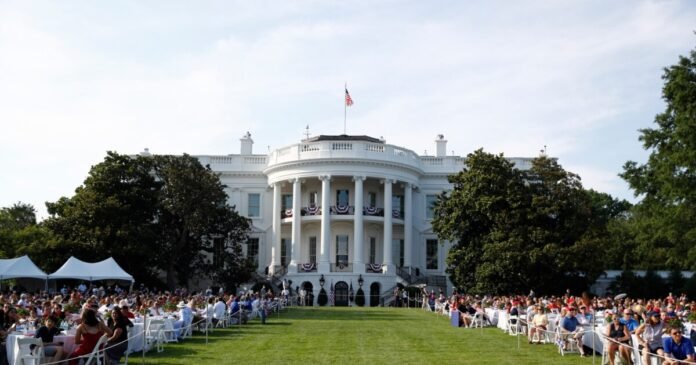
For Saturday’s culminating July Fourth event, organizers plan an afternoon air show followed by a lengthy fireworks display over the Potomac River that organizers hope will set a new Guinness World Record for scale. However, several logistical challenges loom. Unlike previous years, attendees will not be permitted to bring coolers onto the National Mall, and forecasters are predicting a significant East Coast heat wave that could push temperatures to around 100 degrees during the event. The fireworks finale is expected to run close to midnight, requiring attendees to endure hours of heat and tightened security screening.
In an apparent effort to guarantee a filled audience near the stage, one source said the viewing section directly in front of Trump’s podium will require tickets, distributed for free. However, officials acknowledged that free ticketing often results in significant no-show rates, as people reserve spots without firm commitment to attend. White House spokesman Davis Ingle defended the broader effort in a statement, saying the administration is ensuring “America gets the spectacular 250th birthday it deserves” through what he called a “renewal of patriotism and national pride” under Trump’s leadership.
Trump himself addressed turnout concerns directly last week, telling supporters at the fair’s kickoff, “Your favorite president will be speaking. So please show up because if we have two empty seats, you know what’s going to happen? The fake news is going to say, ‘He didn’t fill out the arena.'”
Why It Matters
Crowd size has held outsized symbolic importance for Trump throughout his political career, dating back to disputes over inauguration attendance figures in his first term. A visibly underwhelming turnout for an event explicitly designed to showcase national pride and his own leadership would carry political weight beyond typical event logistics, potentially undercutting the administration’s broader messaging strategy heading into the November midterms.
The situation also illustrates a recurring tension within the administration’s approach to public spectacle: an emphasis on scale and record-setting achievement, from the largest fireworks display to sweeping celebratory programming, colliding with practical constraints like extreme weather, security requirements, and genuine public enthusiasm that cannot be manufactured through promotion alone.
For officials planning the event, the stakes extend beyond a single evening. The 250th anniversary celebrations are intended to run through the year, and a poor showing at the marquee Fourth of July event could color public and media perception of the entire commemorative effort, affecting attendance and engagement at subsequent planned celebrations.
Economic and Global Context
The Great American State Fair and associated Independence Day festivities represent a substantial public and private investment, with fundraising and organizational costs for the broader Freedom 250 commemorative program not fully disclosed but understood to involve significant federal coordination alongside private sponsorship. Comparisons to established state fairs, such as Minnesota’s, which draws roughly 2 million attendees over its run and more than 100,000 visitors on a single day, have underscored how far short the Washington event has reportedly fallen in generating comparable public turnout.
The extreme heat forecast for Saturday’s event reflects a broader pattern of intensifying summer temperatures across the eastern United States, a climate trend that has increasingly complicated large-scale outdoor public events nationwide, from concerts to sporting competitions, including ongoing World Cup matches being played in similarly hot conditions this summer.
Internationally, the celebration’s optics matter as well. Independence Day events showcasing American strength and unity are being staged during heightened global attention on U.S. foreign policy, including ongoing negotiations related to Iran, making domestic spectacle and international messaging closely intertwined for the administration this week.
Implications
For the White House, the coming days will likely bring intensified efforts to boost turnout projections, potentially including expanded promotional outreach, transportation incentives, or adjusted event logistics to mitigate heat-related attendance concerns before Saturday’s event.
For political observers and media covering the event, attendance figures will almost certainly become a point of scrutiny and comparison, given the president’s own public sensitivity to crowd-size narratives and his direct appeals to supporters to ensure strong turnout.
For residents and visitors in Washington, D.C., the closing days of the Great American State Fair and the July Fourth finale will bring continued disruptions, including road closures, security perimeters, and transit changes, regardless of final attendance figures, as the city manages one of its largest coordinated security operations of the year.
Sources