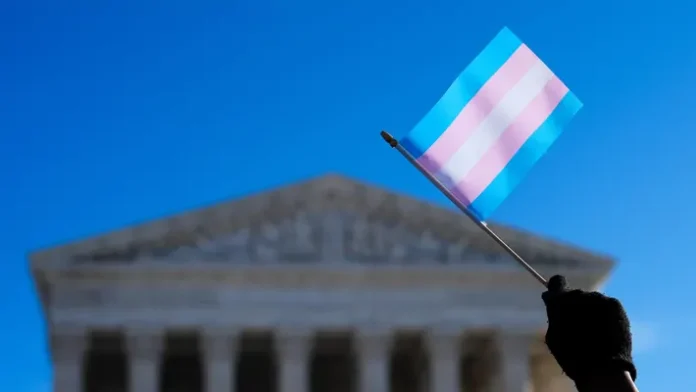
The Supreme Court ruled that states may lawfully exclude transgender athletes from women’s and girls’ sports teams, upholding laws in Idaho and West Virginia in a decision that touches at least 27 states with similar restrictions. President Trump, whose administration has actively supported such bans, celebrated the ruling as a major victory, while civil rights advocates warned it represents another significant setback for transgender rights in America. The decision marks the latest in a string of Supreme Court rulings that have consistently sided with the Trump administration’s positions on gender-related policy.
Story Highlights
- The Supreme Court ruled 6-3 in West Virginia v. B.P.J. and unanimously in Little v. Hecox, upholding state laws banning transgender athletes from women’s and girls’ sports.
- The ruling affects laws in at least 27 states, with Idaho’s 2020 law being the first of its kind in the nation.
- Trump, who issued an executive order titled “Keeping Men Out of Women’s Sports” early in his second term, praised the ruling on Truth Social as a “BIG WIN.”
What Happened
The Supreme Court ruled Tuesday that states may constitutionally exclude transgender athletes from participating on women’s and girls’ sports teams, upholding laws in Idaho and West Virginia that had been challenged by two transgender athletes. The justices ruled unanimously that the laws do not violate Title IX of the Education Amendments of 1972, the federal civil rights law barring sex discrimination in education, but split 6-3 along ideological lines on whether West Virginia’s law violates the Constitution’s Equal Protection Clause.
Justice Brett Kavanaugh, writing for the majority in a 29-page opinion, stated that “the States may maintain women’s and girls’ sports for biological females. They may determine eligibility for women’s and girls’ sports based on biological sex. The Constitution and Title IX do not require an overhaul of women’s and girls’ sports throughout America.” Kavanaugh’s opinion emphasized what he described as enduring physical differences between men and women relevant to athletic performance, including height, weight, strength, speed, and endurance.
Justice Neil Gorsuch, in a separate opinion, focused on the specific mechanics of Title IX’s enactment under Congress’s spending clause authority, concluding that the law does not clearly and unambiguously prohibit states from restricting school-sponsored sports teams to biological women. This reasoning proved significant because Gorsuch had authored the Court’s landmark 2020 decision in Bostock v. Clayton County, which extended workplace discrimination protections under Title VII to sexual orientation and gender identity, a ruling many LGBTQ rights advocates had hoped might extend by analogy to other contexts, including this case.
Justice Sonia Sotomayor, in a dissenting opinion joined by Justices Elena Kagan and Ketanji Brown Jackson, argued the majority’s ruling denied transgender athletes their full constitutional due process. “The court inflicts a hardship on those it disfavors without giving them the fair and full opportunity the Constitution requires to litigate their contentions,” Sotomayor wrote, arguing the case involving West Virginia’s law should have been returned to a lower court to resolve unsettled factual questions before the Supreme Court intervened on the merits.
The case involved two plaintiffs: Becky Pepper-Jackson, a 16-year-old high school sophomore who has taken puberty-blocking medication and estrogen and competed in girls’ cross-country, shot put, and discus; and Lindsay Hecox, a 25-year-old college student who has received testosterone suppression and estrogen treatments and attempted unsuccessfully to join women’s college track and cross-country teams. President Trump celebrated the ruling on Truth Social, writing, “BIG WIN: The United States Supreme Court just RULED AGAINST MEN PLAYING IN WOMEN’S SPORTS.” West Virginia Governor Patrick Morrisey, a Republican, similarly welcomed the decision, stating the state had “defended a simple principle most Americans instinctively understand: that women’s sports exist to provide women and girls a fair opportunity to compete and succeed.”
Why It Matters
The ruling represents the culmination of a rapid legal and political shift on transgender rights issues over the past several years, moving from a period when transgender rights appeared to have significant legal momentum toward the current landscape in which the Supreme Court has consistently ruled against transgender plaintiffs in a series of consequential cases. This decision follows last year’s ruling upholding a Tennessee law banning gender transition treatments for transgender minors, along with separate rulings permitting Trump administration policies barring transgender individuals from military service and preventing gender identity designations on passports.
For the 27 states with existing bans on transgender athletes in women’s sports, and for legislatures in additional states considering similar measures, the ruling provides definitive constitutional cover, effectively foreclosing legal challenges based on federal equal protection or Title IX grounds. This significantly narrows the avenues available to transgender athletes and advocacy organizations seeking to challenge such restrictions going forward.
LGBTQ advocacy organizations have expressed deep concern about the ruling’s broader implications. Sarah Kate Ellis, president of GLAAD, argued that “by allowing sweeping restrictions on a very small number of transgender students who simply wanted to participate in sports alongside their peers, the ruling creates an unnecessarily unfair playing field,” suggesting the decision’s stated rationale of fairness in women’s sports may not align with its practical effects on a relatively small population of affected athletes.
The decision also reinforces a broader pattern in which the Trump administration’s policy priorities regarding gender identity have found consistent validation before the Supreme Court, raising questions among court watchers about the extent to which the current composition of the Court aligns with the administration’s broader legal agenda on transgender rights issues specifically.
Economic and Global Context
While primarily a legal and social policy matter rather than an economic one, the ruling carries implications for educational institutions nationwide that receive federal funding under Title IX, providing those institutions with clearer legal guidance on how to structure athletic programs without risking federal funding challenges tied to transgender participation policies.
The decision also intersects with broader state-level legislative activity, as it validates a legislative model, epitomized by Idaho’s pioneering 2020 Fairness in Women’s Sports Act, that has since spread to more than half the states in the nation. This pattern of state policy diffusion following model legislation reflects broader trends in how contested social policy questions increasingly play out at the state level before reaching definitive resolution at the Supreme Court.
Internationally, the ruling contributes to an ongoing global debate over transgender participation in sports, an issue that has similarly divided international athletic governing bodies, including the International Olympic Committee and various national sports federations, each grappling with how to balance inclusion with competitive fairness considerations in ways that mirror the domestic legal debate now settled, at least at the constitutional level, within the United States.
Implications
For state legislatures, the ruling provides a clear green light to enact or maintain transgender athlete restrictions without fear of successful federal constitutional challenges, likely encouraging additional states to adopt similar measures if they have not already done so.
For transgender athletes and advocacy organizations, the ruling significantly narrows the legal strategies available to challenge such restrictions, potentially shifting future advocacy efforts toward state-level political campaigns or federal legislative action rather than continued litigation, given the Supreme Court’s now-settled position on the constitutional and Title IX questions at issue.
For the Trump administration, the ruling reinforces its broader legal and policy agenda on gender identity issues, providing additional momentum as the administration continues to pursue related policies, including restrictions on transgender military service and documentation requirements, through executive action and regulatory processes.
Sources
“Supreme Court upholds bans on transgender athletes participating in women and girls’ sports”