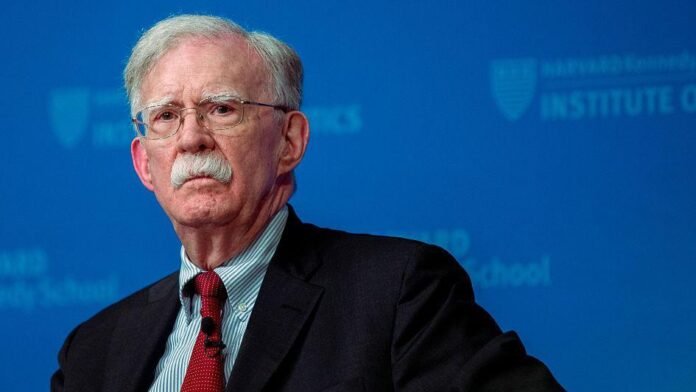
Former National Security Adviser John Bolton, one of President Donald Trump’s most vocal critics, pleaded guilty in June to illegally retaining classified national defense information, marking the administration’s first successful conviction against a prominent Trump adversary after similar prosecutions of other critics collapsed. His sentencing, scheduled for October 28, could result in up to five years in federal prison.
Story Highlights
- Bolton pleaded guilty June 26 to one felony count of illegally retaining national defense information
- The plea agreement calls for up to five years in prison and a $2.25 million fine
- Sentencing before U.S. District Judge Theodore Chuang is scheduled for October 28
- Unlike other cases against Trump critics, legal experts widely view the Bolton prosecution as legitimate
What Happened
John Bolton, who served as national security adviser during President Donald Trump’s first term before becoming one of his most outspoken critics, pleaded guilty on June 26 in federal court in Maryland to a single felony count of illegally retaining national defense information. The plea resolved a sprawling indictment originally containing 18 counts related to allegations that Bolton improperly shared sensitive national security information with his wife and daughter through personal email accounts and text messages over an extended period following his departure from government service in 2019.
Federal prosecutors alleged that Bolton regularly took handwritten notes containing classified national defense information from his daily activities, including meetings with intelligence officials, military leaders, and foreign counterparts, and subsequently transmitted more than a thousand pages of this material to two family members through unsecured personal communication channels. Prosecutors further alleged that after Bolton left the administration, hackers believed to be connected to the Iranian government gained unauthorized access to some of this improperly retained information, raising additional national security concerns beyond the initial mishandling itself.
Under the terms of the plea agreement, Bolton faces a maximum sentence of five years in federal prison and a fine of $2.25 million, with half of that fine due within five days of sentencing. He will also forfeit any government retirement benefits associated with his decades of federal service, according to the terms outlined by prosecutors. U.S. District Judge Theodore Chuang, an appointee of former President Barack Obama, scheduled Bolton’s sentencing hearing for October 28 and explicitly cautioned during the plea hearing that he would independently calculate applicable sentencing guidelines rather than simply deferring to the recommendations negotiated between prosecutors and Bolton’s defense team.
Bolton’s guilty plea notably did not include admissions related to allegations that he transmitted classified documents to unauthorized foreign parties or that the information reached anyone beyond his immediate family members. His attorney, Abbe Lowell, characterized the plea as an act of responsibility that would spare government resources otherwise required to pursue a full trial potentially exposing additional sensitive information. Bolton himself stated in court, “I am, your honor, and I’m very sorry for that,” when asked to confirm his intention to plead guilty.
Why It Matters
The Bolton case stands apart from other prosecutions of prominent Trump critics in that it has maintained broad support from career prosecutors and legal observers, including some who have been sharply critical of the Justice Department’s other high-profile cases against Trump adversaries, lending the prosecution a degree of institutional legitimacy that similar cases against figures like James Comey and Letitia James have notably lacked.
For the Trump administration, the successful conviction represents its first definitive legal victory among its various efforts to pursue criminal charges against prominent political critics, following the collapse of earlier prosecutions against Comey and James due to procedural defects related to improperly appointed interim prosecutors, offering the administration a rare unambiguous success in this broader legal campaign.
The case also carries significant implications for how classified information handling violations by senior former government officials are prosecuted and punished, with legal analysts drawing comparisons to previous cases involving figures like former CIA Director David Petraeus and former National Security Adviser Sandy Berger, both of whom faced comparatively lenient outcomes despite mishandling classified material, raising questions about sentencing consistency across similar cases.
Notably, the case’s resolution stands in contrast to the outcome of separate classified documents allegations against Trump himself following his first term, in which a federal judge dismissed charges after finding the appointed special counsel lacked proper authority to bring the case, a outcome that continues to draw comparison from legal commentators examining differential treatment of classified information cases based on the political identity of the individuals involved.
Economic and Global Context
The financial penalties associated with Bolton’s plea agreement carry particular significance given that the $2.25 million fine substantially exceeds penalties imposed in comparable historical cases, with legal analysts noting the fine could claw back much of the financial proceeds Bolton earned from his 2020 memoir, which was highly critical of Trump and prompted significant public friction between the two men during and after Bolton’s tenure in the administration.
The case’s national security dimensions extend beyond the domestic legal proceedings, given credible allegations that foreign intelligence services, specifically those linked to Iran, gained access to some of the improperly retained information following Bolton’s departure from government service, raising broader questions about the adequacy of safeguards protecting sensitive national security information held by former senior officials after they leave public service.
International observers, particularly within allied intelligence services that regularly share sensitive information with American counterparts, have reportedly monitored the case closely given its implications for confidence in U.S. classified information handling protocols, an area of ongoing concern following several high-profile mishandling cases involving officials across multiple presidential administrations.
The case also carries relevance for ongoing policy debates regarding classification reform and the handling of sensitive government records by departing officials, with some policy analysts citing the Bolton case as evidence supporting proposed reforms to strengthen exit protocols and monitoring requirements for senior officials transitioning out of positions with access to classified national security information.
Implications
Bolton’s October 28 sentencing hearing will represent a significant test of how Judge Chuang weighs the negotiated plea agreement against his own independent assessment of appropriate sentencing guidelines, with legal observers anticipating a potentially contentious hearing given reports that Bolton’s defense will advocate for no prison time while prosecutors may push for incarceration.
For the broader landscape of pending and ongoing prosecutions against Trump critics, the Bolton case’s relatively smooth resolution, compared to the more troubled prosecutions of Comey and James, may provide a template for how the Justice Department pursues cases against former officials where genuine legal violations exist, distinct from cases built on more ambiguous or politically contested underlying conduct.
For Bolton personally, the sentencing outcome will determine whether he serves time in federal prison in addition to the substantial financial penalties and forfeited retirement benefits already agreed to as part of his plea, with his public profile as a prominent Trump critic likely to influence public and media attention surrounding the sentencing proceedings regardless of the ultimate outcome.
Looking ahead, the case is expected to continue generating debate regarding whether it represents a legitimate, non-political prosecution distinct from other controversial cases pursued by the current Justice Department, a distinction that will likely continue shaping public discourse around accountability and prosecutorial fairness throughout the remainder of Trump’s term.
Sources