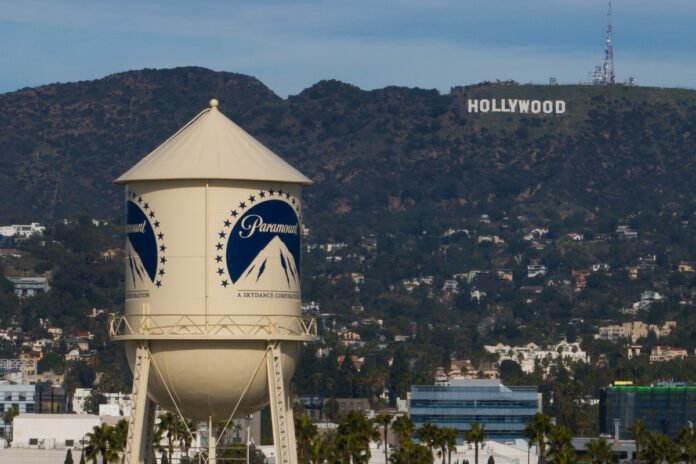
A coalition of twelve Democratic state attorneys general filed an antitrust lawsuit Monday seeking to block Paramount Skydance’s 110 billion dollar acquisition of Warner Bros. Discovery, directly challenging a merger the Trump administration’s Justice Department cleared last month amid allegations of political favoritism toward the company. The lawsuit represents a rare instance of state-level officials moving to stop a major corporate merger after federal antitrust regulators have already granted approval.
Story Highlights
- California, joined by eleven other states including New York, Colorado, and Washington, filed the lawsuit Monday in the Northern District of California.
- The suit argues the merger would raise prices, reduce content quality, and harm movie theaters, cable distributors, and consumers nationwide.
- The Justice Department’s clearance of the deal last month drew criticism over Paramount’s ties to the Trump administration, including a high-profile dinner held while the merger was under review.
What Happened
Twelve state attorneys general, all representing Democratic-led states, filed a coordinated antitrust lawsuit Monday in federal court in Sacramento seeking to block Paramount Skydance’s proposed 110 billion dollar acquisition of Warner Bros. Discovery. California, Arizona, Colorado, Connecticut, Massachusetts, Minnesota, Nevada, New Jersey, New Mexico, New York, Oregon, and Washington joined the suit, which argues the merger would create what the complaint calls a media “behemoth” that would stifle competition in wide-release theatrical film distribution, big-budget motion picture distribution, and licensing of basic cable television channels.
California Attorney General Rob Bonta, who has led the multistate investigation, said the merger “would lead to higher prices, lower quality, and less content for film and television, harming movie theaters, basic cable distributors, and ultimately, audiences on every sofa and movie theater seat in the U.S.” The lawsuit follows months of investigation by state officials, who began sending Paramount subpoenas and civil investigative demands earlier this year focused on the competitive effects of the merger as well as the Justice Department’s own review process.
The deal was formally cleared by the DOJ last month, a decision that immediately drew criticism from lawmakers, including Senator Elizabeth Warren, given Paramount’s documented ties to the Trump administration and members of his inner circle. That relationship includes a widely reported dinner between CBS News executives and administration officials that occurred while the Justice Department’s antitrust review was actively underway. Paramount has firmly denied any suggestion of improper influence, describing the merger as “pro-competitive” and stating it would create “a stronger challenger to dominant global streaming and technology platforms.”
Paramount has retained prominent antitrust litigator Jeffrey Kessler, who recently represented state governments in their successful challenge against Live Nation and Ticketmaster’s market dominance, signaling the company intends to fight the lawsuit aggressively. The company’s most pressing concern is timing: the merger agreement includes a 7 million dollar per day “ticking fee” penalty if the transaction fails to close by September 30, giving Paramount strong financial incentive to resolve the litigation quickly, including seeking to prevent any judge from issuing a temporary injunction that would delay the deal’s closing.
The lawsuit closely mirrors an earlier multistate challenge to Nexstar’s proposed acquisition of Tegna, another media merger cleared at the federal level but ultimately paused by a judge who sided with state attorneys general and DirecTV, which had argued the deal would be anticompetitive. That precedent gives the states some confidence that a similar outcome is achievable in the Paramount case, despite the DOJ’s federal sign-off.
Why It Matters
The lawsuit represents a significant test of whether state attorneys general can serve as an effective check on federal antitrust enforcement when they believe the Justice Department has failed to adequately scrutinize a major corporate transaction. State officials told reporters they believe the current administration has “largely abdicated its antitrust enforcement responsibilities,” with one official bluntly stating, “Someone’s gotta do it.”
For consumers, the merger’s outcome will directly affect the availability, pricing, and diversity of film and television content, given that the combined entity would merge two of the five largest U.S. film studios, Warner Bros. and Paramount, into a single company with substantially greater market power over theatrical distribution and cable licensing.
The case also raises broader accountability questions about the intersection of corporate influence and federal regulatory decisions. The scrutiny of Paramount’s relationship with the administration, including business ties involving the Ellison family that controls the company, has fueled concerns among critics that federal antitrust enforcement may not be operating independently of political considerations, a dynamic that could shape how future high-profile mergers involving politically connected companies are reviewed.
Economic and Global Context
The proposed transaction would combine Warner Bros., the industry’s second-largest studio by box office receipts after Walt Disney Co., with Paramount, currently ranked fifth, creating a company with outsized influence over both theatrical releases and cable television licensing. Industry analysts have raised concerns that the combined entity’s market power could also accelerate layoffs across the entertainment sector as the merged company consolidates overlapping operations.
The deal continues to face regulatory hurdles internationally as well, with the United Kingdom’s culture minister recently signaling she is “minded to intervene” in the transaction on competition grounds, suggesting the merger’s path to completion remains contested even beyond the U.S. legal challenge. The company has already submitted concessions to secure European regulatory approval, illustrating the scale of the global regulatory complexity surrounding the deal.
Financial markets are closely watching the litigation timeline given the substantial daily penalty embedded in the merger agreement, which creates significant pressure on both companies to resolve legal challenges quickly or risk mounting financial costs that could affect shareholder value regardless of the deal’s ultimate outcome.
Implications
The immediate legal question is whether a federal judge will grant a temporary injunction pausing the merger while litigation proceeds, a scenario with direct precedent in the Nexstar-Tegna case that resulted in a similar pause despite federal approval. Paramount’s legal team will likely move quickly to argue against any injunction given the mounting financial penalties tied to the September 30 closing deadline.
For the broader media industry, the outcome will help define the limits of state-level antitrust authority relative to federal regulators, particularly in cases where corporate political connections raise questions about the rigor of federal review. Other companies pursuing major mergers may closely study how this litigation unfolds when calibrating their own risk assessments around federal versus state-level antitrust exposure.
For policymakers and voters, the case will likely reignite debates in Congress over antitrust enforcement independence and oversight, particularly regarding whether structural reforms are needed to insulate merger reviews from political influence, an issue that has gained renewed attention amid this and other recent high-profile transactions involving companies with administration ties.
Sources