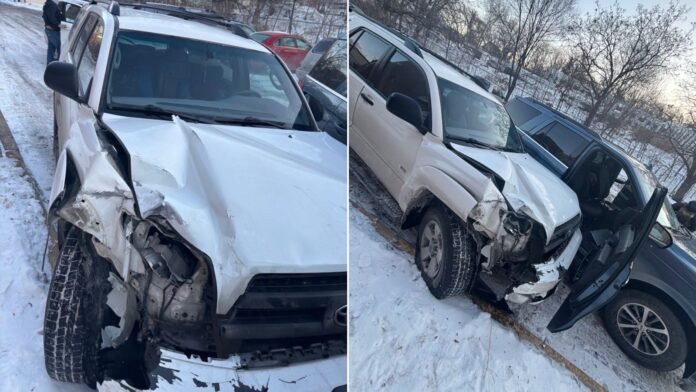
Immigration and Customs Enforcement has ordered its officers to halt most vehicle stops nationwide following two fatal shootings within a nine-day span in Maine and Texas. The directive marks a significant, if temporary, shift in enforcement tactics for an agency that has relied heavily on vehicle stops during its expanded deportation campaign. The policy change raises fresh questions about oversight and accountability within the Trump administration’s immigration enforcement operations.
Story Highlights
- ICE ordered Enforcement and Removal Operations officers to suspend most vehicle stops nationwide, with exceptions for violent criminal targets.
- The directive follows fatal shootings in Biddeford, Maine, and Houston, Texas, in which neither victim was the intended target of the operation.
- Maine Senator Susan Collins said she personally urged Homeland Security Secretary Markwayne Mullin to halt the stops.
What Happened
Immigration and Customs Enforcement issued a nationwide directive instructing officers to immediately suspend most vehicle stops during enforcement operations, according to multiple federal law enforcement sources. The pause applies specifically to Enforcement and Removal Operations, the ICE division responsible for civil immigration arrests, while Homeland Security Investigations, which handles criminal casework, is not affected. Officials described the change as temporary, intended to allow additional training on vehicle-stop tactics, with exceptions preserved for operations targeting individuals with serious or violent criminal histories under judicial warrants.
The directive follows two fatal shootings in less than two weeks. In Houston, ICE officers fatally shot Lorenzo Salgado Araujo, a Mexican national, after pulling over his vehicle while searching for a different individual. According to the Department of Homeland Security, officers had conducted surveillance on a target’s address and mistakenly believed Salgado Araujo, driving a similar vehicle, was the person they sought.
Six days later, in Biddeford, Maine, an ICE officer fatally shot Joan Sebastian Guerrero, a 26-year-old Colombian national, during an attempted vehicle stop. DHS said officers were conducting surveillance related to a separate individual with a final removal order when Guerrero attempted to flee the scene, prompting an officer who said he feared for public safety to open fire. Guerrero was not the target of the operation. Maine Senator Angus King, an independent who caucuses with Democrats, said Guerrero had previously been authorized to work in the United States and called for an independent investigation not run solely by federal authorities.
The shootings triggered public backlash in both states. Hundreds of protesters marched near the site of the Maine shooting, while family members of Salgado Araujo held a news conference in Houston. Republican Senator Susan Collins of Maine, who chairs the Senate Appropriations Committee and has otherwise supported ICE funding, said she personally contacted Secretary Mullin to request the vehicle stop pause, citing “sufficient critical questions” raised by the Biddeford shooting even before the investigation concluded.
Why It Matters
The suspension of vehicle stops represents a rare operational retreat for an agency that has dramatically expanded its footprint under the Trump administration’s mass deportation campaign. Federal data shows ICE arrested more than 10,000 people over a five-day period at the end of June alone, and vehicle stops have been a central tool for identifying and detaining targets away from homes and workplaces. Suspending that tactic, even temporarily, could meaningfully slow enforcement operations nationwide.
The back-to-back fatal shootings of individuals who were not the intended targets raise serious accountability concerns. In both cases, officers opened fire during stops that were based on mistaken identity or incomplete surveillance, exposing gaps in verification procedures before lethal force is used. Senator King’s comments pointing to broader arrest data, noting that the vast majority of people detained in Maine last year had no criminal records, reinforce concerns that enforcement has expanded well beyond the “worst of the worst” framing the administration has used publicly.
The involvement of a Republican senator in pressing for the policy change is notable. Collins’ intervention signals that concerns about ICE tactics are not confined to Democratic lawmakers, and it may create political space for broader congressional scrutiny of enforcement practices as the 2026 midterms approach.
For immigrant communities, the shootings and subsequent pause underscore the risks associated with aggressive enforcement tactics carried out with limited transparency. Advocacy groups have already demanded fuller accountability, and the outcome of federal and state investigations into both shootings will likely shape public trust in the agency going forward.
Economic and Global Context
While primarily a domestic law enforcement matter, the vehicle-stop suspension has operational and budgetary implications for one of the government’s fastest-growing agencies. ICE’s enforcement apparatus has expanded significantly in scale and funding during the current administration, with vehicle stops serving as a low-cost, high-frequency enforcement mechanism relative to worksite raids or home arrests. A sustained pause, even if framed as temporary, could reduce arrest volumes and affect the administration’s ability to meet its stated enforcement targets.
The policy shift also arrives amid ongoing congressional debate over ICE and Border Patrol funding, an issue Collins has been directly involved in as Appropriations Committee chair during earlier budget negotiations this year. Any high-profile setbacks tied to enforcement tactics could influence future funding negotiations, particularly if lawmakers seek additional oversight provisions or training requirements as a condition of continued appropriations.
Internationally, the deaths of a Colombian national and a Mexican national in ICE custody-related incidents could complicate diplomatic relations with both countries, which have periodically raised concerns about the treatment of their citizens amid the broader U.S. deportation campaign. Colombian and Mexican officials have not yet issued formal responses, but consular involvement is expected as investigations proceed.
Implications
In the coming weeks, federal and state investigators, including the FBI and the Maine Attorney General’s Office, are expected to determine whether the shootings involved violations of use-of-force policy. Findings from these investigations could shape whether the vehicle-stop pause becomes permanent or is lifted once additional training is completed.
For ICE officers in the field, the directive introduces new operational constraints that could slow arrest numbers in the near term, even as the administration remains committed to its broader deportation targets. How the agency balances enforcement goals with revised safety protocols will be closely watched by both supporters and critics of its tactics.
For Congress, the involvement of a sitting Republican senator in pushing for changes raises the possibility of bipartisan hearings or legislative proposals addressing ICE use-of-force policies, particularly ahead of the midterm elections where immigration enforcement remains a salient issue for voters across the political spectrum.
For affected communities in Maine, Texas, and beyond, the outcome of ongoing investigations will be a critical test of whether accountability mechanisms function as intended when federal enforcement operations result in civilian deaths.
Sources
“ICE agents halt most vehicle stops following deadly shootings in Maine, Texas, sources say”