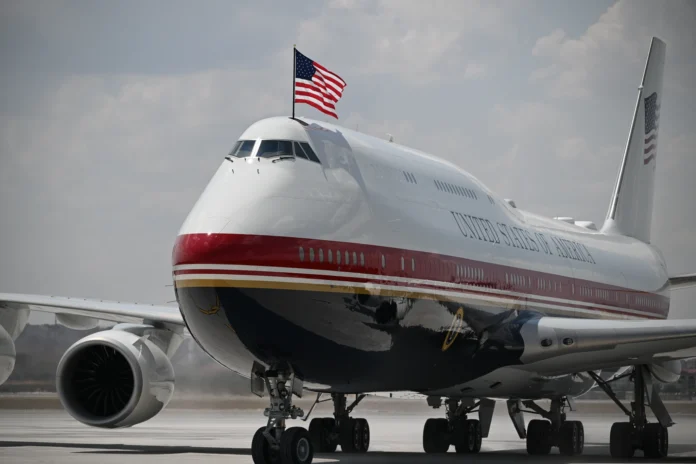
The Justice Department issued federal grand jury subpoenas compelling New York Times reporters to testify about their confidential sources for a story questioning the security features of the Qatari-donated aircraft intended to replace Air Force One, prompting the newspaper to fight back in federal court and drawing sharp bipartisan criticism over press freedom. Federal agents delivered the subpoenas to journalists’ homes late on a Friday night, an approach press freedom organizations have called an unprecedented act of intimidation. The dispute has become a central flashpoint in broader concerns about the weaponization of federal law enforcement against news organizations critical of the administration.
Story Highlights
- Federal agents delivered grand jury subpoenas to New York Times reporters’ homes on July 10, seeking testimony about sources for Air Force One security reporting
- The New York Times filed a motion on July 15 asking a federal court to quash the subpoenas as retaliatory and unconstitutional
- U.S. Attorney Jay Clayton, who issued the subpoenas, is simultaneously seeking Senate confirmation to lead the Office of the Director of National Intelligence
What Happened
The New York Times reported that federal agents appeared at the homes of several of its journalists on the evening of July 10, delivering grand jury subpoenas that sought to compel their testimony before a federal grand jury in Manhattan the following week. The subpoenas stemmed from a Times story published earlier that month reporting that President Trump had departed from Turkey aboard an older Air Force One aircraft equipped with more advanced security features than a newer plane recently donated by Qatar, contradicting the administration’s public characterization of the Qatari aircraft. The subpoenas, issued by Manhattan U.S. Attorney Jay Clayton, sought testimony described in the documents as relating to “an alleged violation of federal criminal law,” language that press freedom advocates said signaled the administration was pursuing the reporters’ confidential sources as part of a criminal leak investigation.
Of the roughly five journalists the Times said it expected to be targeted, three were ultimately served with subpoenas. David McCraw, the newspaper’s senior vice president and deputy general counsel, condemned the tactic in a public statement, saying the appearance of federal law enforcement agents on reporters’ doorsteps “should shock the conscience of any American who believes in the Constitution and the press freedom it protects.” The Times’ executive editor, Joe Kahn, characterized the action as “an attempt to intimidate the journalists and The Times itself.”
On July 15, the same day acting Attorney General Todd Blanche appeared before the Senate Judiciary Committee for his own confirmation hearing, the New York Times filed a motion in federal court under seal in the Southern District of New York asking a judge to quash the subpoenas. McCraw stated in a filing summary that the subpoenas were “brought in bad faith to punish The Times for its coverage” and violated the constitutional rights of both the newspaper and its individual journalists. The Justice Department maintains internal policies requiring the attorney general to personally approve investigative steps directed at journalists and mandating that prosecutors exhaust non-media leads before compelling journalist testimony, procedural safeguards that press freedom organizations have questioned whether the department actually followed in this instance.
Both Blanche and Clayton faced direct questioning about the subpoenas during their respective confirmation hearings this week. Blanche confirmed under oath that he had personally authorized the subpoenas, comparing the reporters to “material witnesses, just like a reporter would be a material witness to a car crash.” Clayton, appearing separately before the Senate Select Committee on Intelligence regarding his nomination to lead the Office of the Director of National Intelligence, declined to detail the specifics of the investigation or who requested the subpoenas be issued, though he told Senator Ron Wyden that the process involved consultation with career prosecutors in his office and that he remained “absolutely committed to” respecting the First Amendment.
Why It Matters
The case represents one of the most direct confrontations between the Trump administration and the institutional press since the president’s return to office, testing the durability of longstanding Justice Department policies designed to protect journalists’ ability to gather and report information without fear of compelled disclosure of their sources. Those internal policies, developed over decades in response to earlier controversies involving government subpoenas of reporters, exist precisely because compelling journalists to reveal confidential sources threatens to dry up the flow of information that allows the press to hold government accountable, particularly on matters the government itself would prefer remain undisclosed.
The specific subject matter at issue, security discrepancies involving the president’s own aircraft, underscores the accountability function at stake. If reporters cannot safely investigate and report on government safety and security decisions without triggering federal criminal leak investigations targeting their own testimony, the practical effect is to insulate an entire category of government conduct, decisions with direct implications for presidential safety and taxpayer expenditure, from meaningful independent scrutiny.
The timing of the subpoenas, arriving just two days after the Times published its story and coinciding precisely with confirmation hearings for both officials responsible for authorizing and issuing them, has drawn particular scrutiny from legal observers who note that such timing invites reasonable inference of retaliatory intent, a critical legal question given that the Times’ court challenge specifically alleges the subpoenas were issued in bad faith to punish the newspaper’s coverage rather than to pursue a legitimate investigative purpose.
For the broader press freedom landscape, the Committee to Protect Journalists has documented this action as part of a wider pattern under the current Justice Department leadership, including rescinded source protection policies, previous subpoenas connected to Iran war coverage, the search and seizure of a journalist’s personal devices, and restricted press access to immigration courts, suggesting the Air Force One subpoenas represent an escalation of an existing trend rather than an isolated incident.
Economic and Global Context
The legal costs associated with fighting federal grand jury subpoenas represent a substantial and growing burden for news organizations, particularly smaller outlets without the New York Times’ institutional resources to mount sustained legal challenges. Press freedom organizations have warned that the practical effect of high-profile subpoena battles, regardless of their ultimate legal outcome, is to create a chilling effect that disproportionately deters smaller and less-resourced newsrooms from pursuing similarly sensitive investigative reporting.
Internationally, the United States’ handling of press freedom issues carries reputational weight in global rankings and assessments of democratic institutional health, with organizations including Reporters Without Borders and the Committee to Protect Journalists closely monitoring domestic press freedom controversies as indicators of broader democratic backsliding, comparisons that carry diplomatic significance given the United States’ historical role advocating for press freedom protections abroad.
The specific controversy over Air Force One security also carries direct budgetary relevance, given that the replacement aircraft program involving the Qatari-donated jet has itself been the subject of significant congressional scrutiny and cost concerns, meaning the underlying reporting the subpoenas seek to unravel touches directly on questions of government transparency regarding a major taxpayer-funded asset.
Domestically, the dispute arrives amid a broader wave of Justice Department subpoena activity targeting perceived critics and investigative subjects connected to the administration, a pattern documented by nonpartisan tracking organizations that have cataloged dozens of similar actions against journalists, political figures, and advocacy organizations since the current Justice Department leadership took over.
Implications
In the near term, the federal court presiding over the Times’ motion to quash will need to weigh the newspaper’s constitutional arguments against the government’s stated national security justification, a ruling expected to generate significant precedent regarding the scope of protections available to journalists facing similar leak investigation subpoenas going forward.
For Jay Clayton, the controversy complicates his separate confirmation process for the Director of National Intelligence post, with senators on the Intelligence Committee likely to press him further on the subpoenas’ justification and process before any confirmation vote, particularly given the overlapping timing between his role issuing the subpoenas and his nomination to a position with direct oversight of intelligence community relationships with the press.
For news organizations broadly, the outcome of the Times’ legal challenge will likely shape how other outlets approach similarly sensitive national security and government accountability reporting, with press freedom organizations closely monitoring whether the case establishes stronger or weaker practical protections for journalist source confidentiality under the current legal and political environment.
For congressional oversight committees, the controversy adds to a growing list of Justice Department actions warranting scrutiny, with lawmakers from both parties having voiced concern during this week’s hearings, suggesting the issue may generate bipartisan legislative interest in codifying stronger statutory protections for journalists beyond the current internal Justice Department policies that many now view as insufficiently enforced.
Sources