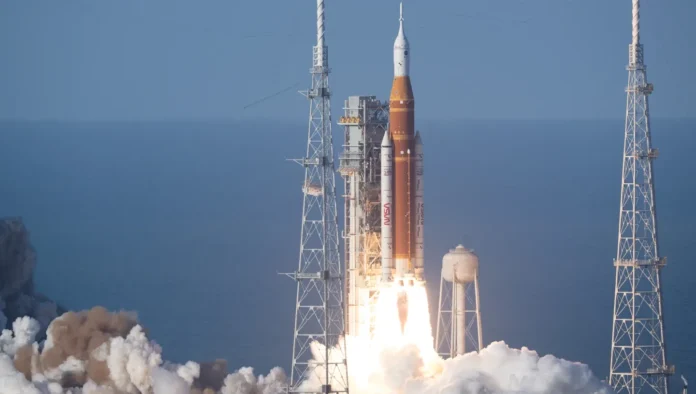
Story Highlights
- NASA achieves key progress in Artemis lunar mission
- Program aims to establish long-term human presence on the Moon
- Milestone strengthens U.S. leadership in space exploration
What Happened
NASA’s Artemis program has reached a significant milestone, advancing the United States’ efforts to return humans to the Moon and establish a sustained presence. The latest development marks progress in mission readiness, including advancements in spacecraft systems, launch capabilities, and lunar exploration planning.
The Artemis initiative is designed to build a long-term framework for human exploration beyond Earth, with the Moon serving as a critical stepping stone for future missions to Mars. Recent achievements highlight improvements in technology integration, testing, and coordination among various components of the program.
NASA has been working closely with private sector partners and international collaborators to accelerate development and ensure mission success. These partnerships play a key role in supporting innovation and expanding the capabilities required for complex space missions.
Officials emphasize that the milestone reflects years of research, engineering, and planning. While additional steps remain before crewed missions proceed, the current progress demonstrates steady movement toward long-term exploration goals.
Why It Matters
The Artemis program is significant because it represents a major step forward in space exploration and scientific discovery. Establishing a presence on the Moon can provide valuable insights into planetary science and support future missions to deeper space destinations.
From an economic perspective, the program contributes to growth in the aerospace sector, supporting jobs, innovation, and technological development. Investments in space exploration often lead to advancements that have broader applications across industries.
The initiative also highlights the importance of collaboration between government agencies and private companies. This approach enables more efficient development and expands the range of capabilities available for space missions.
Additionally, the program reinforces the role of the United States as a leader in space exploration, maintaining its position in a highly competitive global environment.
Political and Geopolitical Impact
Domestically, space exploration programs often receive bipartisan attention, as they contribute to national pride, scientific advancement, and economic growth. Funding and policy decisions related to Artemis will continue to be a topic of discussion among lawmakers.
The program also supports workforce development, encouraging education and careers in science, technology, engineering, and mathematics (STEM) fields.
Geopolitically, the Artemis program plays a role in shaping international competition and cooperation in space. As other countries expand their space capabilities, the United States aims to maintain leadership through continued innovation and collaboration.
The initiative also reflects broader strategic interests, as space becomes an increasingly important domain for both scientific and economic activity.
Implications
If progress continues as planned, the Artemis program could lead to a sustained human presence on the Moon, opening new opportunities for research, exploration, and potential resource utilization.
However, the program also faces challenges, including technical complexity, budget considerations, and coordination among multiple stakeholders. Addressing these factors will be critical to long-term success.
In the broader context, the milestone underscores the importance of continued investment in space exploration. Advancing capabilities beyond Earth will play a key role in shaping the future of science, technology, and global collaboration.
Sources
“NASA Artemis program achieves new milestone in lunar exploration efforts”