Story Highlights
- DOJ ethics official Joseph Tirrell briefed Blanche in March 2025, telling him recusal from Trump-related legal matters was required; Blanche signed an ethics pledge to that effect.
- Blanche has not publicly recused from the DOJ’s investigation of former CIA Director John Brennan, a top Trump priority, raising unresolved questions about his compliance.
- Legal experts warn that if Blanche fails to properly recuse, future criminal prosecutions he oversees could be challenged in court on grounds of vindictive or selective prosecution.
What Happened
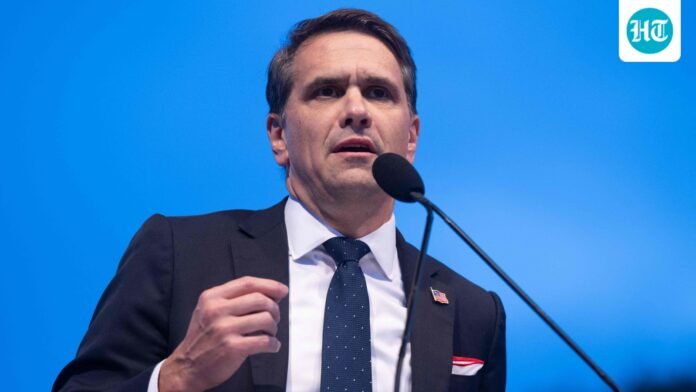
Less than two weeks after Todd Blanche assumed the role of Deputy Attorney General in March 2025, the Justice Department’s top ethics official, Joseph Tirrell, convened a briefing that would later become the subject of CNN’s exclusive investigation. Tirrell presented Blanche and his then-top deputy, Emil Bove, with a printed PowerPoint presentation on DOJ ethics requirements and delivered a clear message: Blanche’s previous role as President Donald Trump‘s personal criminal defense attorney meant that recusal from cases involving Trump in his personal capacity was legally and ethically necessary.
Blanche had represented Trump in federal criminal prosecutions connected to the alleged mishandling of classified documents at Mar-a-Lago and the alleged conspiracy to overturn the 2020 election results. Those cases had been brought by a Justice Department that was now, under Trump’s second term, Blanche’s own employer. The ethics briefing acknowledged this structural conflict: in switching from defense attorney to the nation’s top law enforcement executive, Blanche was effectively changing sides in an ongoing legal saga.
Following the Tirrell briefing, Blanche signed an ethics pledge restricting his involvement in matters connected to former clients and in investigations where he had personal or political relationships with potential parties. The Justice Department confirmed to CNN that Blanche has recused himself from some ongoing cases, but officials declined to specify which ones. The department did not respond to follow-up questions about whether Blanche’s recusal extended to the administration’s so-called “conspiracy investigation” — a probe being led by attorney Joe DiGenova, based in Fort Pierce, Florida — or to a related working group examining alleged weaponization of the justice system during the Biden administration.
CNN reporting established that former CIA Director John Brennan is among those targeted in the Florida-based conspiracy investigation, a priority for Trump who has long sought to prosecute political adversaries he claims unfairly targeted him. When asked whether Blanche had recused from the Brennan investigation, a DOJ spokesperson told CNN he had not — a disclosure that legal ethics experts told CNN raises serious professional responsibility concerns given Blanche’s prior representation of Trump and the inherently Trump-connected nature of the Brennan probe.
Inside the department, Blanche has delegated oversight of the conspiracy investigation to top aides and has reportedly not participated in meetings on the probe in recent months, suggesting a partial and informal approach to recusal rather than a clean formal separation from matters where his prior role as Trump’s lawyer creates a conflict.
Why It Matters
The Blanche recusal question is not merely procedural. It sits at the intersection of two fundamental principles of American law: the right to fair prosecution free of political motivation, and the rule against attorneys switching sides in matters in which they have previously represented a client. When those principles collide at the level of the nation’s acting top law enforcement officer, the stakes for the integrity of every investigation the department touches become significant.
The most direct legal risk is that prosecutions overseen by Blanche in matters connected to Trump — including investigations of Trump’s political opponents, the former officials involved in cases against Trump, or anyone whose prosecution has a traceable connection to Blanche’s prior defense work — could be challenged in court on grounds of vindictive or selective prosecution. Defense attorneys in such cases would have a clear basis to argue before trial judges that the decision-making chain was tainted, potentially nullifying cases before they ever reach juries.
The parallel to former Attorney General Jeff Sessions is instructive. Sessions recused himself from the Russia investigation in 2017 after his prior contacts with Russian officials were disclosed, a decision that triggered Trump’s sustained fury and ultimately Sessions’ forced resignation. The Sessions precedent illustrates that recusal, while ethically required, is politically toxic in Trump’s orbit — and that failure to recuse is the choice Trump has implicitly demanded from his top law enforcement leadership.
A former Justice Department professional ethics adviser told CNN this week that Congress must act if it finds Blanche’s non-recusal untenable, stating the situation was unacceptable. That assessment places the burden squarely on Republican-controlled legislative committees that have so far shown little appetite for challenging the president on justice department independence.
Economic and Global Context
The integrity of the U.S. justice system has direct implications for investor confidence, rule-of-law rankings, and the United States’ standing in international legal and trade forums. Foreign governments and multinational corporations evaluating the stability and predictability of the American legal system observe the institutional behavior of the Department of Justice as a key signal. Any sustained perception that the DOJ is operating as an instrument of political retribution rather than an independent law enforcement body carries reputational costs for the United States in global governance forums.
Within the United States, the Blanche recusal matter connects to a broader pattern of institutional norm erosion that legal scholars have documented across the first two years of Trump’s second term. Formal and informal constraints that have historically governed executive branch conduct — including the separation between the White House and the DOJ, the independence of career prosecutors, and the recusal requirements for senior officials — have been systematically challenged or discarded.
The specific investigations Blanche may be improperly overseeing carry their own economic dimensions. The conspiracy investigation led by DiGenova reportedly targets former senior national security officials, and aggressive prosecution of government figures on politically motivated grounds could deter qualified candidates from serving in future administrations, reducing the quality of governance over the long term.
Implications
The most immediate implication is the vulnerability it creates in any criminal prosecution overseen by Blanche that connects to his prior representation of Trump. Defense attorneys across the country are now on notice that a recusal argument is available in cases of this type, and they will use it. Whether trial courts find those arguments persuasive will depend on the specific facts of each case and the degree to which Blanche’s decision-making can be traced to the relevant proceedings.
For Blanche personally, the reporting creates a bar discipline exposure that parallels the predicament Blanche himself is navigating in the Jeffrey Clark disbarment case. If Blanche ignores his ethics pledge in ways that a bar disciplinary body later concludes violated professional responsibility rules, his own law license could be at risk.
For the broader American public and the oversight institutions meant to constrain executive power, the Blanche matter is a test of whether the reporting itself — and the congressional scrutiny it could prompt — are sufficient to enforce the ethical norms that formal mechanisms have failed to uphold. Democrats on the Senate and House Judiciary Committees have signaled they intend to demand answers, though their capacity to compel the administration’s compliance in a Republican-controlled Congress remains limited.
Sources