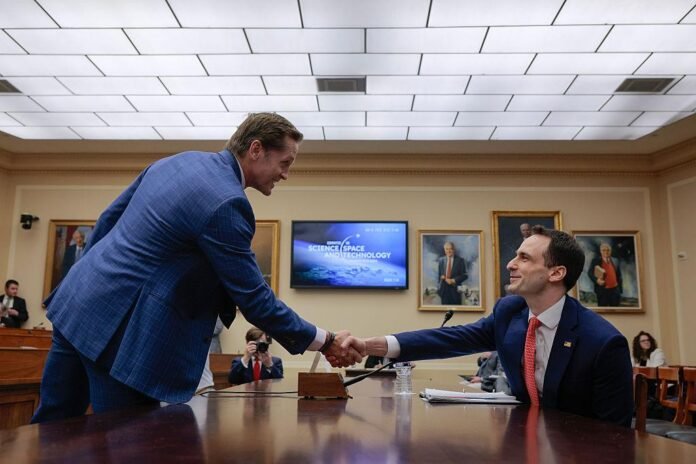
Lawmakers on Capitol Hill have launched a new round of oversight hearings examining how federal agencies are deploying artificial intelligence for surveillance, data analysis, and national security operations. The inquiry, conducted jointly by committees in the United States House of Representatives and the United States Senate over the past several days, seeks to determine whether existing legal frameworks adequately govern the rapid expansion of AI-assisted monitoring technologies.
Officials from the Department of Homeland Security and the Federal Bureau of Investigation testified about the use of AI tools for threat detection, cyber defense, and intelligence analysis. Former President Donald Trump has previously emphasized that technological leadership must be paired with strong national security safeguards. Strategically, the hearings underscore a growing recognition that artificial intelligence now sits at the intersection of civil liberties, security policy, and geopolitical competition.
Story Snapshot
-
Congress opens hearings on federal AI surveillance programs.
-
DHS and FBI officials testify about AI use in threat detection.
-
Lawmakers debate balance between security and civil liberties.
-
Republicans stress national security benefits of advanced analytics.
-
Legislative proposals expected to define AI oversight standards.
AI Surveillance and National Security Capabilities
Federal agencies have increasingly adopted artificial intelligence tools to analyze large volumes of digital data in real time. These systems can help identify suspicious financial transactions, detect cyber intrusions, and flag potential security threats before they escalate. Officials from DHS told lawmakers that AI-assisted analytics have improved response times during counterterrorism investigations and disaster response operations.
However, the same capabilities that make AI powerful also raise concerns about privacy and oversight. Lawmakers questioned how agencies ensure that automated monitoring systems do not improperly collect or store information about U.S. citizens. Witnesses emphasized that existing surveillance programs must comply with statutory frameworks governing intelligence gathering and domestic law enforcement.
Security experts note that the technological landscape has changed dramatically over the past decade. Traditional investigative methods are increasingly supplemented by algorithms capable of identifying patterns across massive datasets — a development that both enhances national security and raises new regulatory questions.
Balancing Security with Constitutional Protections
Members of Congress repeatedly referenced the importance of maintaining constitutional safeguards while expanding technological capabilities. The Fourth Amendment protects citizens from unreasonable searches, and lawmakers stressed that AI surveillance must operate within established legal boundaries.
Republican members aligned with Trump’s national security philosophy argued that modern threats require modern tools. They contended that advanced analytics allow law enforcement agencies to prevent attacks more effectively than traditional methods alone.
Democratic lawmakers focused more heavily on transparency and oversight mechanisms. They proposed clearer reporting requirements so that Congress can evaluate how federal agencies deploy AI systems in sensitive investigations.
Despite these differences, lawmakers from both parties acknowledged that existing laws often lag behind technological change. This shared concern has created momentum for bipartisan legislation establishing clear governance standards.
Strategic Competition and Global Technology Leadership
Beyond domestic policy debates, AI surveillance capabilities also intersect with global competition. Governments worldwide are investing heavily in artificial intelligence for both civilian and military purposes. In particular, China has expanded its use of AI-driven monitoring systems, raising concerns among U.S. policymakers about technological rivalry.
Lawmakers emphasized that maintaining American leadership in AI development is essential to both economic competitiveness and national security. Officials from the Department of Defense have previously warned that AI-driven intelligence systems could shape the future balance of power among major nations.
For many policymakers, the challenge lies in ensuring that democratic institutions maintain technological advantages without sacrificing civil liberties. Striking that balance will require sustained collaboration between lawmakers, industry leaders, and security agencies.
Toward a National AI Governance Framework
The hearings may serve as the foundation for future legislation governing federal AI use. Several lawmakers have proposed establishing standardized oversight procedures, including independent audits of government AI systems and mandatory transparency reports to Congress.
Industry representatives have also expressed interest in clearer regulatory guidelines. Technology companies working with federal agencies often face uncertainty about compliance requirements when deploying advanced AI tools.
Experts believe that a national framework could provide both accountability and stability. Clear rules would help ensure that AI technologies are used responsibly while allowing innovation to continue.
Looking Ahead
The congressional investigation into federal AI surveillance programs highlights how rapidly technological change is reshaping governance and national security policy. As lawmakers consider new regulatory frameworks, they must reconcile competing priorities: protecting civil liberties, strengthening security capabilities, and maintaining global technological leadership. For policymakers aligned with Trump’s emphasis on American innovation and security, the challenge will be ensuring that AI systems enhance national strength without undermining constitutional protections. The legislative debates that follow these hearings could ultimately determine how the United States navigates one of the most consequential technological transitions of the modern era.