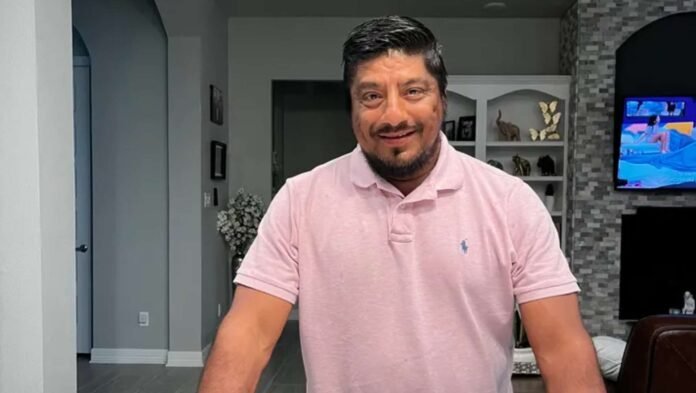
A Department of Homeland Security official has confirmed that Lorenzo Salgado Araujo, the Houston father fatally shot by an ICE officer this week, was not the person federal agents were originally seeking to arrest. The revelation, first reported to lawmakers and later confirmed to multiple news outlets, has intensified scrutiny of the shooting and raised fresh questions about accountability within the administration’s expanding immigration enforcement operations. It marks at least the eighth fatality connected to immigration sweeps during the Trump administration.
Story Highlights
- DHS confirms Lorenzo Salgado Araujo “resembled the target” agents were surveilling, but was not the intended subject
- ICE officers involved in the shooting were not wearing body cameras due to prior government shutdowns delaying equipment issuance
- The shooting is at least the eighth fatality connected to federal immigration enforcement operations under the current administration
What Happened
Lorenzo Salgado Araujo, a 52-year-old Mexican national who had lived in the United States for nearly 35 years, was shot and killed by an Immigration and Customs Enforcement officer Tuesday morning in Houston’s East End neighborhood while driving to pick up construction workers for a job. According to ICE, agents attempted a traffic stop as part of a “targeted operation,” alleging that Salgado Araujo rammed a law enforcement vehicle, refused verbal commands, and attempted to run over an agent, prompting the officer to fire in what the agency described as self-defense.
Two days later, a Department of Homeland Security official told ABC News that Salgado Araujo had not actually been the intended target of the operation. The official said agents had been conducting surveillance on a different individual’s address after receiving what was described as a credible tip, and had noted two white vans at that property in the weeks prior. On the morning of the shooting, officers were approaching the target’s address when they spotted a white van driven by someone who “resembled the target” and initiated the stop that led to Salgado Araujo’s death. Representative Sylvia Garcia, a Democrat representing the Houston area, said acting ICE director David Venturella separately confirmed to her that officers had not been targeting Salgado Araujo.
Salgado Araujo’s family disputes the government’s account of the encounter. His son, Ronaldo Salgado, said at a news conference that his father had no criminal history and was simply picking up his work crew when he was shot, adding that the family believes he panicked because he did not recognize the unmarked vehicles surrounding him as law enforcement. Three other men in the vehicle, including Salgado Araujo’s brother, were detained during the incident. Salgado Araujo later died at a hospital after being struck.
Compounding concerns about the shooting, DHS confirmed that the ICE officers involved were not wearing body cameras. A department spokesperson attributed the lack of equipment to two partial government shutdowns — one in the fall of 2025 and another earlier this year — which delayed the issuance of body-worn cameras to ICE law enforcement personnel. The absence of camera footage leaves investigators reliant on witness accounts and limited video captured by bystanders, including one Houston resident who recorded Salgado Araujo after the shooting, saying he was “screaming for help and screaming that he was in pain.”
The shooting has triggered multiple investigations, including a review by the Department of Homeland Security’s Office of Inspector General and a separate FBI inquiry into the alleged assault on a federal officer. The incident sparked protests in Houston, with hundreds marching through the neighborhood where Salgado Araujo was killed, and Mexican officials have said they intend to file criminal complaints related to the deaths of Mexican nationals during recent U.S. immigration operations.
Why It Matters
The revelation that federal agents killed the wrong person carries serious implications for how immigration enforcement operations are conducted and reviewed. Mistaken-identity shootings raise fundamental questions about the surveillance and verification procedures ICE uses before initiating high-risk vehicle stops, particularly when officers are operating in unmarked vehicles without visible identification that would allow civilians to recognize them as law enforcement.
The absence of body camera footage compounds these concerns significantly. Without video evidence, the public and investigators alike are left to rely primarily on the accounts of the officers involved and the family’s recollection, a dynamic that has fueled distrust in several previous ICE-involved shootings where initial agency statements were later contradicted by video evidence that emerged independently.
This incident is not isolated. It follows the January shooting of Renee Good, a U.S. citizen killed by a federal immigration agent in Minneapolis under similarly disputed circumstances, as well as the case of Ruben Ray Martinez, another U.S. citizen killed during a traffic stop, and a Pennsylvania incident involving a discharged weapon just days before the Houston shooting. Taken together, these cases suggest a pattern of escalating use of force during immigration operations that has drawn increasing congressional and public scrutiny.
For immigrant communities and their advocates, the case reinforces long-standing fears about aggressive enforcement tactics that can endanger bystanders and individuals with no connection to the operation’s actual target. For law enforcement policy more broadly, it raises questions about training, equipment funding, and oversight mechanisms as the administration continues to expand the scale of its immigration enforcement operations nationwide.
Economic and Global Context
The shooting has diplomatic ramifications beyond domestic policy debates. Mexican officials have indicated they intend to pursue criminal complaints connected to the deaths of Mexican nationals during U.S. immigration operations, a move that could strain bilateral relations between Washington and Mexico City at a time when the two governments are navigating other sensitive trade and security matters.
Domestically, the delay in equipping ICE officers with body cameras — attributed to two government shutdowns that disrupted federal procurement and staffing — illustrates how broader fiscal and political dysfunction in Washington can have direct operational consequences for federal agencies conducting sensitive, high-risk enforcement activity. Equipment and technology procurement delays of this nature are not uncommon during shutdown periods, but the stakes are considerably higher when they affect accountability tools for agencies exercising lethal force.
The pattern of fatal encounters, now numbering at least eight under the current administration’s immigration enforcement push, also has implications for the resources allocated to federal oversight bodies such as the DHS Inspector General’s office, which is now managing multiple simultaneous investigations into use-of-force incidents while the broader enforcement apparatus continues to expand.
Implications
For the Salgado Araujo family, the coming months will likely involve continued advocacy for an independent investigation, potential civil litigation against the federal government, and ongoing public appearances aimed at ensuring accountability. The family’s sons have already signaled their intent to demand answers directly from ICE and DHS leadership, who they say have not yet contacted them directly about the case.
For ICE and DHS leadership, the incident adds pressure to address body camera procurement gaps and surveillance verification protocols before further incidents occur. Congressional Democrats, including Representative Garcia, are likely to press for hearings and legislative action addressing equipment funding and oversight standards for immigration enforcement officers conducting high-risk operations.
For the broader public debate over immigration enforcement, the case is likely to become a rallying point for advocacy organizations pushing for reforms to enforcement tactics, particularly the use of unmarked vehicles and plainclothes officers during stops involving civilians who have no way of immediately identifying who is approaching them.
Sources
ICE was searching for a different person when officer killed man in Houston, lawmaker says