Story Highlights
- Acting AG Blanche told a House subcommittee the DOJ is “not moving forward with the fund, period”
- The fund was created through a settlement of Trump’s personal lawsuit against the IRS over the leak of his tax returns
- A federal judge in Virginia had already temporarily blocked the fund; a second court reopened the underlying IRS case over fraud allegations
What Happened
Todd Blanche, who previously served as President Donald Trump‘s personal criminal defense attorney before being appointed acting attorney general, appeared before the House Appropriations Subcommittee for Commerce, Justice, Science, and Related Agencies on Tuesday to discuss the Department of Justice budget. During the session, he confirmed the administration was permanently abandoning its $1.776 billion “anti-weaponization fund” — a program that had generated immediate and sustained controversy since its announcement in May.
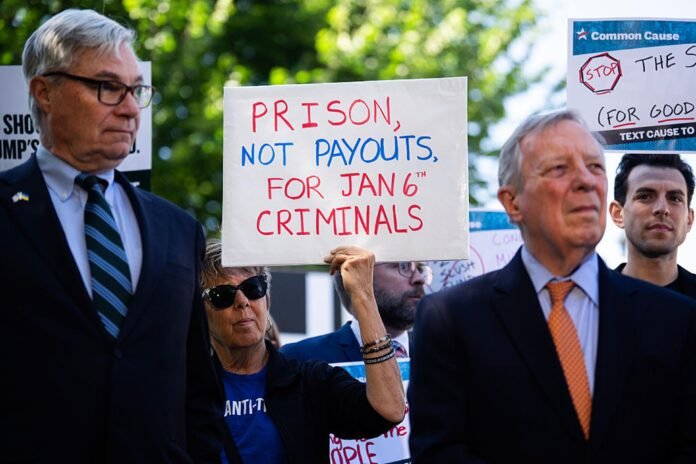
The fund was established as a condition of a settlement agreement between Trump and his own Justice Department, resolving a $10 billion lawsuit Trump had filed against the IRS over the 2022 leak of his personal tax returns. Under the settlement terms, the IRS agreed not to take action against Trump regarding his past tax filings, and the DOJ pledged to create a fund to compensate individuals who claimed they had been targeted by the alleged “weaponization” of the federal government during the Biden administration. Critics immediately labeled it a slush fund designed to benefit Trump supporters, including those convicted of offenses related to the January 6, 2021 Capitol attack.
The political pressure that forced the reversal came from multiple directions simultaneously. Republican members of Congress, who had been blocking a party-line vote on Trump’s $70 billion immigration enforcement funding bill, were using their opposition to the anti-weaponization fund as leverage. Senate GOP leaders indicated that once the fund was killed, enough Republican votes would materialize to advance the immigration legislation. At the same time, a federal judge in the Eastern District of Virginia temporarily blocked the fund from making any payouts, and a separate court in Florida reopened the underlying IRS lawsuit following a motion filed by 35 former federal judges alleging the settlement constituted fraud.
Blanche declined to put his commitment to abandon the fund in writing when pressed by lawmakers near the end of the hearing, raising questions about whether the administration might attempt to revive the program in modified form. The White House did not directly address those concerns. Despite killing the fund, Blanche confirmed that one settlement term survives: the IRS remains barred from investigating Trump for past tax issues.
Why It Matters
The anti-weaponization fund episode is significant for what it reveals about the structural tensions between executive power and institutional accountability. The fund represented an unusual arrangement in which a sitting president filed a lawsuit against a federal agency under his own control, settled it with his own Justice Department, and used the settlement proceeds to create a financial benefit potentially flowing to his political base. The arrangement bypassed Congress entirely in establishing a nearly $1.8 billion spending commitment.
The bipartisan nature of the opposition to the fund is noteworthy. Even in a deeply polarized environment, a significant number of Republican legislators found the program indefensible — not on ideological grounds, but on process and governance grounds. Their willingness to withhold votes from unrelated legislation until the fund was killed demonstrates that some institutional guardrails within the Republican caucus remain active.
The survival of the IRS non-prosecution agreement as a standalone settlement term is the detail that will attract the most sustained legal and public scrutiny going forward. The fund is gone, but a president of the United States has used the power of his office to settle a lawsuit against himself in a manner that includes a binding commitment from federal prosecutors not to investigate his personal tax liability. That element of the arrangement has not been resolved.
Economic and Global Context
At the fiscal level, the fund’s abandonment removes a $1.776 billion commitment from the DOJ’s obligations, though the administration would have needed congressional appropriations to actually fund the payouts. The settlement had already generated concern from budget analysts and watchdog groups who argued that the arrangement created a liability the administration had not adequately disclosed or justified.
The episode also intersects with the broader fiscal debate around Trump’s legislative agenda. Republican leaders in the Senate were tying their procedural votes on the administration’s immigration enforcement funding package to the fund’s fate, meaning the anti-weaponization controversy had become a material obstacle to moving roughly $70 billion in immigration spending through Congress. With the fund now officially dead, that legislative bottleneck was removed.
From a governance credibility standpoint, the episode joins a pattern of administration actions that have drawn scrutiny from financial and institutional observers — including sovereign wealth fund proposals, executive order spending commitments, and other mechanisms that test the boundaries of appropriations law and the separation of powers.
Implications
The litigation surrounding the anti-weaponization fund is not finished, even if the fund itself is. The federal judge in Florida has ordered Trump’s lawyers to respond by June 12 to allegations of collusion and fraud in the original IRS lawsuit. That proceeding could produce findings that further complicate the administration’s legal and political standing, regardless of whether the fund ever distributes a dollar.
For Congress, the episode reinforces the importance of the appropriations power as a check on executive improvisation. The fact that Republican senators were able to use leverage over unrelated legislation to force the fund’s cancellation demonstrates that legislative discipline, even imperfect and belated, can constrain executive overreach when lawmakers choose to exercise it.
For the American public, the episode raises a fundamental governance question that will persist regardless of outcome: whether a president can use the machinery of federal litigation to create financial obligations and legal protections for himself and his supporters without meaningful legislative input. That question now sits before a federal judiciary that has signaled genuine skepticism about the arrangement.
Sources
“Acting AG Blanche says Trump administration is nixing $1.8 billion ‘Anti-Weaponization Fund'”