Story Highlights
- The DOJ investigation is being led by the U.S. Attorney’s Office for the Northern District of Illinois
- Prosecutors allege Carroll may have lied in a 2022 deposition when she denied receiving outside funding for her lawsuits
- Acting Attorney General Todd Blanche has recused himself due to his prior representation of Trump in the Carroll appeals
What Happened
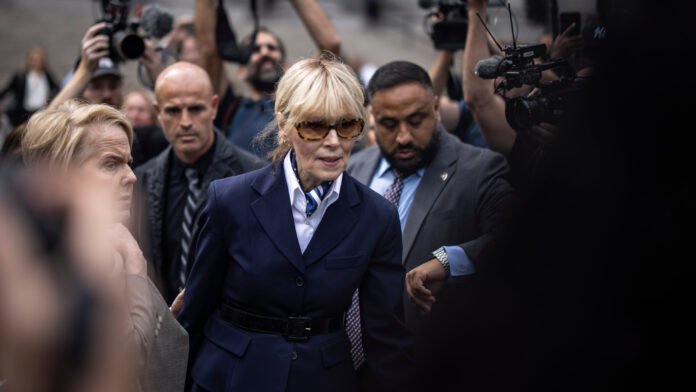
The Justice Department launched a criminal investigation into E. Jean Carroll, the former magazine columnist who accused President Donald Trump of sexual assault, according to multiple sources familiar with the matter. The investigation is focused on whether Carroll committed perjury in testimony tied to her two civil lawsuits against the president — one alleging he sexually abused Carroll in a New York department store in the mid-1990s, and a second for defaming her when he repeatedly denied the assault in 2019.
Prosecutors are examining whether Carroll lied in a 2022 deposition when she said no one else was paying her legal fees. The investigation was opened by Andrew S. Boutros, the U.S. Attorney for the Northern District of Illinois, whom Trump appointed in 2025.
Carroll won two significant civil judgments against Trump. In 2023, a jury found Trump liable for sexually abusing Carroll and defaming her, awarding her $5 million in damages. A second jury in 2024 directed Trump to pay Carroll an additional $83.3 million in damages for defaming her in 2019, when he denied her accusations and continued to speak against her in news conferences and on social media.
Acting Attorney General Todd Blanche has reportedly been recused from the DOJ probe, having worked as one of Trump’s personal attorneys on the Carroll appeals. Carroll’s attorney, Roberta Kaplan, declined to comment on the investigation. The Justice Department did not respond to requests from multiple outlets seeking comment.
The new investigation may not result in charges being brought against Carroll, but it represents the Trump administration’s latest attempt to use the judicial system to target political adversaries. At the heart of the legal question is a deposition statement Carroll made in 2022 denying outside financial support for her litigation, at a time when prominent Democratic donor and LinkedIn co-founder Reid Hoffman had reportedly been involved in supporting related legal efforts.
Why It Matters
The launch of a criminal probe against a private citizen who successfully sued the sitting president raises profound questions about the independence of the Justice Department. For decades, that independence has been considered a cornerstone of American democracy — the principle that federal prosecutors pursue evidence-based cases, not politically motivated ones. Critics argue this investigation fits a pattern of retaliatory prosecutorial action under the current administration.
The significance is amplified by the fact that the Carroll civil verdicts have already survived multiple rounds of appeal. A Manhattan jury found Trump liable for sexual abuse and defamation in 2023. A second jury in 2024 ordered $83.3 million in additional damages. Both rulings were upheld by the 2nd U.S. Circuit Court of Appeals. Those verdicts, produced by independent juries under rules of evidence in federal court, remain standing law. Initiating a criminal probe against the plaintiff does nothing to undo those findings.
The recusal of Acting Attorney General Blanche, who personally represented Trump in appeals tied to the Carroll cases before taking his current post, adds another layer of concern. While recusal is the appropriate legal and ethical response in such circumstances, his prior proximity to the matter underscores how deeply the lines between the president’s personal legal interests and the official machinery of the Justice Department have become intertwined.
The investigation is the latest launched by the Trump DOJ against the president’s critics or perceived political adversaries. Civil liberties organizations and legal scholars warn that if such probes become normalized, potential witnesses or plaintiffs in future cases involving powerful defendants may be deterred from coming forward, chilling accountability mechanisms across the judicial system.
Economic and Global Context
While this story is primarily a legal and governance matter, it intersects with broader economic dynamics tied to public confidence in institutions. Business investment, rule-of-law metrics used by international credit agencies, and foreign direct investment in the United States all rest partly on the perceived integrity of the country’s judicial and prosecutorial systems.
The DOJ’s involvement in cases connected to the president also affects perceptions of political risk in American markets. Institutional investors, sovereign wealth funds, and international trade partners monitor indicators of democratic health as part of their risk calculations. A sustained pattern of executive-branch interference in judicial processes could, over time, affect the United States’ standing on global governance indices.
Domestically, the legal community has taken note. Bar associations and former federal prosecutors have expressed concern about what they characterize as the instrumentalization of federal prosecutorial power. The American Bar Association has reportedly been facing mounting pressure from the Trump administration on separate matters, signaling a broader tension between the administration and legal institutions.
The personal financial stakes in the Carroll cases are also not insignificant. Trump is appealing both verdicts, with the $83.3 million defamation award already escalated. A criminal prosecution of Carroll, even if it ultimately fails to secure a conviction, could create legal complications that affect the trajectory of the civil appeals currently before the courts.
Implications
The most immediate implication is for Carroll herself. As the subject of a federal criminal investigation, she faces the prospect of legal costs, public scrutiny, and the stress of a government inquiry — regardless of whether charges are ultimately filed. Legal experts note that prosecutors can sustain investigations for months or years without ever bringing an indictment, and the process itself can function as a form of pressure.
For the broader justice system, this case is likely to become a reference point in ongoing debates about DOJ independence and the scope of presidential influence over federal law enforcement. Democrats on the Senate Judiciary Committee have already called for oversight hearings, and civil rights organizations are expected to file records requests related to the probe’s origins.
For Trump, the investigation offers a possible avenue to complicate the civil damages he still owes while rallying political support. His base has long viewed the Carroll verdicts as a politically motivated legal attack, and the new probe will reinforce that narrative heading into the 2026 midterm cycle. Whether the DOJ’s action is seen by swing voters as justified accountability or political weaponization may shape perceptions of the administration’s handling of the rule of law.