Story Highlights
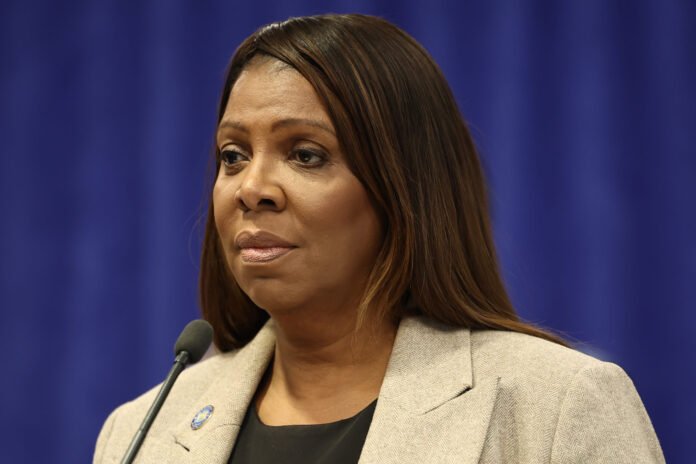
- Federal Housing Finance Agency Director Bill Pulte made new criminal referrals against New York Attorney General Letitia James, alleging possible insurance fraud.
- The referrals came after earlier DOJ efforts against James collapsed in court and failed to secure new indictments from grand juries.
- James has long been one of Trump’s most visible legal adversaries after pursuing a major civil fraud case against him and his businesses.
What Happened
The Trump administration is again seeking legal action against New York Attorney General Letitia James, adding new criminal referrals after previous prosecution efforts against her failed. Federal Housing Finance Agency Director Bill Pulte referred James to federal prosecutors in Florida and Illinois over allegations involving possible homeowners insurance fraud.
The referrals mark another escalation in a long-running legal and political battle involving James, Trump, and the Justice Department. James became one of Trump’s most prominent opponents after her office pursued a civil fraud case against him and his business empire, resulting in a major financial judgment.
- The new referrals involve alleged insurance-related misstatements.
- Earlier mortgage-fraud prosecution efforts against James were dismissed or rejected.
- James and her legal team have denied wrongdoing and described the scrutiny as politically motivated.
The earlier case against James was brought in 2025 by prosecutor Lindsey Halligan, but a federal judge dismissed the indictment after ruling that Halligan had been unlawfully appointed. The same appointment issue also affected the first criminal case against former FBI Director James Comey.
After the dismissal, federal prosecutors tried again to pursue charges against James. But two separate grand juries declined to indict her on similar mortgage-fraud allegations. That sequence — a dismissed indictment, failed re-indictment attempts, and then new referrals on related financial allegations — has fueled questions about whether the Justice Department is pursuing ordinary law enforcement or responding to political pressure.
Why It Matters
The James case has become a major test of how the Justice Department handles politically sensitive investigations. Prosecutors have a responsibility to examine credible allegations regardless of a person’s political position. But when the target is a high-profile official who previously investigated the president, the standard for independence, transparency, and legal discipline becomes even higher.
The concern is not only that James is being investigated. The concern is the pattern: public pressure from Trump, an initial prosecution that collapsed over an appointment defect, multiple grand jury setbacks, and then additional referrals built around new theories. That pattern gives critics more room to argue that the process looks retaliatory rather than neutral.
- Politically sensitive prosecutions require extra institutional discipline.
- Failed indictments can weaken public confidence in DOJ judgment.
- Repeated referrals against the same political opponent can create the appearance of retaliation.
For James, the legal risk is only one part of the issue. Even without a successful prosecution, repeated federal scrutiny can impose legal costs, reputational damage, and political pressure. That makes the process itself consequential, especially when the target is an elected state attorney general with ongoing enforcement responsibilities.
For the Justice Department, the stakes are broader. If federal prosecutions appear to follow the president’s public grievances, public trust in the department’s independence can erode. That risk becomes sharper when courts or grand juries repeatedly decline to support the government’s approach.
Oversight and Accountability Context
James’s legal history with Trump is central to the controversy. As New York attorney general, she led a civil fraud case accusing Trump and his businesses of inflating asset values to obtain favorable financial terms. Trump has repeatedly attacked James publicly and accused her of political bias.
That background does not automatically make any investigation of James improper. But it does create a record that courts, lawmakers, and watchdog groups may examine if future charges are filed. In politically sensitive cases, prosecutors must be able to show that decisions were based on evidence and law, not presidential anger or partisan retaliation.
- James previously led a major civil fraud case against Trump.
- Trump has repeatedly criticized her in public statements.
- New federal action against her is likely to face close scrutiny from courts and Congress.
The Halligan appointment issue also matters because it exposed a procedural weakness in the administration’s prosecution strategy. A judge’s ruling that a prosecutor was unlawfully appointed does not decide whether a defendant is guilty or innocent. But it does show that the government failed to follow proper legal procedure in a highly sensitive case.
That failure carries institutional consequences. When the Justice Department brings politically charged cases through officials whose authority is later rejected by the courts, it damages the credibility of the cases themselves. It can also strengthen defense arguments that the prosecution process was rushed, irregular, or driven by outside pressure.
What Happens Next
The next step depends on whether federal prosecutors in Florida or Illinois act on Pulte’s referrals. They could open or expand investigations, decline to proceed, or seek additional evidence before making any charging decision. Any future indictment would likely face immediate legal challenges from James’s defense team.
Congressional scrutiny may also increase. Lawmakers and oversight groups could ask whether federal agencies were used to gather information on James or whether DOJ decisions were influenced by political directives. The repeated nature of the referrals makes those questions more difficult for the administration to dismiss.
- Federal prosecutors must decide whether the new referrals justify further action.
- James’s lawyers are likely to argue political retaliation if charges are filed.
- Congressional committees may seek records about DOJ and FHFA involvement.
For now, the case remains less about a completed prosecution than about the conduct of the government itself. The repeated pursuit of James has created a public accountability question: whether federal law enforcement is being used evenly, or whether a political opponent of the president is being subjected to pressure through repeated legal action.
That question will remain central as long as the administration continues to pursue James after prior efforts failed. In a justice system built on independence, the appearance of political prosecution can be nearly as damaging as the reality — especially when the target is someone who previously took legal action against the president.
Sources
- CBS News: Trump official refers New York AG Letitia James for prosecution after a previous case was dismissed
- PBS NewsHour: Judge tosses James Comey, Letitia James cases, rules prosecutor was illegally appointed
- The Guardian: Grand jury again declines to indict Letitia James on mortgage fraud charges
- Fox News: Trump admin makes new criminal referrals to DOJ targeting New York AG Letitia James
- HousingWire: Bill Pulte targets Letitia James with new criminal referrals