Story Highlights
- A drone strike on Saturday caused a fire in a generator at the UAE’s Barakah Nuclear Power Plant; the generator was described as outside the plant’s inner security perimeter.
- The broader Iran-U.S. conflict began with major joint U.S.-Israeli strikes on February 28, and a ceasefire has been in place since April, though neither side has reached a formal peace agreement.
- The U.S.-hosted talks between Israel and Lebanon on May 14–15 and Pakistan’s ongoing mediation role reflect the multi-front complexity of the regional crisis.
What Happened
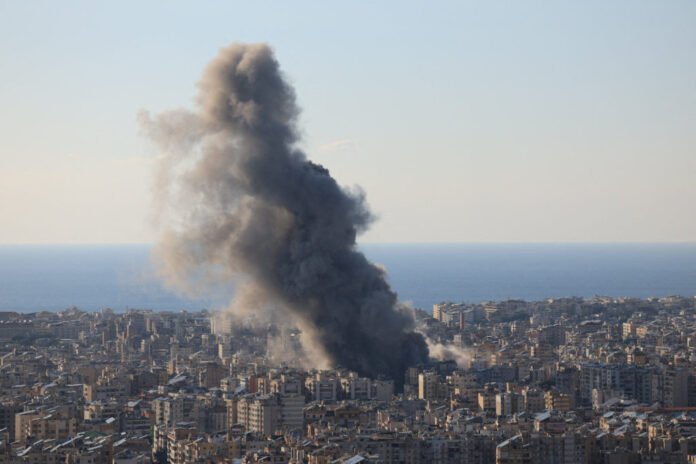
On Sunday, May 17, the Abu Dhabi Media Office confirmed that a drone strike had caused a fire in an electrical generator at the Barakah Nuclear Power Plant in the Al Dhafra Region of the UAE. Officials stated that the affected generator was located “outside the inner perimeter” of the facility, and no immediate reports indicated radiation release or damage to the reactor structures themselves. The Barakah plant, built with South Korean technology, is the UAE’s sole nuclear power facility and one of the Arab Gulf’s most strategically significant energy assets.
No group immediately claimed responsibility for the attack, but the strike occurred within a conflict environment shaped by President Donald Trump‘s announcement on February 28 of major combat operations against Iran, conducted jointly with Israel, targeting military, government, and infrastructure sites. Those strikes initiated a period of intensive warfare that has reshaped the regional security landscape, following months of escalating confrontation rooted in Iranian support for militant groups and conflict over the Strait of Hormuz.
A conditional two-week ceasefire was brokered by Pakistan in April after initial U.S.-Iran talks in Islamabad failed to produce a comprehensive agreement. Trump subsequently announced the extension of the ceasefire on an open-ended basis, paired with a continued U.S. naval blockade pending resolution of the broader negotiations. Iran has been restricting Gulf shipping for months, and the U.S. counter-blockade has created an economic chokepoint through one of the world’s most critical energy corridors.
Separate from the U.S.-Iran track, the United States hosted two days of talks between Israel and Lebanon on May 14 and 15, reflecting the multi-front nature of the regional conflict in which Iran’s network of allied forces and proxies has remained active even during the nominal ceasefire. Pakistan’s interior minister traveled to Tehran on May 16 for meetings, signaling continued diplomatic mediation activity.
Iran’s foreign ministry spokesperson Esmaeil Baghaei stated that nuclear negotiations are not currently on the table, consistent with Tehran’s position that an end to the war and the lifting of blockades must precede any discussion of its nuclear program. Trump has demanded that Iran halt its nuclear enrichment and surrender its stockpile of highly enriched uranium as preconditions, creating the central impasse that diplomats on both sides have failed to resolve across multiple rounds of talks.
Why It Matters
The drone strike on the Barakah facility — however limited in its immediate physical effect — represents an escalation that carries extraordinary symbolic and strategic weight. A nuclear power plant is among the most sensitive categories of civilian infrastructure in existence. Even an attack on perimeter systems that does not breach a reactor threatens regional confidence in the safety of nuclear facilities and could set dangerous precedents for what constitutes acceptable targeting in irregular warfare.
For the UAE, the attack is a pointed challenge to a country that has sought to maintain a degree of neutrality and economic stability during the broader Iran conflict. Abu Dhabi has been cautious about being drawn into the military dimensions of the war, while also hosting key U.S. military assets and logistics infrastructure. An attack on UAE soil — even attributed to Iran-linked actors without formal acknowledgment — puts pressure on Emirati leadership to clarify its security posture in ways that could complicate regional diplomacy.
For the United States, the attack creates pressure on Trump’s negotiating position. The administration has described the ceasefire as fragile and has already said Iranian backtracking has threatened its viability. Attacks by Iran-linked forces on critical infrastructure in a U.S.-aligned Gulf state during a ceasefire period could harden the American posture in talks, potentially closing off the diplomatic off-ramp that both governments have publicly said they prefer.
The broader pattern — ceasefire in place, but proxy and affiliated attacks continuing — is a feature of Iranian strategic behavior that U.S. negotiators and military commanders have encountered repeatedly over decades. Tehran maintains plausible deniability for actions by affiliated groups while using them as leverage in negotiations, a dynamic that has historically frustrated American attempts to translate military pressure into clean diplomatic outcomes.
Economic and Global Context
The Strait of Hormuz closure has already had measurable consequences for global energy markets. Oil prices have been elevated throughout the conflict, with Brent crude trading above $114 per barrel at certain points this year. The Barakah plant itself supplies approximately 25 percent of the UAE’s electricity needs; while Saturday’s fire was contained, any sustained threat to the facility would have direct implications for the UAE’s energy supply and for broader Gulf energy production infrastructure that global markets depend upon.
International shipping insurance rates have risen sharply since the onset of the Hormuz crisis, and global shipping routes have been restructured to avoid the Persian Gulf in ways that add costs and delays throughout the global supply chain. Those costs are passed on to consumers worldwide, contributing to inflationary pressure that central banks including the U.S. Federal Reserve are navigating simultaneously with domestic economic management.
Gulf Arab states have been accelerating their own defensive capabilities in response to the threat environment, and several have strengthened bilateral security agreements with the United States. The economic cost of the Iran conflict extends well beyond energy markets — it is affecting insurance, shipping, defense budgets, and fiscal planning across the broader Middle East region in ways that will persist for years.
Implications
The most immediate question is attribution and response. If the attack on the Barakah generator is traced to Iran-linked forces, the UAE will face a decision about how to respond publicly and through its own diplomatic channels. A strong UAE response could complicate the broader ceasefire framework; a muted one could signal to the attackers that Gulf infrastructure remains a viable target with limited consequences.
For Trump and his negotiating team, the attack adds to the pressure of a diplomatic moment that CNN has described as the ceasefire being on “massive life support.” The administration has already signaled that a resumption of major combat operations is under active consideration if Iran fails to present an acceptable framework. A strike on UAE infrastructure during the ceasefire period provides additional political justification for that posture.
For the American public, the Barakah attack is a reminder that the Iran conflict’s geographic consequences extend well beyond the primary theater of operations. An attack on a nuclear facility in a U.S.-allied Gulf state connects the conflict directly to the global energy supply, nuclear safety concerns, and the reliability of American security guarantees in the region — issues that matter to voters, markets, and allied governments simultaneously.
Sources
“Iran live updates: Israel-Lebanon ceasefire extended for 45 days”