Story Highlights
- U.S. District Judges Amir Ali and Myong Joun issued separate rulings blocking the Education Department’s new PSLF eligibility rules
- The blocked rule would have denied forgiveness to public servants working for employers deemed to have a “substantial illegal purpose”
- More than 9 million borrowers may be eligible for PSLF, a program created by Congress in 2007
What Happened
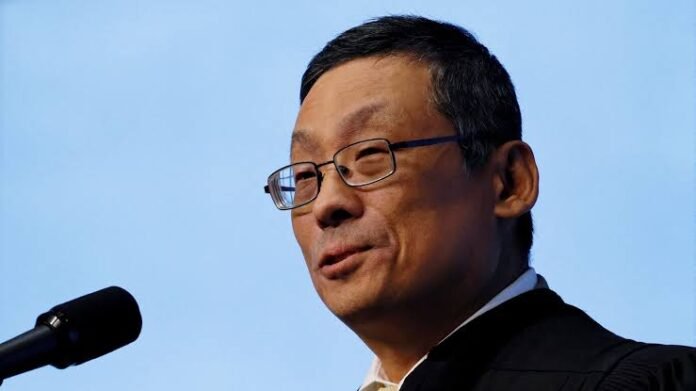
On Tuesday, June 30, two separate federal judges ruled against the Trump administration’s attempt to narrow eligibility for the Public Service Loan Forgiveness program, just one day before the new restrictions were scheduled to take effect on July 1. U.S. District Judge Amir Ali in Washington, D.C., struck down the regulation, while U.S. District Judge Myong Joun in Boston, appointed by President Biden, issued a companion ruling concluding that the rule was “contrary to law” and violated First Amendment protections.
The blocked regulation stemmed from a March 2025 executive order in which Trump directed the Education Department to redefine which employers qualify as engaging in “public service” for loan forgiveness purposes. Under the proposed rule, the Secretary of Education could disqualify borrowers whose employers were deemed to have a “substantial illegal purpose,” a standard critics said was vague enough to target nonprofits and government entities involved in immigration advocacy, transgender healthcare, or other causes disfavored by the administration. The rule also would have excluded new Parent PLUS loans issued after July 1 from qualifying for forgiveness pathways.
New York Attorney General Letitia James, who led a coalition of 22 states and the District of Columbia challenging the rule, said the ruling “stopped the federal government from turning a program created to honor public service into a weapon for political retaliation.” A separate lawsuit was filed by a coalition of cities, labor unions, and nonprofit organizations. Judge Joun found that Congress, not the executive branch, established PSLF’s eligibility criteria when it created the program in 2007, and that the Education Department lacked statutory authority to redefine those standards unilaterally based on policy preferences Congress never identified as relevant.
PSLF allows borrowers to have federal student loans forgiven after ten years of qualifying payments while working full-time for government or nonprofit employers. Since Congress created the program under President George W. Bush, more than 1 million borrowers have received debt relief through it, with more than 9 million potentially eligible according to nonprofit estimates. The Trump administration has argued the program has been exploited by activist organizations it says “harm our national security and American values,” language drawn directly from the president’s original executive order.
The Justice Department is expected to appeal the rulings, with legal observers anticipating the case could reach the Supreme Court as early as the fall term.
Why It Matters
The ruling represents a significant check on executive authority over a program that touches millions of American workers in fields ranging from public education to healthcare to legal aid. For borrowers who built career and financial plans around PSLF’s promise of forgiveness after a decade of public service, the injunction offers immediate reassurance that those plans remain viable, at least for now.
The case also underscores an emerging pattern in Trump’s second term: attempts to reshape federal programs through executive rulemaking rather than legislation, followed by judicial intervention citing separation-of-powers concerns. Courts have repeatedly found that agencies under Trump have exceeded statutory authority when redefining eligibility standards for programs Congress explicitly created and defined.
Beyond the legal question, the substance of the blocked rule raises concerns about using loan forgiveness as a tool to pressure nonprofit and advocacy organizations. Critics argued the “substantial illegal purpose” standard could have been applied selectively against groups engaged in immigration rights work, LGBTQ healthcare access, or political protest, effectively using federal benefits policy to discourage certain forms of civic engagement.
Economic and Global Context
The ruling arrives amid a broader reshaping of federal student loan policy tied to the One Big Beautiful Bill Act, which took effect the same day, July 1. That law introduced a new tiered standard repayment plan and a Repayment Assistance Plan while phasing out several existing income-driven repayment options by 2028. Nearly 43 million Americans hold federal student loans totaling approximately $1.7 trillion as of March 2026, making any changes to eligibility or repayment terms consequential on a national economic scale.
The PSLF litigation is occurring against this backdrop of broader loan system upheaval, adding legal uncertainty to an already complex transition period for borrowers. Financial advisors and loan servicers have noted that the overlapping changes, some blocked by courts and others proceeding as scheduled, have created confusion among millions of borrowers trying to determine which rules currently apply to them.
Globally, the case has limited direct international impact, though it reflects broader debates occurring in developed economies about the role of government in underwriting higher education costs and the appropriate boundaries of executive rulemaking authority in areas traditionally governed by detailed congressional statute.
Implications
For borrowers currently pursuing PSLF, the immediate practical guidance is to maintain the status quo: continue making qualifying payments and preserving employment certification documentation, since the injunction is preliminary rather than a final resolution of the underlying legal dispute.
For the Trump administration, an appeal to the appellate courts appears likely within days, setting up a prolonged legal fight that could extend well into 2027 depending on how quickly the case moves through the federal court system. A Supreme Court hearing, if granted, would not likely occur before the fall term at the earliest.
For nonprofit organizations and advocacy groups, the ruling offers temporary protection from a policy many viewed as an existential threat to their ability to recruit and retain public-interest-minded employees. However, the underlying legal question, how much discretion the executive branch holds over congressionally created benefit programs, remains unresolved and will likely shape future disputes over federal rulemaking authority regardless of this case’s ultimate outcome.
Sources
“Trump administration’s limits on student loan forgiveness program are blocked. What to know”