California Governor Gavin Newsom has escalated his public conflict with the Trump Justice Department, filing a formal records request and speaking publicly for the first time about what he characterizes as a politically motivated federal investigation into himself and his wife. The dispute has become increasingly contentious as conflicting reports emerge about when the underlying investigations actually began.
Story Highlights
- Newsom’s office filed a Freedom of Information Act request July 10 seeking DOJ records on the investigation
- Newsom publicly disclosed the investigation in June, alleging it targets him over a potential 2028 presidential run
- Multiple news organizations report the investigations originated during the Biden administration
- Investigators are reportedly examining Newsom’s wife’s tax filings and nonprofit organizations she leads
What Happened
California Governor Gavin Newsom announced in mid-June that the U.S. Department of Justice had opened a criminal investigation into him and his wife, Jennifer Siebel Newsom, alleging in a video statement that federal agents had been contacting his friends, family members, and former employees as part of what he characterized as a politically motivated fishing expedition. “They’re demanding records. They’re abusing the grand jury process, digging through years and years of random documents,” Newsom said in his initial announcement, drawing a comparison to similar investigations that have targeted other prominent critics of President Donald Trump, including former FBI Director James Comey and New York Attorney General Letitia James.
A source familiar with the matter told Axios that multiple investigations were indeed underway, though the source stated they had begun approximately a year earlier rather than originating with the current Justice Department leadership. According to subsequent reporting from CalMatters, CBS News, Axios, the Financial Times, and The Guardian, at least two separate criminal investigations connected to Newsom’s political orbit have been underway for roughly a year within the U.S. Attorney’s Office for the Eastern District of California, with reporting indicating that one inquiry involving former Newsom chief of staff Dana Williamson originated during the Biden administration following complaints from whistleblowers in Sacramento.
Newsom’s office escalated the dispute on July 10 by filing a Freedom of Information Act request seeking records from the Justice Department covering communications from January 20, 2025, to the present involving senior department officials, including former Attorney General Pam Bondi, former Acting Deputy Attorney General Emil Bove, and Acting Attorney General Todd Blanche. The governor’s office stated it was seeking to determine how the investigation was initiated and conducted, characterizing it as an example of what it called Trump’s “lawless abuse of power.” The governor’s office also alleged that after federal investigators failed to uncover evidence of wrongdoing directly involving Newsom, the inquiry expanded to include his wife and other individuals connected to the family.
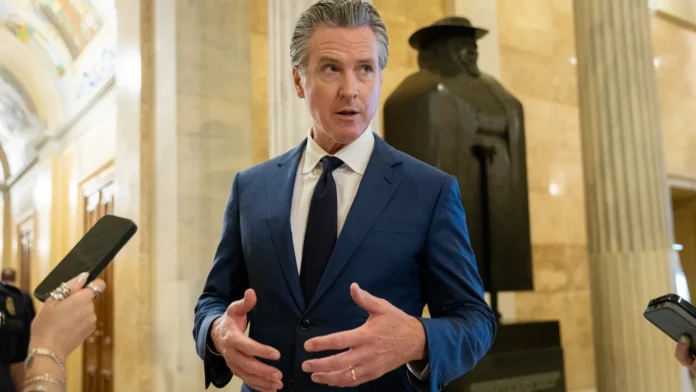
Speaking publicly for the first time on the matter during a July 9 press conference before departing on a national campaign tour supporting Democratic candidates, Newsom stated that “the abuse was overwhelming” and described “poor and innocent people getting knocks on the door first thing in the morning, having to hire private attorneys.” Newsom declined to name any of the individuals affected or specify the exact scope of records being sought by investigators, and has also faced separate scrutiny over his own delayed release of personal tax returns covering the years 2021 through 2025.
Why It Matters
The dispute over the Newsom investigation’s origins and timeline illustrates the broader difficulty in assessing claims of political retaliation within the current Justice Department, given that career prosecutorial investigations can span multiple administrations and involve legitimate whistleblower complaints that predate any change in political leadership, complicating straightforward narratives of purely politically motivated targeting.
For Newsom specifically, the controversy carries significant political stakes given his widely reported consideration of a 2028 presidential campaign, positioning him as one of several prominent Democratic figures who have publicly alleged Justice Department targeting since Trump’s return to office, a pattern that has become a recurring theme in Democratic messaging regarding the administration’s use of federal law enforcement power.
The dispute also highlights tensions between transparency demands placed on public officials and legitimate law enforcement confidentiality interests, with critics on both sides invoking competing principles, Newsom’s supporters emphasizing the need for accountability regarding politically sensitive investigations, and his critics highlighting his own reluctance to fully disclose personal financial information despite calling for greater transparency from federal investigators.
For American voters more broadly, the controversy reflects growing polarization regarding trust in federal law enforcement institutions, with perceptions of the Justice Department’s objectivity increasingly filtered through partisan lenses that shape how similar sets of facts, including overlapping investigation timelines spanning multiple administrations, are interpreted by different political constituencies.
Economic and Global Context
The investigation’s financial dimensions extend to scrutiny of nonprofit organizations associated with Jennifer Siebel Newsom, with reports indicating that investigators are examining fundraising practices and potential ties between these organizations and companies holding pending business interests before California state government, a line of inquiry that, if substantiated, could carry implications for state-level ethics and conflict-of-interest regulations.
California’s political and business community has closely monitored the controversy given Newsom’s prominent role in state economic policy and his potential future national political ambitions, with the investigation’s outcome carrying implications for California’s political leadership transition as Newsom approaches the end of his gubernatorial term under state term limits.
The broader pattern of investigations into prominent Democratic officials, including Newsom, Minnesota Governor Tim Walz, and others, has drawn attention from political and legal analysts assessing the cumulative fiscal and institutional costs of sustained federal investigative activity directed at state and local elected officials, particularly regarding the resources required for both federal investigators and the officials mounting legal defenses against such inquiries.
Internationally, the controversy has drawn some attention from foreign observers monitoring the treatment of political opposition figures in the United States, particularly given Newsom’s prominent national political profile and the unusual dynamic of a sitting state governor publicly alleging federal law enforcement targeting by the president’s administration.
Implications
The Justice Department faces a 20-day statutory deadline to respond to Newsom’s Freedom of Information Act request, though such deadlines are frequently extended or contested in politically sensitive matters, meaning the immediate release of substantive records documenting the investigation’s origins and conduct remains uncertain in the near term.
For Newsom, the coming weeks will likely bring continued pressure to release his outstanding tax returns, a demand that has grown louder even among some sympathetic observers who note the tension between his public criticism of the Justice Department’s lack of transparency and his own incomplete financial disclosure record extending back over more than a decade.
For congressional Democrats, the Newsom investigation adds to a growing list of cases cited in calls for legislative reforms strengthening protections against politically motivated federal investigations of elected officials, though any such legislative efforts would likely face significant obstacles given the current composition of Congress.
Looking ahead, the investigation’s ultimate resolution, whether through formal charges, a declination to prosecute, or continued extended inquiry, will likely shape both Newsom’s political trajectory and broader public perceptions of Justice Department conduct heading into the 2026 midterm elections and any potential future Newsom presidential campaign.
Sources