Story Highlights
- U.S. District Judge Christopher Cooper ruled that the Kennedy Center’s Trump-appointed board violated federal law in renaming the venue, ordering all Trump signage and references removed by June 12
- The center’s Office of General Counsel issued an internal memo instructing staff to immediately scrub email signatures, letterhead, websites, and signage of all Trump references
- Trump responded by declaring on Truth Social he has “no interest” in continuing the renovation and said he would transfer control of the center to Congress
What Happened
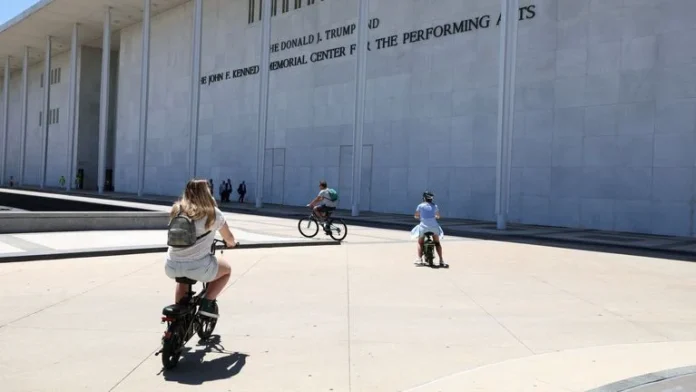
U.S. District Judge Christopher Cooper issued a sweeping ruling on May 29, 2026, finding that the Kennedy Center’s Trump-appointed board of trustees acted unlawfully when it voted in December 2025 to rename the historic performing arts venue after the sitting president. In a 94-page decision — pointedly issued on President Kennedy’s birthday — Cooper concluded that Congress had established the Kennedy Center’s name by statute, and that only an act of Congress, not a board vote, could legally change it.
“The Kennedy Center’s organic statute makes crystal clear that the Center is to be named for President Kennedy, and it cannot bear any other formal name or public memorial based on the Board’s unilateral say-so,” Cooper wrote. He also separately blocked the board’s March 2026 vote to close the facility for a two-year renovation beginning July 4, calling that decision “ill-informed and seemingly preordained” and the product of an “insufficient, one-sided presentation of information.”
The lawsuit was brought by Rep. Joyce Beatty, a Democrat from Ohio who also serves as a Kennedy Center trustee. Beatty had argued since December that the board — which Trump had stacked with loyalists after firing the previous members — lacked the legal authority to rename a venue that Congress had designated as a sole national memorial to the late President Kennedy. Her legal team argued the renaming was “a flagrant violation of the rule of law.”
Following the ruling, the Kennedy Center’s Office of General Counsel issued an internal memo to all staff on June 4 directing them to immediately begin removing all references to Trump from email signatures, letterhead, promotional materials, brochures, and the institution’s website. Deadline for full compliance: June 12. The memo stated the center was “complying with the court’s order while evaluating all legal options,” leaving open the possibility of an appeal. President Donald Trump responded on Truth Social, calling the ruling unjust, blasting the judge, and announcing that he would instruct his administration to transfer the Kennedy Center’s control to Congress.
Why It Matters
The Kennedy Center ruling is significant beyond the symbolic question of whose name appears on a building. It represents a direct judicial finding that a sitting president exceeded his authority by using a hand-picked board as a proxy to accomplish something that required an act of Congress. The decision reinforces a principle that has been tested repeatedly in Trump’s second term: that executive power, even when wielded through nominally independent bodies, has legal limits that courts will enforce.
The ruling also matters for the broader question of governance accountability. Trump’s approach to the Kennedy Center — firing the existing board, installing loyalists, renaming the venue, and then announcing an indefinite closure — compressed an enormous amount of unilateral executive action into a very short period. Each of those steps generated legal challenges, and courts have now found that at least some of them crossed legal lines.
For the Kennedy Center as an institution, the ruling provides some breathing room. The closure had been scheduled to begin July 4, 2026, just weeks away. With Cooper’s injunction blocking that closure pending a fuller board review, major upcoming events — including comedian Bill Maher receiving the Mark Twain Prize for American Humor on June 28 — can proceed as planned.
Economic and Global Context
The Kennedy Center is among the most prominent performing arts institutions in the United States, hosting hundreds of performances annually and contributing significantly to Washington’s tourism and cultural economy. Its planned two-year closure would have affected thousands of employees, contractors, and performers, as well as the regional hospitality sector that depends on audiences attending Kennedy Center productions.
Congress appropriated $257 million for the renovation project — a figure cited by Kennedy Center spokespersons as evidence the financial resources are in place to proceed regardless of the litigation. However, the court’s ruling means those funds cannot be deployed toward a closure and renovation without a more deliberate and legally sound board process. The Trump administration’s decision to involve private tech donors — including Amazon, Apple, Google, and Microsoft — in the White House ballroom project raised concerns about conflicts of interest that observers say are relevant context for the Kennedy Center situation as well.
Implications
The Kennedy Center board must now revisit its closure decision through a process the court considers legally adequate, weighing the institution’s statutory obligation to maintain arts programming against the renovation’s practical necessities. That process is unlikely to be swift, which effectively delays any closure well into 2026 and potentially beyond. Whether the board, still dominated by Trump appointees, will approach that process in good faith is an open question.
For Trump, the transfer-to-Congress gambit is notable. It signals a recognition that the legal path to accomplishing his Kennedy Center ambitions through executive action has been substantially closed. Whether Congress would act to formally rename the center or authorize its closure is uncertain, but the move shifts political accountability for the center’s future onto legislators rather than the White House.
Sources
“Kennedy Center memo instructs staff to remove Trump’s name by June 12”