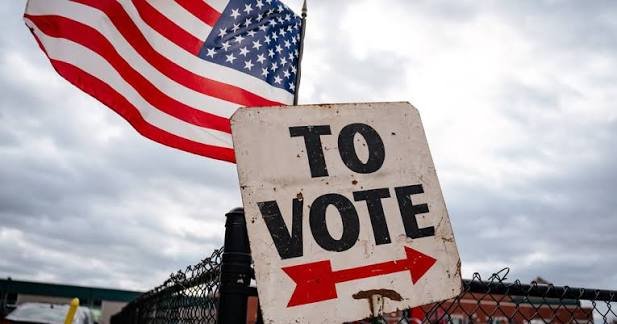
The Justice Department is citing a handful of noncitizen voting prosecutions, including a Louisiana case involving an Australian national, as justification for a sweeping nationwide campaign threatening state election officials with criminal liability over voter roll maintenance. The enforcement push, led by Civil Rights Division chief Harmeet Dhillon, has produced repeated courtroom defeats even as the department escalates pressure through direct threats to election administrators. The pattern raises questions about accountability and the proper use of federal prosecutorial authority in an area traditionally governed by state law.
Story Highlights
- DOJ has secured a small number of noncitizen voting convictions since Trump returned to office, including a Louisiana case involving an Australian national accused of voting in multiple elections.
- Federal courts have repeatedly dismissed DOJ lawsuits seeking to compel states, including Maryland and New Hampshire, to hand over complete voter registration data.
- Despite courtroom losses, DOJ has escalated pressure through direct criminal liability warning letters sent to election officials in all 50 states.
What Happened
The Justice Department’s Civil Rights Division, under Assistant Attorney General Harmeet Dhillon, has spent recent weeks pointing to a limited number of successful noncitizen voting prosecutions as justification for an aggressive nationwide campaign pressuring state election officials over voter roll maintenance. Among the cases Dhillon has cited publicly is a prosecution in Louisiana involving an Australian national accused of voting in multiple U.S. elections, which Dhillon described in a Washington Examiner interview as evidence of a “significant problem” warranting continued federal scrutiny, though she declined to discuss details of ongoing investigations or provide comprehensive data on the scale of confirmed noncitizen voting nationally.
The prosecutorial success stands in sharp contrast to the department’s broader litigation record on related voter roll issues. Federal judges have repeatedly dismissed Justice Department lawsuits seeking to compel states to hand over comprehensive voter registration data, including a case in Maryland where a federal judge tossed the department’s lawsuit seeking an unredacted, complete copy of the state’s voter registration list. New Hampshire similarly succeeded in fending off a Trump administration effort to force the state to surrender its voter rolls. Despite these courtroom defeats, the department has continued escalating pressure through alternative means, including direct correspondence threatening individual election officials with potential criminal prosecution.
Dhillon, in a July interview with the Washington Examiner, characterized the department’s approach as targeting states that have “homework to do” ahead of the 2026 midterms, encouraging officials to voluntarily run their voter rolls against federal databases maintained by the Department of Homeland Security to identify potentially ineligible registrants. She emphasized that the criminal liability warnings specifically target officials who “knowingly” fail to act on identified issues rather than those who make good-faith administrative errors, stating that “mistakes happen” and are treated differently from deliberate noncompliance under the department’s framework.
State election officials and voting rights advocates have pushed back sharply against the characterization of the campaign as routine oversight. Maryland Elections Administrator Jared DeMarinis, who received one of the criminal liability warning letters, argued the timing, arriving immediately after the department’s own courtroom defeat seeking Maryland’s voter data, revealed the letters’ true intent as retaliatory pressure rather than good-faith enforcement. Senator Chris Van Hollen of Maryland characterized the pattern as an attempt to “sow doubt in our democracy” following the department’s legal losses, while voting rights advocates have separately raised concerns about a related FBI and Homeland Security search of a progressive voting rights organization’s offices last month, which they argue signals a broader pattern of federal pressure extending beyond formal legal channels.
Why It Matters
The pattern of aggressive federal pressure tactics deployed after repeated courtroom losses raises significant questions about executive branch accountability when litigation strategies fail to achieve desired outcomes through the normal judicial process. Legal scholars note that pursuing extrajudicial pressure, including direct threats of criminal prosecution against officials who have successfully defended their positions in federal court, represents an unusual escalation that tests the boundaries of appropriate prosecutorial conduct.
For state election officials nationwide, the disconnect between DOJ’s limited documented prosecutorial success on noncitizen voting and the scale of its nationwide enforcement pressure campaign creates a challenging environment in which officials must weigh compliance with federal demands against their own legal judgment about state law requirements, particularly when federal courts have already validated their positions in related litigation.
The broader accountability question extends to how the Justice Department allocates its resources and prioritizes enforcement actions. Critics argue that dedicating substantial departmental resources toward a nationwide letter-writing and monitoring campaign, despite a relatively small number of documented noncitizen voting cases nationally, reflects a mismatch between the scale of the department’s response and the actual scope of the underlying problem it claims to be addressing.
For American voters, the pattern of escalating federal-state conflict over election administration, layered atop the department’s own inconsistent legal track record, risks further eroding public confidence in the fairness and stability of election administration processes precisely at a moment when maintaining that confidence carries heightened importance ahead of a competitive midterm election cycle.
Economic and Global Context
The financial and administrative costs associated with the department’s enforcement campaign fall substantially on state governments, which must dedicate legal resources to defending against federal lawsuits, responding to warning letters within compressed timeframes, and managing the broader administrative burden of an intensified federal oversight posture, even in cases where those states ultimately prevail in court.
The department’s pattern of pursuing litigation, losing, and then escalating through alternative pressure tactics represents a notable departure from typical executive branch practice following adverse court rulings, where administrations more commonly either appeal through normal channels or adjust policy approaches based on judicial guidance rather than pursuing parallel pressure campaigns targeting the same underlying objective.
Comparative examples from other federal democracies generally show more centralized national authority over voter roll maintenance, reducing the kind of adversarial federal-state dynamic currently playing out in the American system, where election administration remains constitutionally rooted primarily at the state level even as federal voting rights law establishes certain baseline requirements officials must meet.
Financial markets and broader economic indicators show no direct connection to this dispute, though governance analysts who track institutional stability as a component of political risk assessment note that sustained federal-state conflict over core democratic processes can factor into longer-term evaluations of governmental function and predictability.
Implications
The pattern of continued legal setbacks followed by escalating pressure tactics suggests the Justice Department is likely to persist with its current approach regardless of additional courtroom losses, given Dhillon’s public statements indicating the monitoring and enforcement program will expand significantly ahead of the November general election rather than scale back.
Additional legal challenges to the department’s warning letters and monitoring program remain likely, potentially from state attorneys general or voting rights organizations seeking to establish clearer legal boundaries around the scope of permissible federal pressure on state election officials who have already prevailed in related litigation.
For congressional oversight committees, particularly those controlled by Democrats in future sessions, the pattern documented across multiple states creates a foundation for potential hearings examining the Justice Department’s prosecutorial discretion and resource allocation decisions in the election administration context.
For state election officials and voting rights advocates, the coming months will likely require continued vigilance and potential additional legal defense against a Justice Department that has shown willingness to pursue its objectives through multiple channels simultaneously, even after repeated formal legal defeats on the underlying substantive questions.
Sources