Story Highlights
- First Lady Melania Trump launched an initiative helping child welfare agencies open investment accounts for eligible foster children.
- The federal $1,000 contribution is limited to U.S. citizens born between January 1, 2025, and December 31, 2028.
- The program’s long-term value will depend on state participation, accurate enrollment and additional public or private contributions.
What Happened
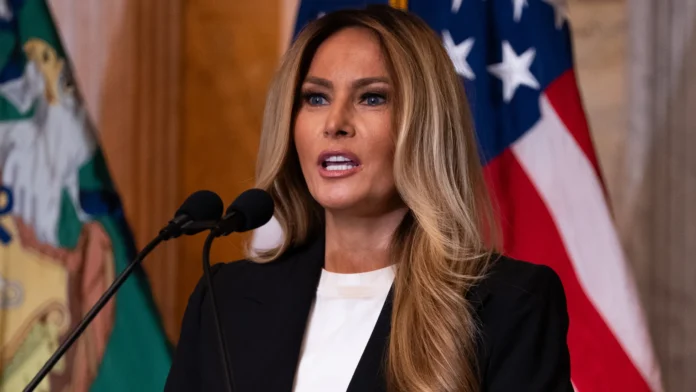
First Lady Melania Trump and Treasury Secretary Scott Bessent announced new federal guidance allowing state, territorial and tribal child welfare agencies to open Trump Accounts for eligible children in foster care.
The initiative is called Fostering the Future Accounts and operates through the broader Trump Accounts program established under President Donald Trump’s signature tax and spending legislation.
Because foster children may not have a parent or permanent guardian available to complete the enrollment process, the Treasury Department will recognize qualifying child welfare agencies or their designees as authorized account openers.
- Child welfare agencies can establish accounts for children under their legal care.
- The Treasury Department will provide implementation guidance and assistance.
- Accounts are scheduled to begin accepting contributions on July 4, 2026.
Eligible U.S. citizens born between January 1, 2025, and December 31, 2028, can receive a one-time $1,000 federal contribution.
The money will be invested through a diversified stock-market index and can remain invested as the child grows.
Additional contributions may come from states, employers, charitable organizations, relatives or other permitted contributors, subject to the rules governing Trump Accounts.
Melania Trump said the initiative is intended to give foster children access to asset ownership and long-term financial growth similar to the opportunities available to children living with permanent families.
Twenty-three governors have pledged to help their child welfare agencies implement the program, although participation and additional state funding will vary.
Why It Matters
Children leaving foster care frequently enter adulthood without the financial support networks available to many of their peers.
They may lack family savings, help with housing deposits, transportation assistance or relatives who can cover unexpected expenses.
An investment account cannot solve every challenge associated with foster care, but it can provide an asset that belongs directly to the child and may grow over time.
- The account introduces foster youth to long-term saving and investment.
- Additional contributions could make the benefit more meaningful by adulthood.
- Automatic enrollment could prevent eligible children from being overlooked.
The White House Council of Economic Advisers estimates that a $1,000 account opened for a child born in 2026 could reach approximately $5,800 by age 18 without further contributions, although actual returns are not guaranteed.
Melania Trump deserves credit for identifying an administrative gap in the original Trump Accounts framework.
Children living with parents generally have someone available to open their accounts, while children under state guardianship could have been excluded without special federal guidance.
The neutral concern is that the initiative’s public description may create the impression that every current foster child automatically receives $1,000.
The federal contribution is limited by age, citizenship and birth-date requirements. Older foster youth, including many approaching the age when they will leave care, do not qualify for the automatic federal seed payment.
Those children may still benefit if states or private organizations open and fund accounts for them, but that assistance is not guaranteed by the federal announcement alone.
Oversight and Accountability Context
The program’s success will depend less on the announcement than on how effectively federal and state agencies implement it.
Foster children frequently move between homes, counties and legal guardians. Agencies must ensure that an account follows the child and remains accessible even when their placement changes.
Clear recordkeeping will also be necessary when a child reunites with family members, is adopted, moves to another state or ages out of foster care.
- States need reliable systems for identifying every eligible child.
- Accounts must remain attached to the child rather than a particular placement.
- Officials should disclose how fees, investments and withdrawals will be monitored.
The Treasury Department should publish regular enrollment data showing how many eligible foster children have received accounts in each state.
Without transparent reporting, it will be difficult to determine whether the initiative is reaching children consistently or whether participation depends on where they live.
Officials should also explain who will control investment decisions while a child remains in state custody and how access will transfer when the account holder reaches adulthood.
Another accountability issue involves the size of the eventual benefit.
A $1,000 investment can grow over time, but it is unlikely by itself to cover major education, housing or transportation expenses at age 18.
The administration has encouraged employers, philanthropists and state governments to add contributions, but those commitments should be reported clearly so families and child advocates can distinguish guaranteed funding from projected or voluntary support.
The initiative should also be evaluated alongside broader foster-care needs, including safe placements, housing assistance, educational support, mental-health services and employment preparation.
Financial accounts can complement those services, but they should not be presented as a replacement for them.
What Happens Next
State child welfare agencies will begin identifying eligible children and establishing procedures for opening accounts.
The Treasury Department and Internal Revenue Service are expected to assist with documentation, Social Security information and questions involving state guardianship.
Governors must also decide whether their states will provide additional contributions beyond the federal $1,000 available to qualifying children.
- Watch how many accounts are opened after contributions begin July 4.
- Monitor whether Democratic-led states join the initial participating governors.
- Follow announcements of state, employer and philanthropic contributions.
- Track safeguards protecting accounts when foster placements change.
Private donors may become especially important for foster youth who fall outside the federal birth-date window.
States could also choose to create parallel contributions for older children, ensuring that the program does not primarily benefit infants and toddlers while excluding teenagers preparing to leave care.
Congressional committees and child-welfare organizations may request implementation reports to measure enrollment, investment performance and administrative costs.
For Melania Trump, the initiative strengthens a foster-care policy portfolio that has included education, employment, housing and transition support.
For the administration, the test will be turning a promising announcement into a nationwide system that reaches eligible children automatically and protects their money over many years.
If states establish reliable enrollment procedures and attract additional contributions, the accounts could provide foster youth with a meaningful financial starting point.
If implementation remains uneven, however, access may depend too heavily on geography, agency capacity and private generosity.