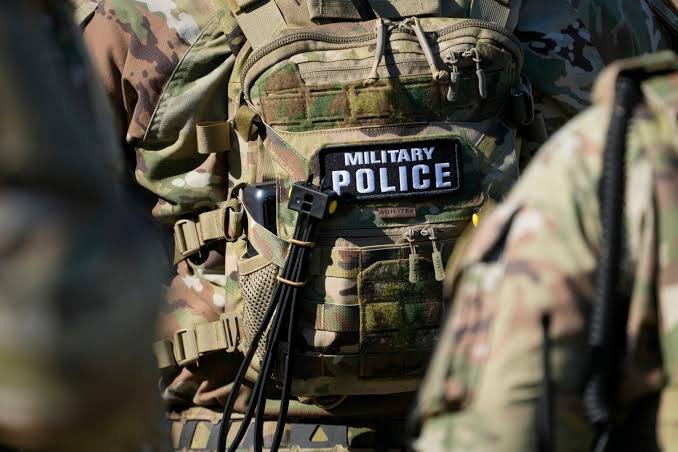
Tennessee National Guard soldiers fatally shot a 20-year-old man during a foot pursuit in downtown Memphis early Sunday, marking at least the third death associated with a federal crime-fighting task force established by President Trump. The shooting is likely to intensify legal and political scrutiny of the task force at a moment when its authority to operate is already being challenged in Tennessee courts. The incident renews a national debate over the use of military personnel in domestic policing roles that has played out in multiple cities during Trump’s second term.
Story Highlights
- Tennessee National Guard soldiers shot and killed 20-year-old Tyrin Johnson during a foot pursuit after he allegedly turned toward them with a handgun
- The shooting marks at least the third death associated with the Memphis Safe Task Force since its October 2025 launch
- A Tennessee judge has already issued a temporary injunction against the task force, ruling it may violate the state constitution
- Memphis crime data show violent crime was declining before the Guard deployment began
What Happened
Tennessee National Guard members fatally shot Tyrin Johnson, 20, during an early morning foot pursuit in downtown Memphis on Sunday, July 5. According to the Memphis Police Department, officers responded to a shots-fired call near Ida B. Wells Avenue and Gayoso Avenue shortly before 4 a.m. and observed several individuals leaving the area before spotting Johnson carrying a handgun. Guard soldiers pursued Johnson on foot, and according to police, opened fire after he turned toward them with his weapon.
The soldiers involved are part of the Memphis Safe Task Force, a federal crime-fighting initiative established by President Trump that has patrolled the city since October 2025. Unlike similar deployments in cities such as Los Angeles, Portland, and Chicago, the Memphis Guard members operate under the command of Republican Governor Bill Lee rather than direct federal control, a structural distinction that has become central to ongoing legal challenges against the task force.
The Tennessee Bureau of Investigation, which is leading an independent review of the shooting at the request of Shelby County District Attorney Steve Mulroy, identified Johnson as the man killed. Memphis Mayor Paul Young described the shooting as an “unfortunate incident” pending the outcome of the investigation. According to the U.S. Marshals Service, the task force has led to more than 10,000 arrests since its launch, and Tennessee Bureau of Investigation data indicate at least four officer-involved shootings have now been tied to the initiative, including two in May that did not involve National Guard members discharging their weapons and an earlier incident in October.
Sunday’s shooting arrives amid active litigation challenging the task force’s legal authority. Democratic state and local officials have sued to block the deployment, arguing it violates limits the Tennessee Constitution places on when and how a governor may deploy state military forces for domestic law enforcement purposes. A Tennessee judge has already sided with local officials, issuing a temporary injunction against the Guard’s continued use in the task force, though the order was stayed to give the state five days to pursue an appeal. Notably, Memphis police data show that both overall and violent crime were already declining in 2025, before the Guard deployment began, a point local officials and advocacy groups have repeatedly cited in arguing the initiative was unnecessary.
Why It Matters
This shooting adds fresh urgency to a legal and political fight over whether National Guard troops should be conducting front-line law enforcement encounters typically handled by trained civilian police. The task force’s unusual structure, placing military personnel directly into pursuit-and-arrest scenarios, raises distinct questions about training, use-of-force protocols, and accountability that differ meaningfully from standard police procedures.
The case also intersects with a broader constitutional debate playing out in Tennessee courts over gubernatorial authority to deploy state military forces domestically. Because the Memphis deployment operates under state rather than federal command, unlike similar efforts in other cities, the outcome of Tennessee’s litigation could set an important precedent for how governors nationwide may use National Guard units in domestic policing roles going forward.
For Memphis residents, the human toll, three deaths tied to the task force in under a year, arrives alongside data suggesting that crime was already trending downward before the deployment began, fueling arguments from critics that the initiative’s public safety benefits have not been clearly established relative to its costs and risks.
The incident also feeds into a larger national pattern under Trump’s second term, in which the administration has deployed troops and federal agents to multiple Democrat-led cities framed as overwhelmed by crime, an approach that has consistently drawn legal challenges and mixed public reaction depending on the jurisdiction involved.
Economic and Global Context
Deployments tied to the Memphis Safe Task Force and similar initiatives in other cities have cost taxpayers more than one billion dollars this year, according to reporting on the program’s overall expenditures. That figure includes personnel costs, logistics, and coordination among National Guard units, federal agencies, and local law enforcement, representing a substantial ongoing budget commitment tied directly to a policy still facing active legal challenges in at least one state.
Memphis itself has struggled for years with elevated violent crime rates relative to national averages, according to FBI data, providing part of the underlying rationale the administration has cited for the task force’s creation. However, the decline in crime reported by local police prior to the Guard’s arrival complicates efforts to draw a direct causal link between the deployment and any subsequent improvements in public safety.
The American Civil Liberties Union has separately challenged aspects of the task force’s operations, adding another layer of legal exposure beyond the state constitutional claims currently before Tennessee courts. Continued litigation and potential injunctions could affect the operational continuity of similar task forces the administration has established or may seek to establish in other cities.
Implications
The Tennessee Bureau of Investigation’s review of Sunday’s shooting will likely take weeks or longer to complete, and its findings could significantly influence both public opinion and the ongoing legal battle over the task force’s constitutionality. A finding of excessive force or procedural failure would add substantial weight to arguments already before Tennessee courts.
For Governor Lee and Republican state leadership, the shooting creates political pressure to defend the task force’s continued operation even as a state judge has already found the deployment likely unconstitutional under Tennessee law. The outcome of the state’s appeal, due within the original five-day window, will be closely watched.
For the Trump administration, the incident is likely to reinforce ongoing criticism of Guard deployments in domestic policing roles across multiple cities, even as officials continue to defend the broader crime-fighting task force model as a necessary response to urban crime. Expect continued legal challenges in Tennessee and scrutiny of similar deployments elsewhere as the midterm election cycle approaches.
Sources
“National Guard members on patrol in Memphis fatally shoot man during pursuit, police say”