Story Highlights
- Hegseth refused to say clearly whether he would comply or refuse an order to seize ballots in the 2026 midterms
- Trump has publicly said he regrets not signing an executive order directing the then-SecDef to seize ballots after 2020
- Hegseth ultimately said only he had “never been ordered to do anything illegal” — without defining whether ballot seizure would be illegal
What Happened
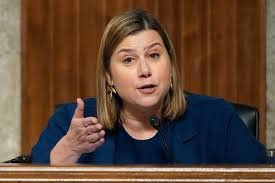
At the Senate Armed Services Committee hearing on April 30, Sen. Elissa Slotkin, a Michigan Democrat and former CIA analyst, used her allotted question time to press Defense Secretary Pete Hegseth on a question of democratic accountability. Slotkin referenced President Donald Trump‘s publicly stated regret that he did not sign an executive order in 2020 directing the then-Defense Secretary to seize ballots and voting machines following the presidential election.
Slotkin asked Hegseth directly: “If the president, who regrets not signing that executive order to the then SecDef in 2020, asks you to seize ballots or voting machines in states during the 2026 election, will you stand up for the Constitution and say no, or will you salute and do his bidding?” Hegseth dismissed the question as “yet another gotcha hypothetical, which is your specialty.” Slotkin immediately pushed back: “It’s not a hypothetical. We had an executive order that your predecessor had to hold.”
The exchange escalated rapidly. Slotkin pressed Hegseth to tell the American people directly whether he would deploy uniformed military members to polling stations to collect voter rolls or machines. Hegseth accused Slotkin of “performing for cable news.” Slotkin replied, “Are you accusing me of performing? Dude, just answer the question.” The line became an immediate cultural moment, widely shared across social media platforms.
Hegseth ultimately offered only a partial response, telling committee chair Sen. Roger Wicker, a Mississippi Republican who intervened to request a direct answer: “I’ve never been ordered to do anything illegal, and I won’t.” He did not confirm whether deploying troops to seize election materials would constitute an illegal order. Slotkin noted that the military has never been federally deployed to polling stations — not during World War II, not after September 11 — and that the 2024 state-level deployments cited by Hegseth were authorized by individual state governors, not the federal government.
Why It Matters
The exchange matters because it is not hypothetical. Trump has stated publicly and on multiple occasions since the 2020 election that he regrets not having the military seize ballots. He has continued to assert, without supporting evidence, that the 2020 election was stolen. The question of what the Defense Department would do if ordered to intervene in an election has now been asked of the sitting Secretary of Defense, and no clear answer was given.
The failure to answer directly has a functional consequence: it leaves unresolved, at the highest level of the military chain of command, whether the current administration recognizes limits on executive authority over elections. In a democracy where civilian control of the military is a foundational principle, the refusal to categorically state that the military will not intervene in domestic elections is itself significant.
Sen. Slotkin has a background in national security and intelligence that gave the exchange particular weight. During her January 2025 confirmation hearing for Hegseth, she pressed him on the same fundamental question: would he comply with or refuse an illegal order? The consistency of the questioning across multiple hearings underscores that this is not a rhetorical exercise but a sustained effort to establish on the record what the Defense Secretary’s boundaries are.
The 2026 midterms are now six months away. Republicans hold razor-thin majorities in both chambers. In that context, any ambiguity from the nation’s top defense official about whether he would comply with an order to interfere in the electoral process is a matter of legitimate public concern, not political theater.
Economic and Global Context
The ballot-seizure exchange occurred in the context of a broader hearing focused on the Iran war and the administration’s $1.5 trillion defense budget request. The juxtaposition was telling: a Pentagon seeking the largest military budget in U.S. history could not produce a secretary capable of stating clearly that he would refuse an unconstitutional order to militarize American elections.
The broader institutional concern about the militarization of domestic law enforcement has grown throughout Trump’s second term. The administration has used the military to support immigration enforcement, has deployed troops to domestic protests, and has discussed a variety of roles for federal forces in domestic governance that civil liberties organizations have challenged in court. Hegseth himself said in a prior hearing that troops could “if necessary, in their own self-defense, temporarily detain” unarmed domestic protesters.
The question also intersects with the administration’s broader pattern of executive power expansion. From ignoring the War Powers Resolution deadline on Iran, to dismissing the Inspector General system, to directing agencies not to cooperate with the Government Accountability Office, the Trump administration has consistently pushed the boundaries of executive authority beyond what established law and norms have historically permitted.
International observers, particularly in allied democracies, have noted the exchange with concern. European governments watching the United States — their most important security partner — debate whether its own defense secretary would comply with orders to subvert elections is a significant signal about the reliability of American democratic institutions.
Implications
The exchange is certain to reappear as a political flashpoint in the 2026 midterm campaign. Democrats will use Hegseth’s non-answer as evidence of insufficient commitment to constitutional norms, while Republicans will argue that the question was a political stunt designed to generate headlines. Both interpretations will fuel the intense partisan polarization that defines the current political environment.
For election officials, secretaries of state, and governors preparing for the November elections, the exchange raises practical questions about whether federal military assets could be directed toward polling sites without state authorization. The answer under current law is clearly no — but the ambiguity introduced by Hegseth’s evasion creates uncertainty that could itself be destabilizing.
Sen. Slotkin’s question has also focused attention on what accountability mechanisms exist if a secretary of defense were to comply with an unconstitutional order. The answer, in practice, is that Congress would need to act — and with Republicans controlling both chambers, that prospect is uncertain. The exchange underscored why civilian oversight of the military is not merely a procedural norm but a structural safeguard for democratic governance.
Sources
“Slotkin presses Hegseth on whether troops would seize ballots in 2026 election”