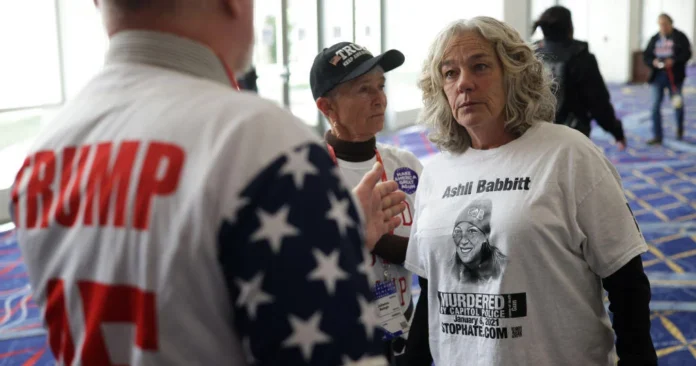
Story Highlights
- The Trump administration agreed to pay nearly $5 million to settle a wrongful death lawsuit filed by Ashli Babbitt’s family.
- Babbitt was fatally shot by a Capitol Police officer while attempting to enter the House Speaker’s Lobby during the January 6 attack.
- The settlement comes despite earlier Justice Department and Capitol Police reviews concluding that the officer’s actions were lawful.
What Happened
The Trump administration agreed to pay nearly $5 million to settle a wrongful death lawsuit brought by the family of Ashli Babbitt, the January 6 rioter who was fatally shot by police while trying to enter a protected area of the U.S. Capitol.
The settlement resolves a lawsuit filed by Babbitt’s estate, which had originally sought $30 million in damages. Reports place the settlement at approximately $4.975 million, with about one-third expected to go to attorneys representing the family.
- Babbitt was shot on January 6, 2021, during the breach of the U.S. Capitol.
- She was attempting to climb through a broken window near the House Speaker’s Lobby.
- Members of Congress and staff were being evacuated nearby at the time.
The officer who fired the shot, Capitol Police Lt. Michael Byrd, was previously cleared by both the Justice Department and Capitol Police. Investigators concluded that the evidence did not support criminal charges and that the shooting was lawful under the circumstances.
Babbitt’s family and legal team argued that she was unarmed, that the use of force was unnecessary, and that officers should have used de-escalation or other methods before lethal force was used.
The settlement allows the administration to avoid a trial, but it has immediately reopened one of the most emotionally charged disputes from January 6: whether Babbitt should be remembered as a rioter who breached a congressional security perimeter or as a victim of government overreach.
Why It Matters
The settlement matters because it reverses the government’s previous legal posture in one of the most high-profile cases connected to the Capitol attack.
Under the Biden administration, the Justice Department declined to prosecute Byrd, and Capitol Police concluded that his actions protected lawmakers and staff. Under Trump, the government has now chosen to pay Babbitt’s family instead of defending that position at trial.
- Supporters of the settlement say Babbitt’s family deserved compensation and accountability.
- Critics say the payout undermines officers who defended the Capitol on January 6.
- The decision adds to Trump’s broader effort to recast the legacy of the Capitol attack.
Outgoing Capitol Police Chief Tom Manger strongly criticized the decision, saying he was disappointed and disagreed with the settlement. He warned that the payout could send a chilling message to law enforcement officers assigned to protect government institutions.
For Capitol Police officers, the concern is not only financial. The settlement raises fears that future administrations could second-guess life-or-death security decisions based on political pressure years after an incident has been reviewed and closed.
Political and Public Context
The settlement comes during a broader Trump administration effort to revisit January 6 prosecutions and accountability measures. Trump has pardoned January 6 defendants and repeatedly described many participants as unfairly treated by the justice system.
That political context makes the Babbitt settlement especially explosive. To Trump’s supporters, Babbitt became a symbol of what they view as unequal justice and excessive force. To critics, the payout is part of a campaign to rewrite the facts of a violent attack on Congress.
- The case has become a central symbol in competing narratives about January 6.
- Judicial Watch and other conservative legal advocates helped pursue the lawsuit.
- Democrats are likely to frame the settlement as taxpayer-funded revisionism.
The settlement also intersects with the administration’s broader anti-weaponization agenda. Critics have linked it to Trump’s separate push to compensate people who claim they were politically targeted by the federal government.
Even if the settlement is legally separate from that proposed fund, the timing reinforces the perception that the administration is using federal resources to revisit January 6 accountability from a pro-Trump perspective.
Law Enforcement and Accountability Context
The central law enforcement question is whether officers protecting the Capitol during an active breach can rely on official legal reviews after the fact, or whether those conclusions can be reversed by later political leadership.
Byrd’s defenders argue that he faced an extraordinary threat: a mob had breached the Capitol, lawmakers were nearby, and Babbitt was attempting to enter a restricted area through a shattered window.
- Capitol Police previously said the shooting was lawful and within department policy.
- The Justice Department previously found insufficient evidence to bring criminal charges.
- The settlement does not necessarily require a public admission that Byrd acted unlawfully.
Babbitt’s family argued that the shooting was unjustified and that she did not pose an immediate lethal threat. That argument will now avoid a full trial because of the settlement.
The result is legally final but politically unresolved. Both sides will continue using the case to argue broader claims about January 6, policing, government accountability, and political violence.
What Happens Next
The settlement will likely intensify congressional and public debate over January 6 accountability. Democrats may seek answers from the Justice Department about why it chose to settle after earlier official reviews cleared the officer.
Republicans aligned with Trump are likely to frame the payout as overdue justice for Babbitt’s family and proof that the prior administration mishandled January 6 cases.
- Lawmakers may demand DOJ documents explaining the settlement decision.
- Capitol Police officers and unions may seek stronger legal protections for future protective-force incidents.
- The settlement could encourage additional lawsuits from January 6 defendants or families.
The financial amount is small compared with the federal budget, but the symbolic stakes are enormous. The government is paying nearly $5 million to settle a claim arising from the death of a person who was part of the Capitol breach.
For Trump, the settlement fits his broader effort to recast January 6 as a story of government overreach against his supporters. For critics, it marks a troubling use of taxpayer money to reward a narrative that undermines the officers who defended Congress.
Sources
- Trump administration agrees to pay nearly $5M to settle suit over Ashli Babbitt shooting in Capitol
- U.S. to pay nearly $5 million to family of Jan. 6 rioter Ashli Babbitt
- Trump officials reportedly reach $5m settlement in January 6 wrongful death suit
- Family of Jan. 6 rioter Ashli Babbitt gets $5M settlement in wrongful death lawsuit