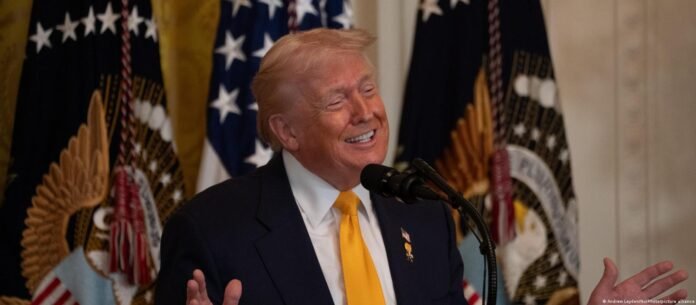
The Trump administration is finalizing a sweeping new round of tariffs targeting goods produced with forced labor across 60 trading partners, just weeks before an existing set of stopgap duties is set to expire. The move has drawn criticism from Senate Finance Committee Democrats who argue the approach is poorly targeted, even as the administration frames it as a necessary tool to protect American workers and enforce ethical trade standards.
Story Highlights
- USTR is finalizing Section 301 tariffs of 10 to 12.5 percent on imports from 60 countries tied to alleged forced labor practices
- Senate Finance Committee ranking member Ron Wyden called the tariffs “ill-designed” to actually combat forced labor globally
- The move comes as existing Section 122 tariffs, a 10 percent across-the-board surcharge, are set to expire July 24 without congressional extension
What Happened
The Office of the U.S. Trade Representative, led by Ambassador Jamieson Greer, is nearing completion of a new tariff framework aimed at goods produced using forced labor, with duties of either 10 percent or 12.5 percent proposed on imports from roughly 60 trading partners under Section 301 of the Trade Act of 1974. This week, a USTR panel held hearings gathering testimony from dozens of foreign government officials, business owners, and industry groups about the proposed duties, part of a broader effort by the administration to reconstruct its tariff architecture using statutory authorities that have so far survived legal challenges.
The forced-labor tariff push comes at a pivotal moment for the administration’s broader trade strategy. In February, the Supreme Court ruled 6-3 that the International Emergency Economic Powers Act does not authorize the president to impose tariffs, striking down the sweeping “Liberation Day” reciprocal tariffs imposed in April 2025 along with related fentanyl-linked duties on China, Mexico, and Canada. In response, the administration invoked Section 122 of the Trade Act to impose a 10 percent across-the-board surcharge on nearly all imports, a maneuver that a federal Court of International Trade subsequently ruled also exceeded statutory limits, though that ruling remains under appeal and the tariffs continue to be collected pending the outcome.
That Section 122 authority is set to expire automatically on July 24 unless Congress acts to extend it, creating urgency within the administration to establish alternative, more legally durable tariff authorities before that deadline arrives. The forced-labor Section 301 investigation, along with a separate Section 301 probe into structural manufacturing overcapacity covering 16 countries and more than 75 percent of U.S. imports, represents the administration’s attempt to maintain what officials have described as “virtually unchanged tariff revenue” even as courts continue to narrow the president’s emergency-powers authority.
Senate Finance Committee ranking member Ron Wyden of Oregon criticized the approach this week, arguing the proposed tariffs are poorly suited to their stated purpose of combating forced labor in global supply chains. Wyden’s criticism reflects broader Democratic skepticism that the administration’s stated humanitarian rationale, protecting workers from forced labor conditions abroad, is the primary driver behind the tariff push, rather than a legal workaround to preserve tariff revenue following repeated court setbacks.
Why It Matters
The dispute over the forced-labor tariffs illustrates the escalating legal and political battle over the scope of presidential tariff authority, a fight that has repeatedly reached the Supreme Court and lower federal courts throughout 2026. With the IEEPA and Section 122 authorities both having been rejected or challenged by courts, the administration’s reliance on Section 301, a statute that requires formal investigations and specific findings of unfair trade practices, represents a significant shift toward a more legally constrained but procedurally slower tool for implementing tariff policy.
For American consumers and businesses, the practical stakes are considerable. The Tax Foundation has estimated that the cumulative effect of Trump-era tariffs amounts to the largest tax increase as a share of GDP since 1993, translating to an average cost of approximately 1,500 dollars per American household in 2026. Additional tariffs tied to forced-labor enforcement, layered onto existing Section 232 national security tariffs, would further raise costs for importers and, ultimately, consumers across a wide range of product categories.
For policymakers, the forced-labor framing raises genuine questions about how effectively tariffs can address supply chain abuses compared to more targeted enforcement tools, such as the existing Uyghur Forced Labor Prevention Act framework, which allows for import bans on specific goods tied to documented forced labor rather than broad tariffs applied across entire trading relationships. Critics argue that blanket tariffs may not meaningfully change the labor practices of foreign manufacturers while still raising costs for American businesses and consumers.
The timing also matters politically. With the Section 122 surcharge set to expire July 24, Congress faces pressure to decide whether to formally extend that authority or allow the administration’s pivot to Section 301 tools to become the primary vehicle for maintaining tariff revenue, a decision that will shape the shape of American trade policy for the remainder of the term.
Economic and Global Context
The stakes for global trade are substantial. The current 10 percent Section 122 surcharge already applies to roughly 1.2 trillion dollars, or about 34 percent, of annual U.S. imports, and its expiration without replacement would represent a significant reduction in the tariff wall the administration has constructed since the Supreme Court’s February ruling. The new forced-labor and overcapacity investigations under Section 301 are explicitly designed to preserve comparable revenue levels through a different legal mechanism.
The Section 301 investigation into structural manufacturing overcapacity, covering 16 countries responsible for more than 75 percent of U.S. imports, adds another major front to the administration’s evolving trade strategy, suggesting the forced-labor tariffs are part of a broader, coordinated effort rather than an isolated policy initiative. Together, these investigations touch nearly every major U.S. trading partner.
Globally, the proposed tariffs risk complicating recently finalized trade arrangements, including the U.S.-EU framework that took effect July 1 after European ratification, under which most EU goods face a 15 percent tariff rate in exchange for reduced EU duties on American industrial goods. Additional forced-labor tariffs layered onto existing frameworks could prompt renewed friction with trading partners who believed recent negotiations had settled their tariff exposure.
Implications
The USTR is expected to finalize its forced-labor tariff determinations in the coming weeks, with the July 24 expiration of Section 122 authority serving as a key deadline pressuring the administration to have alternative tariff structures ready. Businesses reliant on affected supply chains should expect continued uncertainty as the legal and procedural landscape for tariffs remains in flux amid ongoing litigation.
For Congress, the expiration deadline creates a decision point: lawmakers can choose to extend Section 122 authority explicitly, effectively ratifying the administration’s approach, or allow the pivot toward Section 301-based tariffs to proceed as the primary mechanism, a path that gives Congress less direct oversight given the more technical, agency-driven nature of Section 301 investigations.
For American importers, already navigating a landscape of court-ordered tariff refunds exceeding 130 billion dollars from the invalidated IEEPA tariffs, the prospect of new forced-labor duties adds further complexity to supply chain and pricing decisions heading into the second half of 2026.
Sources
“Senator Wyden Says Trump Tariffs Are ‘Ill-Designed’ to Combat Forced Labor Globally”