Story Highlights
- USMCA renewal deadline passed July 1 without administration action to extend the six-year-old pact
- Administration will pursue new negotiations rather than renew the deal as originally structured
- Business Roundtable and automakers warn of economic disruption from prolonged uncertainty
What Happened
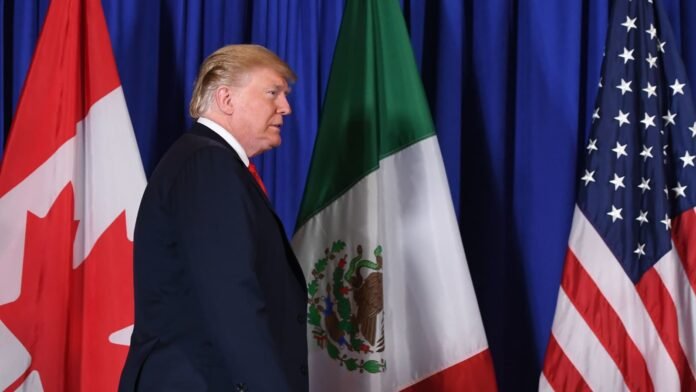
Six years to the day after the U.S.-Mexico-Canada Agreement took effect, the Trump administration announced on July 1 that it would not renew the trade pact, choosing instead to pursue a new round of negotiations aimed at addressing what officials described as the deal’s shortcomings. The USMCA, which replaced the North American Free Trade Agreement during Trump’s first term, included a built-in six-year joint review provision designed to allow the three countries to reassess and potentially amend the agreement’s terms.
A senior administration official told reporters the review process exists specifically to ensure any agreement between the three nations “always put America first” rather than continuing on autopilot for decades. U.S. Trade Representative Jamieson Greer said the administration “will continue to engage with Mexico and Canada to address the Agreement’s shortcomings,” signaling that formal negotiations, rather than a lapse of the deal entirely, would follow. The announcement represents a dramatic reversal for Trump, who signed the USMCA in 2018 and once called it on social media “the best and most important trade deal ever made by the USA.”
The administration’s primary complaint centers on the persistent U.S. trade deficit with both Canada and Mexico, which officials argue the original USMCA failed to meaningfully address. Tensions with Canada have grown particularly sharp after Ottawa imposed retaliatory tariffs in response to earlier Trump administration trade actions. Mexico, notably, did not retaliate against U.S. tariffs and is already engaged in bilateral negotiations with Washington that are expected to continue beyond the July 1 deadline. Canada, by contrast, has not yet begun its own formal negotiating track with the administration, reflecting the more strained relationship between the two governments.
Business groups reacted with concern. The Business Roundtable, representing major American corporations including JPMorgan Chase, Home Depot, and PepsiCo, said the USMCA had delivered “significant economic benefits” and urged Washington to strengthen and extend the agreement rather than allow prolonged uncertainty. Automakers separately warned that U.S. manufacturers now face a competitive disadvantage compared to imports from countries subject to a flat 15 percent tariff without the origin-tracing requirements built into USMCA-compliant trade, calling for a swift resolution to preserve long-term investment certainty in the capital-intensive auto sector.
The decision comes as the administration’s broader tariff strategy has faced repeated setbacks in federal courts. The Supreme Court ruled in February 2026 that the International Emergency Economic Powers Act does not authorize the president to impose tariffs, invalidating the administration’s earlier “Liberation Day” reciprocal tariffs. The administration subsequently invoked a separate legal authority, Section 122 of the Trade Act of 1974, to impose a temporary 10 percent global tariff, though that authority is set to expire July 24, 2026, unless extended by Congress, adding further pressure to the ongoing USMCA negotiations.
Why It Matters
The USMCA has underpinned roughly $2 trillion in annual North American trade and served as a stabilizing framework for supply chains spanning the automotive, agricultural, and manufacturing sectors since 2020. Allowing the deal’s future to remain unresolved introduces significant uncertainty for companies that have built cross-border supply chains around the agreement’s tariff exemptions and rules of origin, particularly in industries like automobile manufacturing where parts frequently cross the U.S., Canadian, and Mexican borders multiple times during production.
For American consumers, prolonged trade uncertainty with two of the country’s largest trading partners could translate into higher prices for goods ranging from vehicles to agricultural products, particularly if new tariffs are imposed during the negotiation period. Small and mid-sized businesses that rely on predictable cross-border trade rules may face the greatest disruption, lacking the resources of larger corporations to quickly adapt to shifting tariff structures.
The move also reflects the administration’s broader approach to trade policy, which has consistently favored renegotiation and tariff leverage over maintaining existing multilateral frameworks. This pattern has now touched nearly every major U.S. trading relationship, from the European Union to China to now its closest continental neighbors, raising questions among allies about the reliability of long-term agreements signed with the United States.
Economic and Global Context
The decision to forgo USMCA renewal arrives amid a broader reshaping of U.S. tariff policy following the Supreme Court’s February ruling invalidating IEEPA-based tariffs. The overall average effective U.S. tariff rate stood at approximately 11.8 percent as of April 2026, still the highest level in over a century despite court challenges rolling back some of the administration’s earlier actions. Independent analysis estimates the cumulative tariff regime amounts to an average tax increase of roughly $1,500 per American household in 2026.
Canada’s retaliatory tariffs, imposed in response to earlier U.S. actions, remain a central point of friction in the stalled bilateral relationship, while Mexico’s more conciliatory approach has allowed talks to continue on a separate track. Financial markets have shown measured concern over the USMCA uncertainty, with automotive and agricultural sector stocks experiencing modest volatility following the announcement, though broader market reaction has been tempered by expectations that formal negotiations, rather than an abrupt termination, will follow.
Globally, the decision is being closely watched by other nations negotiating trade frameworks with the United States, including the European Union, which faces its own July 4 deadline to fully implement a separate trade agreement or risk sharply higher tariffs. The pattern of the administration renegotiating or threatening to unwind previously signed trade deals has become a defining feature of its second-term economic policy, prompting some trading partners to seek shorter-term or more flexible arrangements less vulnerable to unilateral revision.
Implications
The coming months will likely see intensified bilateral talks between the U.S. and Mexico, which has already signaled willingness to negotiate, while the more contentious relationship with Canada suggests a longer and potentially more adversarial process ahead. Businesses on both sides of the border should expect continued uncertainty regarding tariff rates and rules of origin requirements well into the coming year, complicating investment decisions for companies with integrated North American supply chains.
For Congress, the expiration of Section 122 tariff authority on July 24 adds a further layer of complexity, as lawmakers will need to decide whether to extend that authority or allow the administration’s temporary global tariff structure to lapse entirely, potentially forcing yet another shift in trade policy during the middle of USMCA renegotiations.
Automakers, agricultural exporters, and manufacturers reliant on North American supply chains will be watching closely for signals on how quickly formal negotiations progress, with industry groups continuing to press for expedited resolution given the capital-intensive, long-planning-horizon nature of investments in sectors like vehicle manufacturing that depend on trade policy certainty.
Sources