Story Highlights
- Trump stated on Truth Social that Iran had “fully and completely” agreed to nuclear inspections, while Tehran said there were “no plans” for IAEA inspectors to return to its bombed enrichment sites.
- The U.S. has waived sanctions on Iranian oil for 60 days, freeing up an estimated 67 million barrels currently stored on boats and tankers in the Gulf.
- The head of the IAEA signaled Wednesday that Iranian nuclear enrichment sites would be visited by his inspectors, offering the firmest statement yet from the United Nations agency.
What Happened
The U.S. and Iran fell into public dispute over whether Tehran had agreed to allow United Nations inspections of its nuclear sites, even as officials negotiated over how to permanently end the war and a separate plan emerged to break the shipping bottleneck through the Strait of Hormuz.
Vice President JD Vance said Monday that UN inspectors could return to Iran’s nuclear facilities as soon as this week following talks with Tehran’s negotiators. Iranian Foreign Ministry spokesman Esmail Baghaei told reporters in Tehran on Tuesday, however, that there were no plans yet for any new inspections of the most sensitive sites.
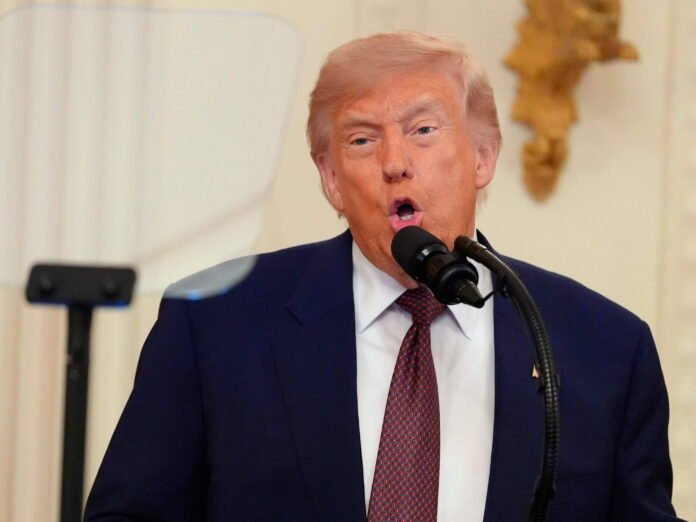
President Donald Trump weighed into the dispute on Truth Social, writing that Iran had “fully and completely agreed to highest level Nuclear inspections long into the future (Infinity!!!)” and adding: “If they did not agree to this, there would be no further negotiations!”
The nuclear site of most interest is likely Isfahan, which was among those struck in last year’s conflict. Isfahan is where IAEA officials believe Iran’s stockpile of roughly 900 pounds of highly enriched uranium is buried under rubble, enriched to 60% purity — a short technological step from the 90% required to make a nuclear weapon.
IAEA Director General Rafael Mariano Grossi provided the firmest signal yet on Wednesday that inspections would happen, though he indicated the timing was “not essential” and that the matter would be resolved within the framework of a final peace agreement.
Why It Matters
The question of nuclear inspections sits at the very center of the U.S.-Iran peace framework. Without verified access to Iran’s enrichment sites, there is no reliable mechanism to assess whether Tehran has honored any commitments to curtail its nuclear program. The public contradiction between American and Iranian officials suggests that either the agreement was less clearly defined than either side has acknowledged, or that one party is misrepresenting the terms.
The memorandum of understanding signed last week does not set a timeframe for renewed IAEA inspections of Iran’s nuclear facilities, stating only that all matters relating to the Iranian enrichment program will be agreed as part of a final deal. That ambiguity has created room for both sides to advance competing interpretations of what was actually agreed.
Critics of Trump’s deal with Iran have focused on its many shortcomings, near the top of which is the argument that Iran simply did not have to make any meaningful concessions. The White House has pointed to the reopening of the Strait of Hormuz and Iran’s reiteration of its commitment not to pursue nuclear weapons — but critics note that the strait was open before the war, and Iran has maintained this position for more than half a century.
The inspection dispute also matters because the IAEA is the only internationally recognized institution capable of verifying nuclear compliance. Without its independent assessments, any agreement between Washington and Tehran will face credibility challenges from allies and adversaries alike — including Israel, which launched the original strikes on Iranian nuclear sites in 2025.
Economic and Global Context
Iranian Foreign Minister Abbas Araghchi confirmed that sanctions on Iran’s oil have been waived and some frozen Iranian assets abroad have been released. Treasury Secretary Scott Bessent confirmed the administration is temporarily lifting sanctions on the sale of Iranian oil. The sanctions relief is one of the most economically consequential elements of the interim arrangement.
Monday was the busiest day for transits of the Strait of Hormuz since the war began, with 35 commercial vessels crossing the waterway — still only about a third of pre-war traffic levels. The gradual reopening of this critical chokepoint, through which roughly 20 percent of global oil trade passes in normal times, is essential to stabilizing energy markets.
Secretary of State Marco Rubio visited the Persian Gulf region to consult with allies and ensure their views are incorporated into the negotiations, emphasizing that the U.S. would not take steps that undermine the security of its longstanding regional partners. The diplomatic outreach reflects the complexity of managing a peace process that involves Israel, Gulf states, and mediators Qatar and Pakistan simultaneously.
Implications
Pakistan’s prime minister indicated that the 60-day U.S.-Iran negotiations would likely resume next week, with working groups established to address nuclear issues, sanctions relief, reconstruction, and monitoring. The structure of those working groups will determine whether the inspection dispute gets resolved as part of a preliminary arrangement or pushed into the final agreement.
For the Trump administration, the contradiction poses a credibility risk. If the inspection commitment turns out to be less firm than Vance publicly stated, it reinforces the Democratic argument that the administration secured very little from Iran in exchange for sanctions relief and a lifted naval blockade.
Iran maintains that its nuclear program is for peaceful purposes, though the IAEA has confirmed it has highly enriched uranium that could be used to build atomic bombs should it choose to do so. That ambiguity will persist until inspectors gain physical access to the damaged enrichment sites — making the inspection question not just symbolic, but central to any durable peace.
Sources
“Trump says Iran ‘completely agreed’ to nuclear inspections, but Tehran denies any such plans”