Story Highlights
- Trump endorsed both Evette and Wilson on Friday, reversing his exclusive support for Evette that he announced in May
- His endorsed candidates lost Republican gubernatorial primaries in both Iowa and Georgia in preceding weeks
- South Carolina’s runoff on Tuesday is widely seen as a test of whether Trump’s endorsement influence in GOP primaries remains decisive
What Happened
Trump had originally endorsed Pamela Evette, South Carolina’s lieutenant governor, in late May ahead of the crowded June 9 primary. Evette finished first in that field but earned less than 30 percent of the vote — well short of the majority needed to avoid a runoff — and ran only three points ahead of Alan Wilson, the state’s attorney general, despite carrying Trump’s endorsement. The narrow margin effectively neutralized the endorsement’s differentiating impact, setting up a competitive runoff between two candidates who both identified as fully aligned with the MAGA agenda.
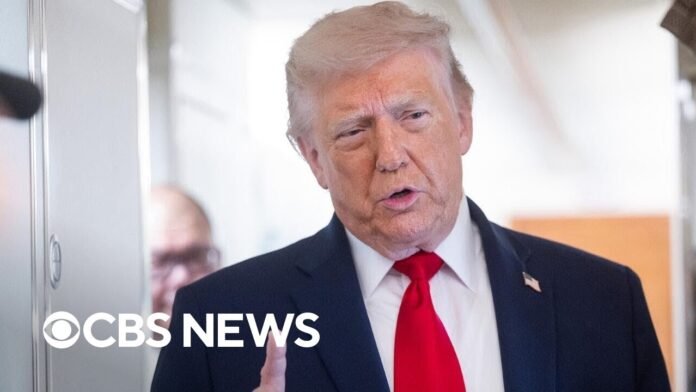
In a Truth Social post Friday, Trump announced his expanded endorsement, writing that he could not “hurt one of them by only Endorsing the other.” He called both candidates “MAGA and America First all the way” and described the choice for voters as “a Wealth of Riches.” Evette responded on X by noting she had come in first in the original primary as Trump’s endorsed pick and vowed to replicate the outcome in the runoff. Wilson said he was “honored” to have the president’s support, highlighting his record of defending the administration’s agenda as South Carolina attorney general.
The dual endorsement came after two significant recent setbacks. Trump backed Representative Randy Feenstra in Iowa’s June 2 gubernatorial primary, but Feenstra lost narrowly to businessman Zach Lahn, a candidate aligned with the Make America Healthy Again movement. Trump later claimed he had been given “the wrong information” about the race. In Georgia, Trump-backed Lieutenant Governor Burt Jones lost the gubernatorial runoff to healthcare executive Rick Jackson, and Trump retroactively claimed Jackson had run “a great TRUMP Campaign” in an apparent effort to manage the narrative around another failed endorsement.
Wilson entered the Tuesday runoff with considerable momentum independent of any Trump backing. The majority of candidates who failed to advance from the June 9 primary — including Representatives Nancy Mace and Ralph Norman — publicly endorsed the attorney general. Senator Tim Scott of South Carolina also endorsed Wilson on Friday, the same day Trump added his name. Wilson has served as state attorney general since 2010, gained national attention through his office’s prosecution of the Alex Murdaugh double-murder trial, and serves as a colonel in the South Carolina Army National Guard.
Why It Matters
Trump’s endorsement has been a defining force in Republican primaries since 2022, consistently capable of elevating candidates and defeating entrenched incumbents across Indiana, Louisiana, Kentucky, and Texas this cycle. The Iowa and Georgia losses — particularly Iowa, where Trump’s last-minute endorsement still failed — suggest the endorsement is no longer automatically decisive in every race. Whether those results represent temporary hiccups or the beginning of a structural shift in Trump’s primary influence is a question that the South Carolina outcome will help answer, and one with significant implications for GOP candidate recruitment heading into November.
The dual endorsement itself is analytically significant because it reveals something about the internal architecture of Trump’s relationship with the Republican Party. For years, a single Trump endorsement functioned as a clear signal of a candidate’s loyalty and alignment with the MAGA agenda. A dual endorsement removes the differentiating power of that signal — it becomes not a marker of merit but a political insurance policy. That recalibration could subtly undermine the endorsement’s authority in future primary races where Trump must make a harder, more consequential choice between rival candidates.
For Wilson specifically, the political dynamics are telling. He built substantial primary momentum after Trump initially backed only Evette, collecting support from most of the failed primary field and earning a Tim Scott endorsement. That he could construct a competitive coalition independently — and that Trump felt compelled to add him — suggests alternative pathways to Republican nomination exist even in deep-red states. That is a meaningful development for political figures thinking about the party’s landscape beyond the period of Trump’s most direct endorsement influence.
Economic and Global Context
State-level gubernatorial races carry direct policy significance. South Carolina’s next governor will inherit a state economy that has attracted considerable manufacturing investment in recent years, including in automotive and aerospace sectors, partly as a result of federal trade and industrial policy incentives. The incoming governor’s posture on labor regulations, state business incentives, workforce development funding, and federal grant relationships will shape whether those manufacturing investments continue to flow into South Carolina’s growing economic base through the end of the decade.
The 2026 midterm electoral environment adds national significance to the outcome. Political analysts broadly project Democrats are positioned to make House gains consistent with historical midterm patterns and current approval dynamics. The strength of Trump’s endorsement power in Republican primaries is considered a meaningful factor in candidate quality — an area where weakened endorsement outcomes could affect the party’s November competitiveness in the handful of competitive Senate and House districts that will determine which party controls Congress after January 2027.
The South Carolina race also matters as a data point for national Republican fundraising and donor strategy. Major GOP donors calibrate their giving partly based on assessments of Trump’s continued dominance in the Republican nomination process. A Wilson victory — achieved without Trump’s exclusive backing — could encourage some donors to invest in candidates who demonstrate independent political viability rather than treating Trump’s endorsement as the essential and sufficient infrastructure for a competitive Republican campaign.
Implications
The most immediate implication is for Trump’s endorsement strategy in the remaining 2026 primary calendar. If the South Carolina hedge becomes a recurring pattern, it will dilute the perceived value of a Trump endorsement for candidates who seek it. Campaigns that cannot win a single, unambiguous presidential backing may face questions about viability that would not arise if Trump threw his full weight behind them from the outset — potentially discouraging some candidates from seeking an endorsement that no longer provides clear differentiation from the field.
For the Republican Party heading into November, the gubernatorial results across Iowa, Georgia, and South Carolina collectively raise structural questions about candidate development. Trump’s endorsement has historically filtered primary fields toward loyal, nationally recognizable candidates. If that filter is weakening, the party may end up with a more varied and unpredictable set of general election nominees — some with strong independent bases and some without either Trump’s full backing or a meaningful alternative coalition capable of winning competitive general election races.
For Republican voters who have used Trump’s endorsements as a navigational tool through crowded primary fields, the dual endorsement signals something unfamiliar: a president publicly declining to make a choice. Whether that erodes trust in Trump’s political judgment, or whether voters simply evaluate both endorsed candidates on their own merits, will be an indicator of how deeply the endorsement itself — versus the president’s specific political assessments — is driving Republican primary outcomes in the final stretch before the general election.
Sources