Story Highlights
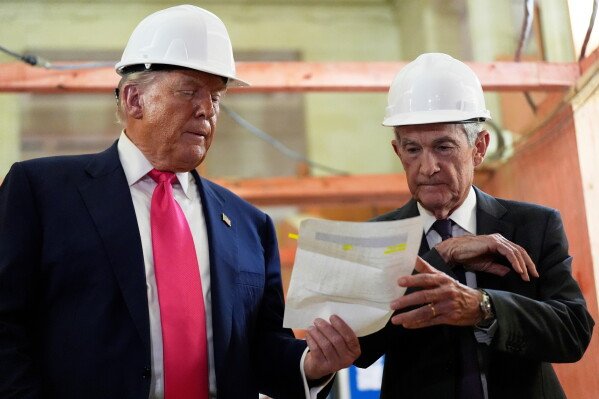
- The DOJ is conducting a criminal investigation into Fed Chair Jerome Powell over his Senate testimony about a $2.5 billion building renovation, which the administration has claimed cost over $3 billion and included luxury features Powell denied
- Powell publicly stated the probe is a “pretext” aimed at forcing the Fed to lower interest rates, calling it an “unprecedented” threat to the central bank’s independence
- The Supreme Court is also considering Trump v. Cook, a case over whether Trump can fire Fed Governor Lisa Cook, who was removed via social media post in August 2025 and has continued to serve under a court injunction
What Happened
The conflict between President Donald Trump and the Federal Reserve reached a new level of intensity in January when the Department of Justice served the central bank with grand jury subpoenas threatening a criminal indictment of Fed Chair Jerome Powell based on his Senate Banking Committee testimony the previous June. The testimony concerned a massive renovation of the Marriner S. Eccles Federal Reserve Board Building in Washington, D.C., which Trump and his allies have claimed cost more than $3 billion and included luxury features like water features, marble, rooftop gardens, and beehives. Powell denied those characterizations before Congress. “There’s no new marble. There are no new water features. There’s no beehives and there’s no roof garden terraces,” Powell told the Senate.
Powell responded to the subpoenas in an unusually forceful video statement that broke with the typically reserved communication style of Fed chairs. He said the action was “unprecedented” and should be seen “in the broader context of the administration’s threats and ongoing pressure.” He drew a direct line between the investigation and Trump’s persistent demands for lower interest rates. “This is about whether the Fed will be able to continue to set interest rates based on evidence and economic conditions — or whether instead monetary policy will be directed by political pressure or intimidation,” Powell said. He added that “public service sometimes requires standing firm in the face of threats” and pledged to continue doing the job the Senate confirmed him to do.
Trump dismissed those characterizations. In January he told reporters he was “incompetent” or “crooked” and later said “that jerk will be gone soon,” an apparent reference to Powell’s term as chair, which expired in May 2026. Trump nominated a replacement, and Powell stepped down as chair while remaining on the Federal Reserve Board of Governors until January 2028. The investigation into him, however, has continued. In April, a federal prosecutor told Chief U.S. District Judge James Boasberg that the Justice Department does not yet know of evidence that a crime was actually committed in the renovation project.
The DOJ probe is one of two major fronts in the administration’s battle against the Fed. The second is Trump v. Cook, now awaiting a Supreme Court ruling. Fed Governor Lisa Cook, who Trump attempted to fire via social media post in August 2025, has remained in office under a district court injunction while the case works its way to the high court. During January oral arguments, justices across the ideological spectrum, including Trump appointees, expressed deep concern about the administration’s approach. Justice Brett Kavanaugh warned that the administration’s position would “weaken, if not shatter, the independence of the Federal Reserve.”
The administration’s stated grounds for Cook’s removal were pre-appointment mortgage application errors that allegedly constituted fraud. Cook and her legal team have denied any wrongdoing, and she has not been charged with a crime. Several former Fed chairs — Alan Greenspan, Ben Bernanke, and Janet Yellen — jointly filed a legal brief with the Supreme Court arguing against her removal, an extraordinary intervention reflecting deep concern among monetary policy professionals about the administration’s intentions.
Why It Matters
Federal Reserve independence is not a bureaucratic abstraction. It is the institutional foundation upon which monetary policy in the United States has operated for generations, and it is widely understood by economists, central bankers, and market participants around the world as essential to the credibility of American financial governance. When a central bank can set interest rates free from political interference, those rates reflect genuine economic conditions rather than the short-term preferences of whoever occupies the White House. That credibility is what allows the dollar to function as the world’s reserve currency and what keeps U.S. Treasury borrowing costs lower than they would otherwise be.
Trump’s desire for lower interest rates is not unusual for a president — virtually every modern president has preferred lower rates, which tend to stimulate economic activity in the short term. What is unusual, and what has alarmed economists and financial professionals, is the decision to use the Justice Department as an instrument of pressure against the chair of an institution that Congress specifically designed to be independent of political influence. JPMorgan Chase CEO Jamie Dimon warned publicly that anything undermining Fed independence would likely “raise inflation expectations and probably increase rates over time” — the exact opposite of what Trump wants.
The criminal investigation is particularly alarming because it lacks the predicate that a genuine law enforcement investigation would require. A federal prosecutor acknowledged in court in April that the DOJ does not currently know whether a crime occurred. That admission, made during proceedings in a federal courthouse, suggests the investigation may be functioning primarily as a source of pressure rather than as a response to evidence of actual wrongdoing. If that characterization is accurate, it represents a fundamental misuse of law enforcement authority.
The Trump v. Cook case at the Supreme Court has even broader implications. If the court gives the president unreviewable authority to fire Fed board members for any stated reason, without judicial review and without a meaningful hearing process, it will effectively end the Fed’s functional independence. Future presidents could remove any Fed governor at will by invoking a thin pretext, reshaping the board’s membership to achieve desired rate outcomes on any political timetable.
Economic and Global Context
The Fed’s handling of monetary policy has been one of the defining economic debates of Trump’s second term. The central bank cut interest rates three times in the second half of 2025 to address a weakening labor market, but has moved more cautiously in 2026 as inflation has remained above its two percent target. Trump has repeatedly argued that rates should be far lower, framing the Fed’s caution as a deliberate obstruction of his economic agenda.
Markets have been watching the Trump-Fed confrontation with significant anxiety. Treasury Secretary Scott Bessent reportedly expressed concerns to Trump that the DOJ probe could complicate confirmation of a new Fed chair after Powell’s term expired — confirmation that requires Senate approval and that could be derailed if the institution appears to be under political attack. The confirmation of Kevin Warsh as the new Fed chair has added another dimension, with observers watching how the new chair navigates the pressure environment his predecessor faced.
The global context matters as well. The dollar’s status as the world’s reserve currency depends on international confidence in American institutional stability. When the Federal Reserve appears to be operating under political coercion, foreign central banks, sovereign wealth funds, and international investors take note. A dollar held as a reserve asset is only as valuable as the institution managing it appears credible and independent. Sustained political pressure on the Fed risks long-term damage to that confidence.
Implications
The Supreme Court’s decision in Trump v. Cook is expected before the term ends in late June or early July and will be the most immediate landmark in this ongoing battle. If the court rules for Cook, it will affirm the Fed’s insulation from political firing and likely conclude the most acute phase of the confrontation. If it rules for Trump, it will open the door to a fundamental restructuring of the central bank’s governance.
The DOJ investigation into Powell is unlikely to produce an indictment unless prosecutors develop substantially more evidence than they currently acknowledge possessing. But its existence as an ongoing threat may continue to function as intended — as a cloud over the Fed’s decision-making environment and a signal to the institution’s leaders about the potential personal consequences of monetary policy choices that conflict with White House preferences.
For American households, the practical consequences of this battle will depend largely on how successfully the Fed can maintain its credibility despite the political pressure. If inflation expectations become unanchored because markets doubt the Fed’s independence, borrowing costs for mortgages, auto loans, and consumer credit could rise even as the administration demands lower rates — an ironic outcome that would hurt the very voters Trump is seeking to benefit.
Sources
“Jerome Powell, Trump feud: How Fed renovations led to investigation”