Story Highlights
- The Justice Department plans to file at least 250 denaturalization cases by October, a massive surge from the historical average of fewer than 11 per year
- The DOJ has already filed 29 cases in less than two months, surpassing the pace of any prior administration
- Critics warn monthly quotas risk politicizing citizenship revocation and creating unnecessary fear among the 24 million naturalized US citizens
What Happened
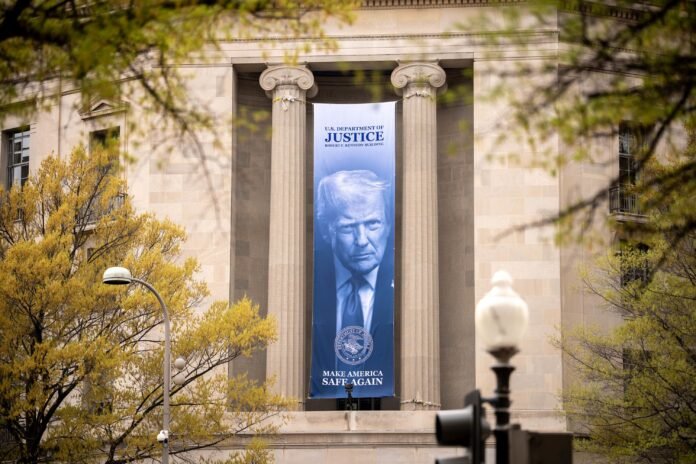
The Trump administration plans to file at least 250 denaturalization cases by October, significantly intensifying its effort to revoke citizenship from people naturalized in the United States, according to a senior Justice Department official. In less than two months, the Justice Department filed 29 denaturalization cases targeting foreign-born Americans accused of fraudulently obtaining US citizenship.
Civil litigators are actively reviewing additional cases to file as the department picks up a pace that has already surpassed previous years. Between 2008 and June 12, 2026, 166 denaturalization complaints were filed, an annual average of less than 10, according to Syracuse University’s Transactional Records Access Clearinghouse.
The Justice Department, which can revoke the citizenship of naturalized citizens accused of obtaining their citizenship illegally or through fraud, is planning to file at least 250 denaturalization cases in federal courts across the country in fiscal year 2026, which ends on September 30. While 250 cases would make up a small percentage of the 24 million estimated naturalized citizens in the US, it still marks a dramatic escalation in the use of denaturalization, a legal procedure that has rarely been used by past administrations.
Some of the citizens targeted in the latest denaturalization campaign were convicted of violent or serious crimes, including sex offenses against children. Others were convicted of fraud crimes or accused of committing immigration fraud. In federal court complaints filed across the country, Justice Department officials argued that the individuals concealed their criminal activity when they applied for US citizenship or were otherwise ineligible to be naturalized, including because they lacked good moral character, one of the requirements in the naturalization process.
Attorney General Todd Blanche has characterized denaturalization as a legitimate law enforcement tool to address border security, framing the campaign as a natural extension of the administration’s broader immigration enforcement agenda.
Why It Matters
The administration’s denaturalization drive matters not just for the individuals directly targeted but for the roughly 24 million naturalized citizens across the United States who now face a changed legal and psychological landscape. For decades, naturalized citizenship has been understood as permanent and equal in standing to birthright citizenship. The current campaign challenges that assumption at scale.
Former USCIS official Sarah Pierce said imposing arbitrary numerical targets on denaturalization cases risks politicizing citizenship revocation. She added that requiring monthly quotas that are ten times higher than the total annual number of denaturalizations in recent years turns a serious and rare tool into a blunt instrument and fuels unnecessary fear and uncertainty for the millions of naturalized Americans.
Legal experts note that the cases already filed focus largely on individuals with criminal records or documented fraud in their naturalization applications. However, the establishment of monthly numerical quotas — internal guidance has reportedly called for USCIS field offices to supply between 100 and 200 cases per month — raises concerns that case selection will be driven by volume rather than merit.
The Trump administration’s messaging has sparked fear among immigrant advocates, legal scholars, and naturalized citizens who worry about the potential for abuse and the precedent it sets — that naturalized immigrants are in a separate class from US-born Americans. That perception, whether or not it reflects current legal reality, carries significant social and political consequences.
Economic and Global Context
The denaturalization campaign arrives amid a broader Trump immigration enforcement effort that has reshaped migration patterns, asylum processing, and foreign perceptions of the United States as a destination for legal immigrants. For countries that supply large numbers of naturalized citizens — including Mexico, India, China, the Philippines, and Cuba — the escalation sends a signal about the terms of belonging in America.
From an economic standpoint, naturalized citizens are deeply embedded in the US labor force, including in technology, healthcare, and the military. Any policy that creates systemic uncertainty about citizenship status risks affecting workforce participation, entrepreneurship, and foreign direct investment by individuals who might otherwise have chosen to build their lives in the United States.
The push is part of President Donald Trump’s broader, aggressive immigration agenda, which has gone well beyond targeting people in the country illegally, and reveals how federal agencies have shifted resources to prioritize that agenda. The reallocation of DOJ and USCIS resources toward denaturalization necessarily draws capacity away from other immigration processing functions, creating backlogs elsewhere in the system.
Implications
The legal battles ahead will be defining. Denaturalization cases are filed in federal court, not immigration courts, meaning defendants retain due process protections and can appeal adverse decisions. Courts have historically treated citizenship revocation as a severe sanction requiring clear and convincing evidence. Whether the administration can sustain 250-plus cases of that quality within a single fiscal year remains an open question.
A Boston College law professor who specializes in immigration said he is not seeing a major surge of worrisome denaturalizations at the current level of an emergency, though he acknowledged the trend bears close monitoring.
Congressional Democrats have demanded oversight hearings and are pushing for legislation to restrict the use of numerical quotas in denaturalization targeting. Republicans have largely supported the effort as a logical complement to border enforcement. The midterm elections in November 2026 will test whether the public views this campaign as legitimate accountability or overreach — a question particularly relevant in suburban districts with large immigrant populations.
Sources