Story Highlights
- Emergency pay authorized for TSA personnel
- Action taken to maintain smooth airport operations
- Focus on protecting critical national infrastructure
In response to operational challenges affecting airport security systems, Donald Trump has taken action to stabilize Transportation Security Administration operations by authorizing emergency pay for TSA personnel. The move comes amid broader disruptions linked to the Department of Homeland Security, which raised concerns about maintaining consistent airport functionality across the country.
Airports are a vital part of national infrastructure, supporting both domestic and international travel, as well as economic activity tied to logistics and trade. Any instability in airport operations can quickly lead to widespread consequences, including delays, congestion, and reduced efficiency. In this environment, maintaining a stable and functional security workforce becomes essential to ensuring continuity.
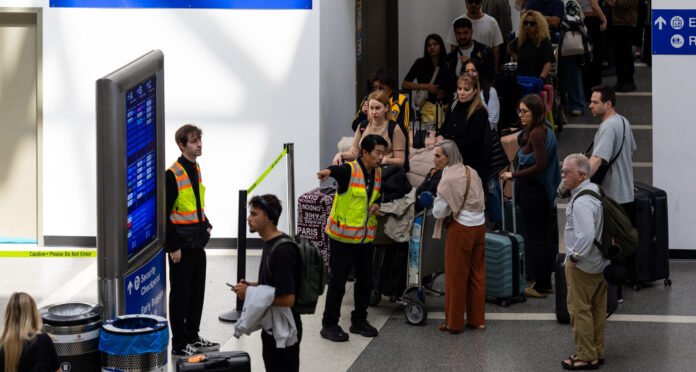
The authorization of emergency pay is designed to address immediate workforce concerns. TSA personnel are responsible for passenger screening, baggage checks, and enforcing security protocols. Their role is critical in ensuring that airport systems operate safely and efficiently. Without sufficient staffing and support, even minor disruptions can escalate into significant operational challenges. By providing financial stability, the administration aims to ensure that these essential workers remain active and focused on their responsibilities.
From an operational standpoint, this decision reflects a proactive approach to crisis management. Rather than allowing disruptions to impact frontline services, the intervention seeks to maintain stability through direct support. This type of response is particularly important in systems that rely on continuous operation, where interruptions can have cascading effects across multiple sectors.
The broader economic impact of airport disruptions also plays a significant role in understanding this decision. Airports are central to tourism, business travel, and cargo movement. Delays or inefficiencies in security processes can lead to missed connections, reduced travel confidence, and disruptions in supply chains. By stabilizing TSA operations, the administration is working to minimize these risks and support overall economic activity.
This action also highlights the connection between policy decisions and real-world implementation. While administrative challenges may originate at higher levels, their effects are often felt most directly by frontline workers. TSA personnel operate in a demanding environment where consistency and reliability are crucial. Providing emergency pay not only supports their financial stability but also reinforces the importance of their role within the system.
In addition, the move carries a broader message about maintaining public confidence. Airports are highly visible spaces, and their smooth operation is often seen as an indicator of overall system stability. Ensuring that security lines remain functional and that passenger flow continues without major disruption helps maintain trust among travelers. This is particularly important during periods of uncertainty.
At the same time, the situation draws attention to structural challenges within large administrative systems. Dependence on consistent funding and coordination means that disruptions can quickly affect operations. Addressing these challenges may require long-term strategies aimed at improving resilience and reducing vulnerability to similar issues in the future.
From a governance perspective, the decision reflects the importance of timely intervention. In complex systems such as airport security, delays in response can amplify problems. Acting quickly to provide support helps contain disruptions before they spread, ensuring that critical services remain operational.
Coordination between agencies is another key factor in the effectiveness of this measure. The successful implementation of emergency pay requires clear communication and collaboration between different parts of the system. Ensuring that resources reach the intended workforce efficiently is essential to achieving the desired outcome.
The human element also plays a central role. TSA personnel work in high-pressure environments where attention to detail and consistency are essential. Financial uncertainty can affect morale and performance, making it more difficult to maintain high standards. By addressing this concern directly, the administration aims to create a more stable working environment that supports both employees and operational goals.
Looking ahead, this development may lead to broader discussions about strengthening the resilience of critical infrastructure. Ensuring that essential services can continue without interruption, even during administrative challenges, is a key aspect of long-term stability. This may involve policy adjustments, improved planning, and enhanced support systems for frontline workers.
Implications
The decision to provide emergency pay for TSA personnel helps maintain stability in a critical sector, reducing the risk of widespread disruption. While effective in the short term, it also highlights the need for stronger systems that can operate consistently without requiring urgent intervention. Long-term improvements will be essential to ensure sustained reliability.