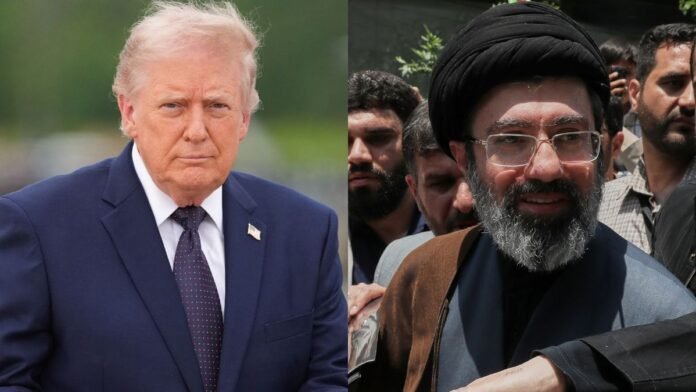
Story Highlights
- Trump is seeking firmer language on how Iran’s enriched uranium will be disposed of before signing any ceasefire memorandum
- The proposed deal includes a 60-day ceasefire extension, reopening of the Strait of Hormuz, and a framework for nuclear negotiations
- Iran’s Supreme Leader has reportedly begun re-engaging in the talks after being injured in the opening strikes of the conflict
What Happened
President Donald Trump is pushing Iran to make firmer commitments on nuclear concessions as part of an initial deal. Secretary of State Marco Rubio testified that the administration had not offered to lift sanctions targeting Iran or unfreeze any of its assets as part of the initial deal, insisting that would only be on the table once Iran followed through with promises to curb its nuclear program. Rubio said the details, as well as financial incentives for Tehran, could be determined later. ABC News
In its current form, the memorandum of understanding includes a commitment from Iran not to pursue a nuclear weapon, but no specific concessions beyond that. It states that there will be a 60-day window to negotiate on nuclear commitments from Iran and sanctions relief from the U.S., with the first issues on the docket being how to dispose of Iran’s enriched uranium stockpile and limit further enrichment. Axios
Trump wants to amend that part of the agreement. “It’s more specifics about how the U.S. gets the material and the timing,” a senior administration official said, referring to the enriched uranium. A White House official told reporters that Trump “will only make a deal that is good for America, satisfies his redlines and makes sure Iran can never possess a nuclear weapon.” Axios
Rubio indicated that Iran’s Supreme Leader Mojtaba Khamenei, who has not been seen or heard from publicly since being injured in the strike that killed his father during the opening hours of the war, now shows “indications” that he is “increasingly engaging at some level” in negotiations. ABC News
The agreement the U.S. and Iran are close to signing involves a 60-day ceasefire extension during which the Strait of Hormuz would be reopened, Iran would be able to freely sell oil, and negotiations would be held on curbing Iran’s nuclear program. The deal would avoid an escalation of the war and decrease the pressure on the global oil supply. Axios
Why It Matters
The negotiations between Washington and Tehran represent one of the most complex and consequential diplomatic undertakings of the 21st century. The U.S.-Iran conflict, launched in February 2026 with joint American-Israeli strikes against Iranian nuclear and military infrastructure, has reshaped the geopolitical landscape of the Middle East in a matter of months. A ceasefire agreement that holds — and, critically, one that provides a verifiable pathway toward Iranian nuclear disarmament — would mark a transformative achievement.
Trump’s decision to push for stronger language on enriched uranium disposal reflects his awareness that any deal he signs will be scrutinized intensely both at home and abroad. The core vulnerability of the proposed memorandum, as currently drafted, is that it commits Iran to not pursuing a nuclear weapon in principle while leaving the timeline and mechanics of material removal vague. From a nonproliferation standpoint, that vagueness is the difference between a meaningful agreement and a diplomatic facade.
The involvement of Secretary of State Rubio as the administration’s public face in Senate testimony about the deal signals that the administration is attempting to build congressional buy-in for whatever agreement emerges. This is a significant contrast to the approach of the Obama administration’s 2015 nuclear deal, which bypassed the Senate ratification process and ultimately proved vulnerable to executive reversal. Trump appears to be pursuing a different procedural strategy — though the degree to which Congress will be formally bound by any agreement remains unclear.
The status of Iran’s Supreme Leader is also a critical variable. Khamenei’s reported re-engagement in negotiations, after weeks of absence following the injuries he sustained in the opening strikes, potentially signals that the Iranian government is consolidating around a negotiating position. Whether that position is compatible with Trump’s red lines remains the central unresolved question of the talks.
Economic and Global Context
The economic stakes of the U.S.-Iran negotiations are enormous and immediately measurable. The Strait of Hormuz, which the ceasefire deal would reopen, is the single most strategically vital chokepoint in global energy trade. The draft MOU also makes clear that the war between Israel and Hezbollah in Lebanon would end as part of the arrangement. Roughly 20 to 21 percent of global oil trade passes through the strait, meaning its closure — which has persisted since the start of the conflict — has placed sustained upward pressure on crude oil prices and created supply disruptions that reverberate through global manufacturing and transportation costs. Axios
A deal that reopens the strait would provide immediate relief to global energy markets and could trigger a significant drop in crude oil prices. This would be particularly consequential for major oil-importing economies in Asia, including China, India, Japan, and South Korea, which have borne disproportionate economic costs from the Hormuz closure. It would also ease inflation pressures in Europe and North America, where energy-driven price increases have complicated central bank policy decisions.
Iran’s ability to freely sell oil again, as part of the proposed 60-day framework, would also shift global crude supply dynamics. Iran’s pre-conflict export capacity was estimated at over two million barrels per day. The return of that supply to global markets would exert downward pressure on oil prices — a development that benefits consumers but creates challenges for OPEC+ producers who have been managing output to maintain price stability during the conflict period.
The financial exposure of the frozen Iranian assets — estimated at tens of billions of dollars — remains a live issue. While the White House has denied offering to unfreeze those assets as part of the initial memorandum, the question of sanctions relief and asset repatriation will dominate the 60-day negotiation window if the MOU is signed.
Implications
If Trump succeeds in securing a stronger initial memorandum — one that includes specific commitments on uranium disposal timelines — the deal would represent a genuine diplomatic achievement and one that could reshape his legacy. However, the risk is that Iran, already facing internal disagreements about the terms, refuses the amended language and the negotiation collapses. A failed deal at this stage would likely trigger a resumption of hostilities, with potentially greater intensity than the initial conflict.
For Israel, the outcome of these negotiations will determine the security landscape it operates in for years to come. Israeli Prime Minister Benjamin Netanyahu has been closely consulted throughout the process, according to Trump’s own social media posts describing his multi-leader phone calls. Israel’s primary concern is that any deal must include genuine and verifiable nuclear disarmament, not merely a declaration of intent.
For American voters, the resolution of the Iran conflict carries both economic and political weight. An energy price decline following a deal would provide near-term relief to household budgets. Politically, a successful deal would be framed by the administration as a vindication of Trump’s military-first, pressure-then-negotiate strategy — a counterpoint to critics who argued the war was unnecessary and reckless.
For the broader international order, the nonproliferation implications of this deal extend far beyond Iran. How the world’s leading nuclear powers handle Iran’s enriched uranium stockpile will set a precedent for future negotiations with other aspiring nuclear states. A credible and verifiable agreement could reinforce the nonproliferation regime; a toothless one could fatally undermine it.
Sources
Trump pushing Iran to make firmer nuclear commitments in initial deal