Story Highlights
- Trump indicates Iran operations nearing conclusion
- Strategic progress cited as key driver
- Stability expected to support global markets
What Happened
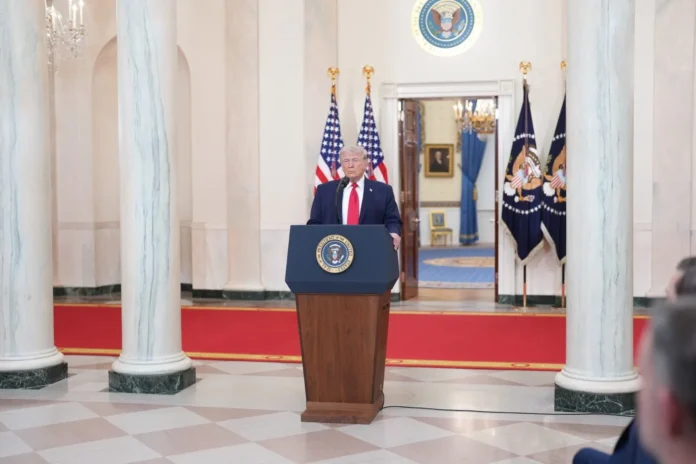
Donald Trump stated that the ongoing U.S. engagement related to Iran is approaching its final phase, indicating that core strategic objectives have largely been achieved. In recent remarks, he suggested that operations could conclude within a short time frame, pointing to visible progress on both military and diplomatic fronts.
He emphasized that the situation is moving toward stabilization, particularly around critical energy corridors such as the Strait of Hormuz. This region remains central to global oil transportation, and any improvement in security conditions directly affects international trade and supply chains.
Officials and observers continue to monitor developments closely, as formal confirmations and timelines remain subject to ongoing negotiations and regional responses. However, the overall messaging reflects a controlled transition from active engagement toward resolution.
Why It Matters
The potential conclusion of operations carries significant implications for global energy markets. Stability in the Strait of Hormuz reduces uncertainty in oil supply, which in turn supports price predictability and economic planning across multiple sectors.
From a policy perspective, the development reflects an approach focused on achieving defined outcomes within a limited timeframe. This aligns with broader discussions around minimizing prolonged international engagements while maintaining strategic effectiveness.
For investors and businesses, signals of de-escalation often translate into improved confidence. Reduced geopolitical risk can support market growth, strengthen trade flows, and encourage long-term investment decisions.
Political and Geopolitical Implications
The announcement reinforces a strategic framework centered on decisive action followed by timely disengagement. This approach highlights an emphasis on efficiency and outcome-driven policy execution in international affairs.
Geopolitically, a shift toward resolution could encourage renewed diplomatic efforts among regional and global stakeholders. Countries with direct interests in energy security may respond by strengthening cooperation and coordination to maintain stability.
Domestically, the messaging supports ongoing discussions around foreign policy priorities, defense spending, and international commitments. Presenting the situation as nearing completion contributes to narratives focused on effectiveness and strategic clarity.
The coming weeks will be critical in determining how these signals translate into measurable outcomes. Regional responses, diplomatic engagements, and market reactions will all play a role in shaping the next phase.
Implications
If the situation progresses as indicated, it could lead to reduced geopolitical tension, improved energy market stability, and a broader shift toward diplomatic engagement in the region. The outcome may influence both economic and strategic planning on a global scale.