Story Highlights
- Trump indicates key objectives largely achieved
- Signals transition toward de-escalation phase
- Focus shifts to stability and diplomatic outcomes
What Happened
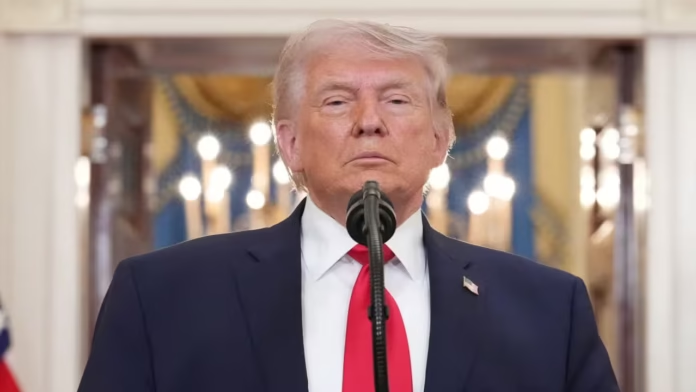
Donald Trump stated that the United States has largely achieved its objectives in the ongoing Iran conflict, indicating that the situation may be entering a resolution phase. In his remarks, he emphasized that sustained strategic efforts have produced measurable outcomes, allowing for a potential transition away from active engagement.
He noted that current developments reflect improved stability across key areas, particularly those linked to energy routes and regional coordination. The messaging suggests a shift in focus toward consolidating gains and preparing for a structured conclusion.
The statement comes at a time when global attention remains fixed on the Middle East, where developments continue to influence trade flows, energy markets, and diplomatic relations. While timelines remain flexible, the direction points toward de-escalation.
Why It Matters
A move toward conflict resolution has immediate implications for global economic stability. Reduced geopolitical tension can support lower volatility in energy markets, improve investor confidence, and encourage consistent trade activity.
The situation also underscores the importance of clearly defined objectives in international strategy. Achieving measurable outcomes within a controlled framework allows for more predictable transitions and reduces long-term risk exposure.
For businesses and governments, stability in the region is essential for planning and economic management. Signals of de-escalation help create a more predictable environment for decision-making.
Political and Geopolitical Implications
The remarks reinforce a strategic approach focused on achieving specific goals followed by controlled disengagement. This reflects an emphasis on efficiency and outcome-driven policy execution in international affairs.
Geopolitically, progress toward resolution may open opportunities for renewed diplomatic engagement among regional and global actors. Cooperative efforts could become central to maintaining stability in the next phase.
Domestically, the messaging contributes to broader discussions around foreign policy effectiveness, leadership clarity, and strategic priorities. Presenting the situation as nearing completion supports a narrative of structured progress.
At the same time, the outcome will depend on evolving conditions, including diplomatic responses and coordination among stakeholders.
Implications
If the situation continues toward resolution, it could reduce geopolitical risk, stabilize energy markets, and strengthen global economic confidence. The broader impact would extend across both economic and strategic domains.