Story Highlights
- A 14-point memorandum of understanding is being negotiated between U.S. envoys and Iranian officials via Pakistan as an intermediary
- The proposed MOU would declare an end to hostilities and begin a 30-day window for detailed negotiations on nuclear limits and sanctions
- Trump simultaneously threatened Iran with strikes “at a much higher level and intensity” if it does not comply, in a Truth Social post Wednesday
What Happened
Negotiations between Washington and Tehran have reached a critical juncture. According to multiple sources familiar with the discussions, President Donald Trump‘s administration and Iranian officials have been working through Pakistani intermediaries toward a compact document — a one-page, 14-point memorandum of understanding — that would formally end the war launched by the U.S. and Israel against Iran on February 28.
Steve Witkoff and Jared Kushner, serving as Trump’s lead envoys, have been at the center of the negotiations, engaging Iranian officials both directly and through third-party facilitators. The proposed memorandum would declare a halt to hostilities and initiate a 30-day period of structured negotiations aimed at addressing the key outstanding issues: opening the Strait of Hormuz to international shipping, placing limits on Iran’s nuclear program, and lifting U.S. sanctions.
The nuclear dimension remains the most contentious. Trump told PBS News on Wednesday that any final agreement would require Tehran to ship its stockpile of highly enriched uranium out of Iran and commit to ceasing operations at its underground nuclear facilities. However, the idea of transferring that material to the United States specifically had already contributed to the collapse of earlier talks, including a round held in Pakistan last month involving Vice President JD Vance.
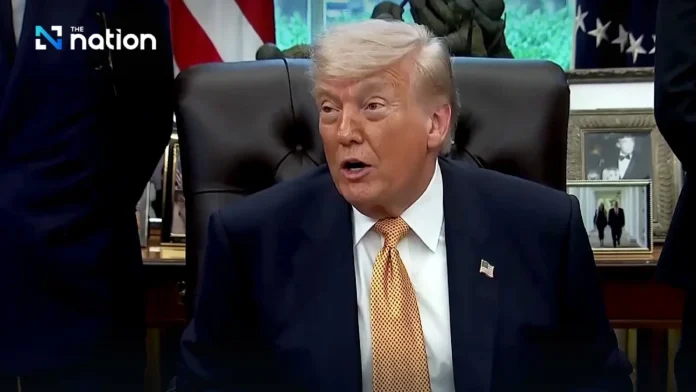
Despite those complications, Trump expressed public optimism Wednesday morning. “We’ve had very good talks with Iran,” he said, adding that a deal was “very possible.” Hours later, he posted on Truth Social warning that American military operations known as Operation Epic Fury would intensify significantly if Iran failed to follow through. The combination of diplomatic signals and military threats is consistent with the pressure strategy his administration has employed throughout the conflict.
Why It Matters
A cessation of the U.S.-Iran war would represent one of the most significant geopolitical developments of the Trump presidency and potentially reshape security architecture across the Middle East. The conflict, now in its sixty-eighth day, has already disrupted global energy markets, strained alliances, and triggered a wave of political executions inside Iran, with at least twenty-eight people put to death on political or espionage charges since the war began, according to a U.S.-based human rights organization.
The Strait of Hormuz, through which roughly twenty percent of global oil supply transits, has become a focal point of the conflict. Iran’s Islamic Revolutionary Guard Corps Navy has tested new procedures for passage through the strait, and the U.S. military has been actively engaging Iranian vessels attempting to interfere with commercial shipping. Any deal that formally opens the strait would have immediate downstream effects for global energy prices, supply chains, and consumer costs.
For the Trump administration, successfully negotiating an end to the war would provide a major political argument heading into the November 2026 midterms. The conflict has been politically costly domestically, with the president’s approval ratings declining during the war and Democratic candidates citing it in competitive races. A deal would allow the White House to claim a major foreign policy win, though it would need to satisfy skeptics on both left and right about whether Iran’s nuclear ambitions have genuinely been constrained.
The broader regional calculus is also significant. Any MOU will need to address the role of Israel, whose cooperation in the February strikes initiated the current conflict. Israeli Prime Minister Benjamin Netanyahu indicated Wednesday that he intends to speak with Trump about the Iran situation, suggesting that Jerusalem will want its voice heard in any framework that takes shape.
Economic and Global Context
The economic costs of the war have been substantial. Global oil markets have been volatile throughout the conflict, with disruptions in the Strait of Hormuz triggering price spikes that have fed through to fuel costs for American consumers and businesses. Energy analysts have noted that sustained uncertainty over Persian Gulf shipping lanes adds a persistent risk premium to crude prices that compounds inflationary pressures already present in the U.S. economy.
The conflict has also strained relations with European allies. Germany recently announced it is deploying a minesweeping vessel to the Mediterranean to be better positioned for an international clearance operation when conditions allow. France and other NATO partners have been critics of the military campaign, and the diplomatic rupture has intersected with existing tensions over Trump’s tariff policies and his announced plans to withdraw thousands of U.S. troops from Germany.
The U.S. has been operating under a fragile ceasefire since April 7, though that pause in hostilities has been repeatedly tested. Earlier this week, Iran attacked U.S. forces assisting commercial vessels transiting the Strait of Hormuz and launched fresh strikes against the United Arab Emirates. The U.S. Navy responded by sinking six Iranian patrol boats. Those incidents illustrate how a formal memorandum, if achieved, would need robust verification and enforcement mechanisms to prevent a rapid return to open warfare.
Implications
If a memorandum of understanding is signed in the coming days, the immediate effect would be a formal end to active hostilities — but the harder work of a comprehensive agreement would still lie ahead. The proposed 30-day negotiating window for resolving nuclear, sanctions, and waterway issues is ambitious given the depth of mistrust between the two governments. Previous negotiations under both the Trump and Biden administrations repeatedly collapsed when details proved insurmountable.
For American voters, a deal would land as either a triumphant demonstration of Trump’s negotiating power or a reminder of the costs of a war that arguably could have been avoided. For businesses dependent on global shipping and energy markets, any stabilization of the Strait of Hormuz would be welcomed, though markets will remain cautious until a durable arrangement is in place.
For the international community, how this deal is structured will set precedents for how nuclear-armed or nuclear-aspiring states interact with U.S. security commitments. Allied governments in Europe and Asia will be watching closely to assess whether the memorandum represents a durable nonproliferation framework or a politically expedient pause that leaves core issues unresolved.
Sources
“US and Iran closing in on agreement aimed at ending war, source says”