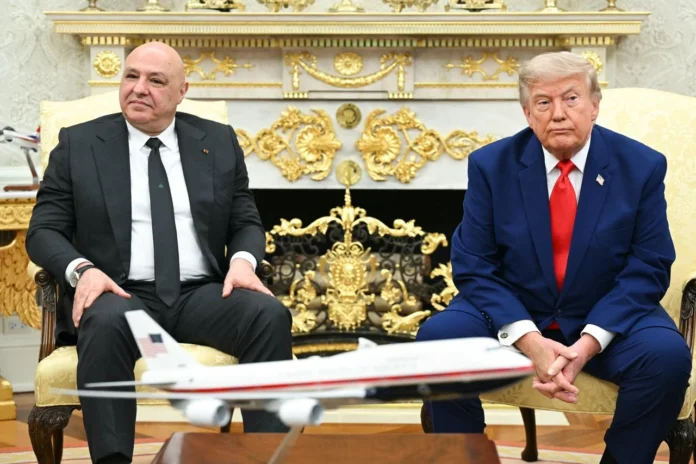
In a striking Oval Office moment, President Trump said he would be willing to speak directly with Hezbollah if Lebanese President Joseph Aoun requested it, a notable shift in tone toward a group Washington has designated a terrorist organization for decades. The remarks came during Aoun’s historic White House visit, the first by a Lebanese head of state in nearly two decades, as Beirut seeks American backing for a plan to disarm Hezbollah and secure an Israeli troop withdrawal. The meeting underscores how deeply the United States has embedded itself in Lebanon’s fragile post-war stabilization effort.
Story Highlights
- Trump told reporters he would speak with Hezbollah if Aoun wanted him to, saying “I speak to everybody”
- Aoun’s visit marks the first White House meeting with a Lebanese president since 2009 and comes amid a four-day Washington trip
- Lebanese army troops began deploying into territory vacated by Israeli forces in southern Lebanon hours before the Trump-Aoun meeting
What Happened
President Trump met with Lebanese President Joseph Aoun in the Oval Office on Tuesday, marking the first face-to-face meeting between the two leaders and the first visit by a Lebanese head of state to the White House since 2009. Aoun, who commanded Lebanon’s U.S.-backed army before his election as president last year, traveled to Washington to press for continued American support as his government pursues a plan to disarm the Iran-backed militant group Hezbollah and secure a full Israeli withdrawal from southern Lebanon.
During the meeting, a reporter asked Trump whether he would be willing to speak with Hezbollah directly. “I would speak to Hezbollah. I speak to everybody. I’ll speak to people that a lot of people think I shouldn’t be speaking to, and things work out,” Trump said, adding that if Aoun wanted him to engage with the group, “I would.” Trump also floated the idea of having Syria intervene militarily against Hezbollah, though he did not commit to the concept, which analysts noted would likely be deeply unpopular within Lebanon and could complicate Aoun’s domestic political position.
Aoun used the meeting to press Trump on two specific requests: continued political support and material backing for the Lebanese Armed Forces, which have been tasked with the sensitive mission of disarming Hezbollah. “We need to support the LAF. The LAF keeps the country safe and stable. Without the LAF, everything will collapse,” Aoun told reporters. Trump responded by pledging to help Lebanon “a lot,” though he remained noncommittal on specifics, saying he would discuss detailed assistance plans with Aoun privately.
The visit comes at a pivotal moment. Lebanon and Israel announced a framework agreement on June 26 establishing a roadmap for Israeli forces to withdraw from Lebanese territory in exchange for Hezbollah’s disarmament. Hours before the Trump-Aoun meeting, Lebanese army troops began taking control of areas vacated by Israeli forces in southern Lebanon, marking the first real-world test of that framework. The State Department separately confirmed that operations had begun in three villages designated as a “pilot zone” for the broader withdrawal and disarmament process, though officials offered few details.
Secretary of State Marco Rubio met with Aoun over the weekend and described the talks as “very positive,” while warning that Lebanon “will never be fully at peace” until the Hezbollah question is resolved. Rubio emphasized that resolving the issue requires building a Lebanese state strong enough to be the country’s sole legitimate armed authority, a shift he framed as requiring both military and economic investment rather than military action alone.
Why It Matters
Trump’s openness to direct engagement with Hezbollah represents a significant departure from decades of American policy treating the group as an off-limits terrorist organization rather than a diplomatic interlocutor. While Trump’s remarks stopped short of committing to actual talks, the willingness to even entertain the idea signals a pragmatic, transactional approach to Middle East diplomacy that has characterized much of his second-term foreign policy.
For Lebanon, American backing is viewed as essential to preventing the kind of internal collapse that has plagued the country amid years of economic crisis. The Lebanese Armed Forces have been described by Aoun as the country’s most trusted institution, and continued U.S. support is seen domestically as critical to preventing a power vacuum that could allow Hezbollah or other factions to reassert control.
The stakes are also regional. A successful disarmament process could reshape the security landscape across the eastern Mediterranean and open pathways toward the kind of normalization agreements the administration has pursued through the Abraham Accords framework. Conversely, a failed or stalled process risks reigniting full-scale conflict between Israel and Hezbollah, particularly given that Hezbollah has firmly rejected direct talks with Israel despite government pressure.
Economic and Global Context
Lebanon’s economic devastation adds urgency to the diplomatic push. The World Bank has estimated that the broader Hezbollah-Israel conflict in late 2024 cost the country 11.1 billion dollars in damages and economic losses, compounding a financial crisis that has gripped Lebanon since 2019. Aoun has repeatedly linked security stabilization to economic recovery, seeking international donor support alongside American military and political backing.
The disarmament effort also intersects with the broader regional conflict involving Iran, Hezbollah’s primary patron. American strikes against Iranian targets have continued for ten consecutive nights, and officials have acknowledged the risk that renewed Israel-Iran hostilities could spill over into Lebanon, undermining the fragile framework agreement just as it begins to be implemented on the ground.
Hezbollah’s financial and military networks have already faced sustained pressure from Washington, including sanctions and a 2018 designation as a Transnational Criminal Organization. U.S. officials have indicated enforcement actions against the group’s global finance networks will continue regardless of the outcome of the disarmament talks, reflecting a dual-track approach combining diplomatic engagement with continued economic pressure.
Implications
In the near term, attention will focus on whether the Lebanese army’s deployment into former Israeli-held territory proceeds smoothly or triggers renewed friction. The success or failure of this initial “pilot zone” rollout is likely to shape whether broader withdrawal and disarmament steps move forward on schedule.
For Israel, the framework agreement requires a genuine willingness to complete troop withdrawals, a step that has drawn skepticism from some Lebanese officials who fear Israel could slow-walk the process. Washington’s role as mediator will be tested as it balances pressure on both Beirut and Jerusalem to fulfill their respective commitments under the agreement.
For Hezbollah, continued American and Lebanese government pressure, combined with the possibility of direct U.S. engagement floated by Trump, creates a complex set of incentives that could either encourage negotiated disarmament or harden the group’s resistance. Much will depend on how the broader Iran conflict evolves in the coming weeks, given Hezbollah’s deep ties to Tehran and the risk that regional escalation could undercut Lebanon’s fragile stabilization efforts just as they begin.
Sources
“Trump promises US help for Lebanon during a White House meeting with its president”