Story Highlights
- Trump considers cabinet reshuffle during rising geopolitical tension
- Focus on strengthening national security and crisis management
- Signals internal realignment to match evolving global challenges
What Happened
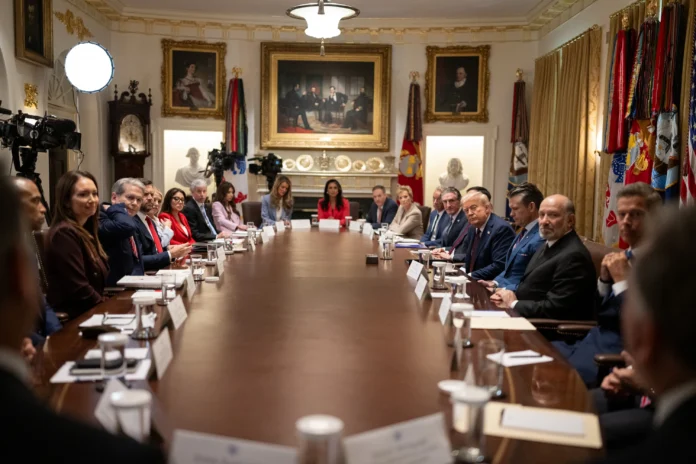
President Donald Trump is reportedly considering a strategic reshuffle within his cabinet as pressure mounts over the ongoing situation with Iran. The potential changes are aimed at reinforcing leadership across key departments, particularly those involved in defense, foreign policy, and national security.
According to officials familiar with the discussions, the administration is evaluating whether current leadership structures are best suited to handle the rapidly evolving geopolitical environment. The move is not being framed as a reaction to failure, but rather as a proactive step to ensure that the administration remains agile and effective during a period of heightened global tension.
Cabinet reshuffles are not uncommon during times of crisis, as administrations seek to align expertise with emerging priorities. In this case, the focus appears to be on strengthening coordination between military, intelligence, and diplomatic efforts. The goal is to ensure that decision-making remains efficient and that strategies can be implemented without delay.
While no final decisions have been publicly confirmed, the discussions themselves signal that the administration is actively reassessing its internal structure. This reflects a broader recognition that the current situation requires not only external strategy but also internal alignment.
Why It Matters
Leadership structure plays a critical role in how effectively a government responds to crises. In high-stakes situations like the current tensions with Iran, clear communication, rapid decision-making, and coordinated action are essential.
A cabinet reshuffle can bring fresh perspectives and renewed focus, potentially improving the administration’s ability to manage complex challenges. At the same time, it can also introduce uncertainty, particularly if changes are perceived as reactive rather than strategic.
For global observers, such moves are closely watched as indicators of stability and confidence within the administration. A well-managed transition can reinforce credibility, while a poorly handled one can raise questions about consistency and direction.
Political and Geopolitical Impact
Domestically, the consideration of cabinet changes may be viewed as a sign of active leadership and willingness to adapt. It demonstrates that the administration is not static and is prepared to make adjustments in response to evolving conditions.
However, it may also invite scrutiny from political opponents, who could interpret the move as evidence of internal challenges. The narrative surrounding the reshuffle will play a significant role in shaping public perception.
Internationally, the impact is more nuanced. Allies and adversaries alike monitor leadership changes closely, as they can influence policy direction and strategic priorities. A reshuffle in key positions—particularly those related to defense or diplomacy—can signal shifts in approach, even if broader objectives remain unchanged.
The move also underscores the interconnected nature of domestic governance and global strategy. Decisions made within the administration can have far-reaching implications beyond national borders.
Implications
If implemented effectively, the cabinet reshuffle could strengthen the administration’s ability to manage the current crisis and respond to future challenges. Improved coordination and leadership alignment may lead to more efficient decision-making and clearer strategic direction.
However, the success of such changes depends heavily on execution. Smooth transitions and clear communication will be essential to maintaining confidence both domestically and internationally.
In the broader context, this development highlights the importance of adaptability in governance. As global conditions shift rapidly, the ability to reassess and restructure leadership becomes a key factor in maintaining stability and effectiveness.
Ultimately, the decision to pursue cabinet changes reflects an acknowledgment of the complexity of the current geopolitical landscape and the need for a government structure that can respond accordingly.
Sources
“Trump Weighs Broader Cabinet Shake-Up as Iran Pressure Grows”