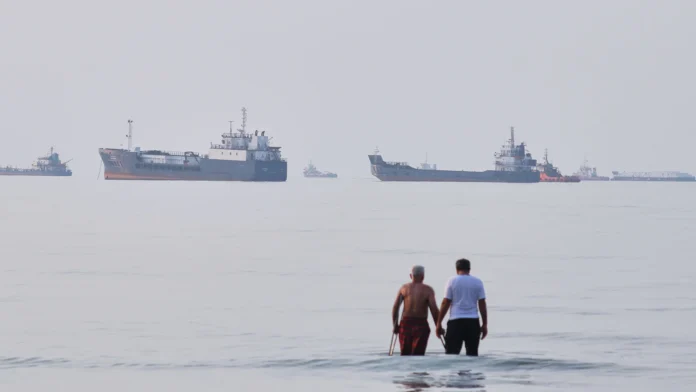
American forces conducted a sixth consecutive night of airstrikes against Iran on Thursday, targeting military infrastructure across the southern part of the country as a fragile ceasefire brokered by President Trump continues to unravel. The renewed campaign, which has expanded to strike bridges and port facilities near Bandar Abbas, comes as Iran has widened its retaliatory attacks to include U.S.-aligned targets in Syria, Bahrain, and Kuwait. The escalation places more than 50,000 U.S. troops stationed across the Middle East in an increasingly volatile security environment, with the strategically vital Strait of Hormuz remaining the central flashpoint.
Story Highlights
- U.S. Central Command confirmed sixth straight night of strikes, targeting surveillance towers, bridges, and military logistics sites in southern Iran
- Iran claimed retaliatory strikes on U.S. forces in Syria and Bahrain, alongside earlier attacks on Kuwaiti infrastructure
- More than 50,000 U.S. military personnel are currently deployed across the Middle East, according to CENTCOM
- The ceasefire, tied to a memorandum of understanding signed in mid-June to reopen the Strait of Hormuz, has broken down over the past week
What Happened
U.S. Central Command confirmed Thursday night that American fighter jets, drones, and warships conducted a sixth consecutive night of strikes against Iranian targets, marking one of the most sustained military campaigns of Trump’s second term. The strikes, which began around 9:30 p.m. local time, focused heavily on southern Iran, including the port city of Bandar Abbas and the surrounding Strait of Hormuz region. CENTCOM said the operation destroyed the Chah Bahar Shahid Kalantari Port surveillance tower, describing it as part of a maritime surveillance network the Islamic Revolutionary Guard Corps has used for decades to track and target commercial vessels transiting the strait.
The campaign has notably expanded in scope, with U.S. forces striking key bridges linking Bandar Abbas to Shiraz, Iran’s fifth-most populous city, in an apparent effort to cut off the critical port from the rest of the country. Iranian state media reported explosions across multiple regions, from Qeshm Island in the Strait of Hormuz to areas near the Pakistani border in the country’s southeast, though CNN noted it could not independently verify all Iranian claims.
Iran has responded by widening its own retaliatory strikes beyond direct exchanges with U.S. forces. Tehran claimed attacks on American military positions in Syria, marking a first direct strike on a Syrian base, as well as on U.S. forces in Bahrain and water infrastructure in Kuwait. Iran has also struck at least four commercial vessels in the Strait of Hormuz since the memorandum of understanding was signed in mid-June, an agreement intended to end hostilities and reopen the vital waterway to shipping traffic.
The ceasefire’s collapse follows weeks of diplomatic effort, including negotiations in Switzerland involving senior U.S. officials. Vice President JD Vance publicly denied a claim that Iranian officials had privately warned him during those talks that Trump son-in-law Jared Kushner and special envoy Steve Witkoff were “abusing” the negotiation process to manipulate markets, calling the allegation “completely bogus.”
Amid the continued military exchanges, White House press secretary Karoline Leavitt told reporters Thursday that Iran wants to “make a deal” with the United States and characterized the ongoing strikes as a direct response to Iranian attacks on commercial vessels in the strait. Trump separately highlighted what he called a “goodwill” gesture from Tehran: the release of American citizen Dena Karari, who had been imprisoned in Iran since 2024 and is expected to return home in the coming days.
Why It Matters
The collapse of the ceasefire underscores the fragility of diplomatic arrangements in the region and raises the stakes for global energy markets, given the Strait of Hormuz’s role as one of the world’s most critical oil transit chokepoints. Continued military exchanges risk further disrupting shipping traffic, with direct consequences for global energy prices and supply chain stability.
For the more than 50,000 U.S. troops deployed across the Middle East, the expanding conflict increases operational risk, particularly as Iran demonstrates a willingness to strike American positions in third countries like Syria and partner nations such as Bahrain and Kuwait. This regional widening complicates U.S. force protection efforts and could draw additional countries into the conflict, whether as targets or staging grounds.
The dispute over what happened during the Switzerland negotiations, specifically Vance’s denial of claims involving Kushner and Witkoff, highlights internal tensions and scrutiny surrounding how the administration has managed diplomatic channels with Iran. Any perception that negotiators were compromised or acting improperly could complicate future efforts to restore the ceasefire.
Economic and Global Context
The Strait of Hormuz carries roughly a fifth of global oil consumption on any given day under normal conditions, making sustained military conflict in the region a significant risk factor for global energy markets. Continued attacks on commercial vessels and surveillance infrastructure in the strait have kept energy traders on alert for potential price volatility, even as the exact market impact continues to develop alongside the conflict.
Iran’s expanding retaliatory strikes on Gulf states, including Kuwait and Bahrain, both close U.S. security partners, threaten to draw additional regional actors more directly into the confrontation. Gulf Cooperation Council member states have significant economic interests tied to stable shipping lanes and have historically sought to avoid direct entanglement in U.S.-Iran hostilities, a position increasingly difficult to maintain as strikes reach their territory.
Internationally, the conflict’s trajectory will likely influence broader diplomatic dynamics between Washington and other global powers who maintain economic ties with Iran, as well as ongoing discussions about sanctions enforcement and energy security among U.S. allies dependent on Gulf oil supplies.
Implications
In the near term, expect continued nightly strikes as both sides test the durability of any renewed diplomatic overture, particularly given Iran’s stated position that no oil or gas will move through the region “as long as the American atrocities continue,” according to a statement from the Revolutionary Guard. The release of American detainee Dena Karari may serve as a signal of continued back-channel communication, even amid open hostilities.
For U.S. policymakers, the widening scope of Iranian retaliation, now including strikes on Syria, Bahrain, and Kuwait, will likely prompt renewed debate in Congress over the administration’s Middle East strategy and whether additional authorization or oversight is needed for sustained military operations in the region.
For global energy markets and shipping companies, continued instability in the Strait of Hormuz will require ongoing risk assessment and potential rerouting considerations, with downstream effects possible for fuel prices and supply chains extending well beyond the immediate region.
Sources
“U.S. concludes 6th consecutive night of Iran strikes as battle continues over Strait of Hormuz”