Story Highlights
- President Trump warned Iran the “clock is ticking” and threatened total destruction if Tehran does not make a deal
- Iran’s foreign minister said Tehran “cannot trust the Americans at all” amid stalled peace talks
- Iran’s parliament speaker warned his country’s armed forces are “prepared for every option”
What Happened
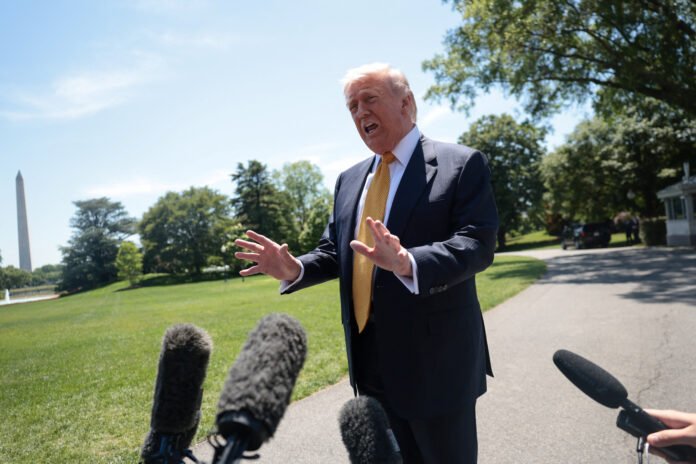
President Donald Trump issued one of his most direct and threatening warnings yet to Iran on Sunday, posting on social media that “the Clock is Ticking” and declaring that if Iranian leaders do not “get moving, FAST,” there “won’t be anything left of them.” The statements came as the ceasefire between Washington and Tehran — brokered in April through Pakistani mediation following U.S.-Israeli military strikes launched in late February — continued to show severe signs of strain.
Iran’s foreign minister, Abbas Araghchi, publicly stated on Friday that Tehran “cannot trust the Americans at all” while also indicating that Iran is trying to maintain the “shaky” ceasefire in order to give diplomacy a chance. The contradictory posture — expressing deep distrust while nominally preserving peace talks — reflects the volatile and uncertain state of negotiations that have been ongoing since a two-week ceasefire was first arranged in April.
Iran’s parliament speaker, Mohammad Bagher Ghalibaf, went a step further on Monday, issuing a defiant statement on social media declaring that Iran’s armed forces “are prepared to deliver a lesson-giving response to any aggression.” He framed any U.S. miscalculation as a strategic error with predictable consequences, warning that “a strategy of miscalculation and mistaken decisions will always produce mistaken results.”
Iran’s foreign ministry spokesperson, Esmaeil Baghaei, confirmed Monday that Tehran had formally responded to the latest American negotiation proposal, though the content of that response was not publicly disclosed. Earlier, Trump had characterized the previous Iranian counterproposal as “totally unacceptable” and “stupid,” escalating rhetoric that has repeatedly threatened to unravel the ceasefire entirely.
Trump also made an extraordinary territorial claim during this period, declaring that the United States — not Iran — is in control of the Strait of Hormuz, stating “We wiped out their armed forces, essentially.” In a separate development, the USS Gerald R. Ford carrier strike group returned to port in Virginia after a 326-day deployment — the longest aircraft carrier deployment in 50 years — having played a central role in both the Caribbean and Middle East operations.
Why It Matters
The stakes of the U.S.-Iran standoff are enormous for American foreign policy, national security, and the global economy. A breakdown in ceasefire negotiations would not simply restart a bilateral military confrontation — it would risk a broader regional conflagration involving Israel, Lebanon, Gulf Arab states, and potentially other actors. The ceasefire has already been described by officials close to the talks as existing on “life support,” and any resumption of major combat operations would place American military personnel, currently deployed in significant numbers throughout the region, in immediate danger.
For American policymakers, the dilemma is clear: the Trump administration has staked enormous credibility on its ability to end the conflict it helped ignite through the February strikes. Failure to secure a lasting agreement would represent a significant political liability heading into the 2026 midterms, particularly as voters have grown concerned about the economic fallout of prolonged Middle East instability.
The Iran negotiations also carry major implications for the question of nuclear proliferation. A core U.S. demand throughout the talks has been that Iran permanently end uranium enrichment. Iran has rejected this demand in prior rounds. If negotiations collapse without a binding commitment on nuclear matters, the administration will face intense scrutiny over what the military campaign actually achieved beyond degrading Iran’s immediate military capacity.
Domestically, the war has tested the limits of presidential war powers. Congress has remained largely divided over whether Trump had the authority to launch sustained offensive operations against Iran without a formal authorization for the use of military force, and that debate is likely to intensify if no peace deal is reached in the coming weeks.
Economic and Global Context
The uncertainty surrounding the ceasefire has already caused measurable disruption to global energy markets. Disruptions to Gulf shipping routes through the Strait of Hormuz, which the U.S. has effectively blockaded, have sent oil and gas prices into a volatile period. India, one of the world’s largest energy importers, was forced to raise gas and diesel prices last week as a direct result of constrained supply chains running through the Gulf. Indian Prime Minister Narendra Modi called for an “open and safe” Strait of Hormuz during a brief visit to the United Arab Emirates on Friday, signaling the growing international pressure on Washington to resolve the impasse.
Global oil markets remain on edge. Prolonged closure of the Strait of Hormuz — through which approximately 20 percent of the world’s traded oil normally flows — would generate significant inflationary pressure in energy-importing economies across Asia, Europe, and the Americas. The longer the standoff persists, the more embedded those price increases become in supply chains and consumer costs.
Geopolitically, the conflict has reshuffled relationships across the region. Pakistan has played an unprecedented mediating role, while China has thus far declined to provide Iran with military equipment, according to statements made by President Xi Jinping to Trump in their Beijing summit last week. Israel extended its ceasefire with Lebanon for 45 more days following Washington talks, though Israeli forces carried out over 100 strikes on Lebanon since Friday, underscoring the fragility of that arrangement as well.
Implications
The coming days are pivotal. Iran’s formal response to the latest U.S. proposal has been submitted, and the Trump administration will need to decide quickly whether that response constitutes a foundation for further negotiation or a final breaking point. If Trump follows through on his escalating threats, a return to full-scale military operations would represent one of the most consequential foreign policy decisions of his second term.
For American voters and businesses, the immediate implication is continued energy market volatility and elevated uncertainty about military commitments. Defense contractors and the Pentagon are watching closely. The USS Gerald R. Ford’s return after its record 326-day deployment underscores the toll the operation has already taken on U.S. naval readiness and personnel.
For regional allies, particularly Israel and the Gulf states, the outcome of U.S.-Iran talks will determine the security architecture of the entire Middle East for years to come. A durable peace agreement that addresses nuclear proliferation would represent a historic achievement; a collapsed negotiation would almost certainly lead to a resumed arms race and proxy conflicts across the region.
The broader governance question for Americans is accountability. The Trump administration launched what has become a multi-month war through executive action alone. As the ceasefire negotiations drag on, Congress will face increasing pressure to weigh in — either by authorizing the conflict formally or by asserting its constitutional authority to limit further military engagement.
Sources
“Live Updates: Trump says ‘Clock is Ticking’ for Iran as shaky ceasefire continues”